
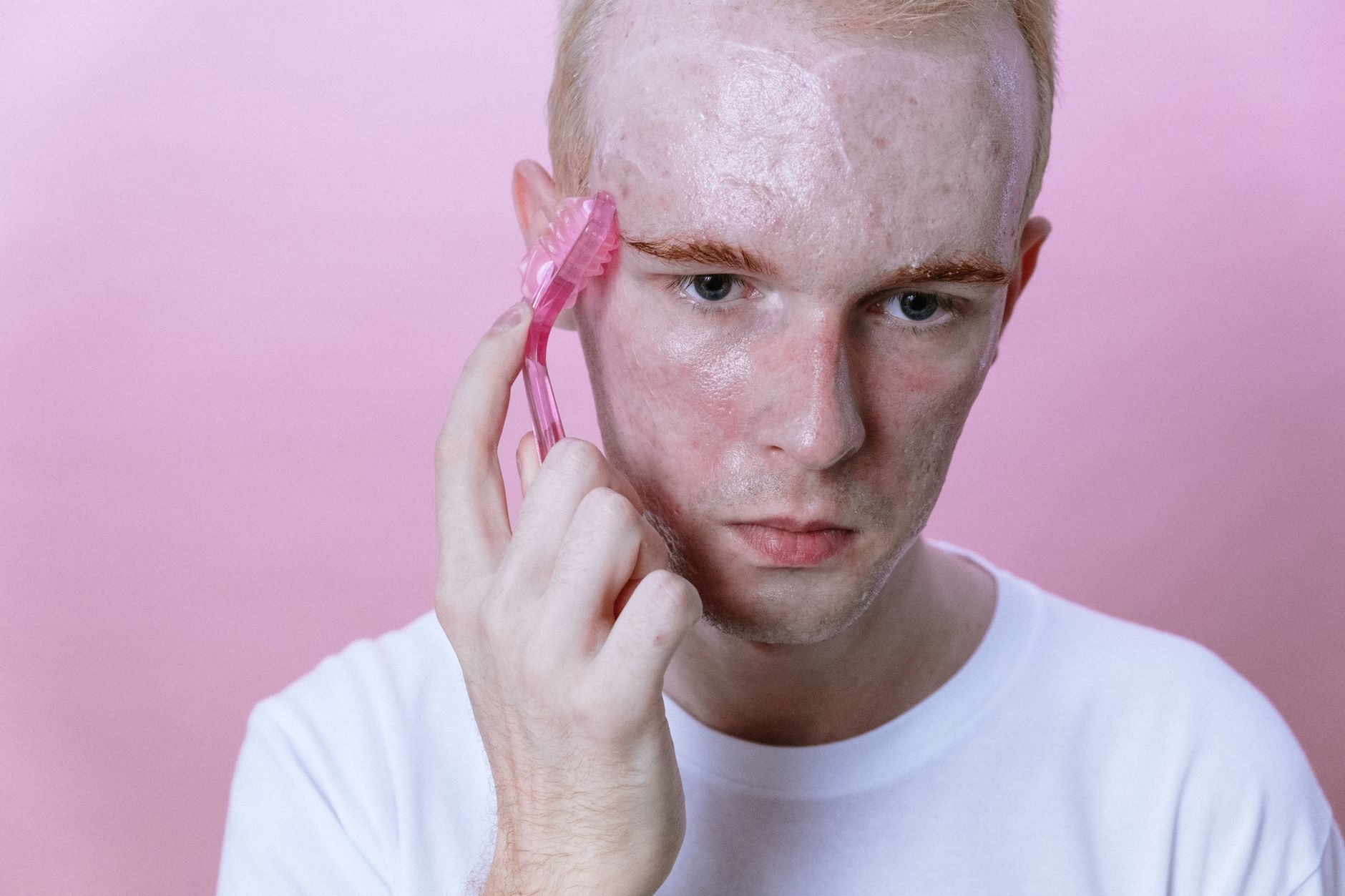
Seek dermatologic care for severe nodular breakouts, scarring risk, emotional distress, spreading redness with fever, infant acne after 6 weeks, or acne with early hormonal signs. Incyte noted in a Business Wire announcement with meeting details that the 2026 American Academy of Dermatology Annual Meeting ran March 27-31 in Denver for pipeline updates and late-breaking research.
Acne vulgaris means clogged pores, pimples, and deep painful lumps. Rosacea means lasting facial flushing with bumps or tiny visible vessels. Families comparing treatments need age limits and warning signs to decide the next step.
Medical information disclaimer: This article is for general educational purposes only and does not provide medical advice, diagnosis, or treatment. Always consult a physician or other qualified health professional about symptoms, medications, tests, or treatment decisions.
Table of Contents
- What do guidelines recommend for acne?
- Does age change which topical fits?
- Could redness be pediatric rosacea?
- When should families seek care?
What do guidelines recommend for acne?
The Journal of the American Academy of Dermatology 2024 update, summarized by MDedge, in its guideline summary gives strong recommendations for topical benzoyl peroxide, topical retinoids, topical antibiotics and fixed-dose combinations, plus oral isotretinoin for severe acne. Fixed-dose combination means two active drugs in one product.
American Academy of Dermatology guidance summarized by Medscape advises multimodal therapy that combines mechanisms of action. It advises concomitant benzoyl peroxide with oral antibiotics to reduce resistance and limit systemic antibiotic duration. Resistance means bacteria stop responding to the drug.
Does age change which topical fits?
The FDA label via NDC List in the drug label states adapalene/benzoyl peroxide gel 0.1%/2.5% is indicated for acne vulgaris at age 9 and older. That made it the first topical acne approval down to age 9.
The FDA DailyMed/Aurobindo label states the higher-strength 0.3%/2.5% formulation is indicated only at age 12 and older, once daily to face and trunk. Adapalene is a retinoid that helps unclog pores. Benzoyl peroxide targets acne bacteria on the skin.
Could redness be pediatric rosacea?
A Dermatology Times clinical takeaway describes pediatric rosacea as rare but documented, most often papulopustular disease. Signs include flushing, papules and pustules, and telangiectasia, which are tiny visible vessels.
Heat and sun exposure are common triggers across ages. Systematic review literature from 2023-2024 notes incidence and prevalence in children remain unknown because cases are rarely diagnosed and often misdiagnosed. Treatment comparisons therefore rely on adult data and small pediatric series.
When should families seek care?
Nationwide Children's Hospital guidance aligned with AAD advice in its pediatric care guidance lists these reasons to seek dermatologic care: Infant acne after 6 weeks warrants evaluation rather than home treatment alone.
- severe nodular or cystic breakouts
- risk of scarring
- emotional distress from skin disease
- spreading redness with fever
- infant acne after 6 weeks
You Might Also Like
- Pediatric Acne and Rosacea at the 2026 AAD Annual Meeting: Treatment-Selection Questions for Families Comparing Acne Treatments
- Pediatric Acne and Rosacea at the 2026 AAD Annual Meeting: Skin-Care Routine Questions for Families Comparing Acne Treatments
- Pediatric Acne and Rosacea at the 2026 AAD Annual Meeting: Diagnosis and Look-Alike Questions for Families Comparing Acne Treatments