
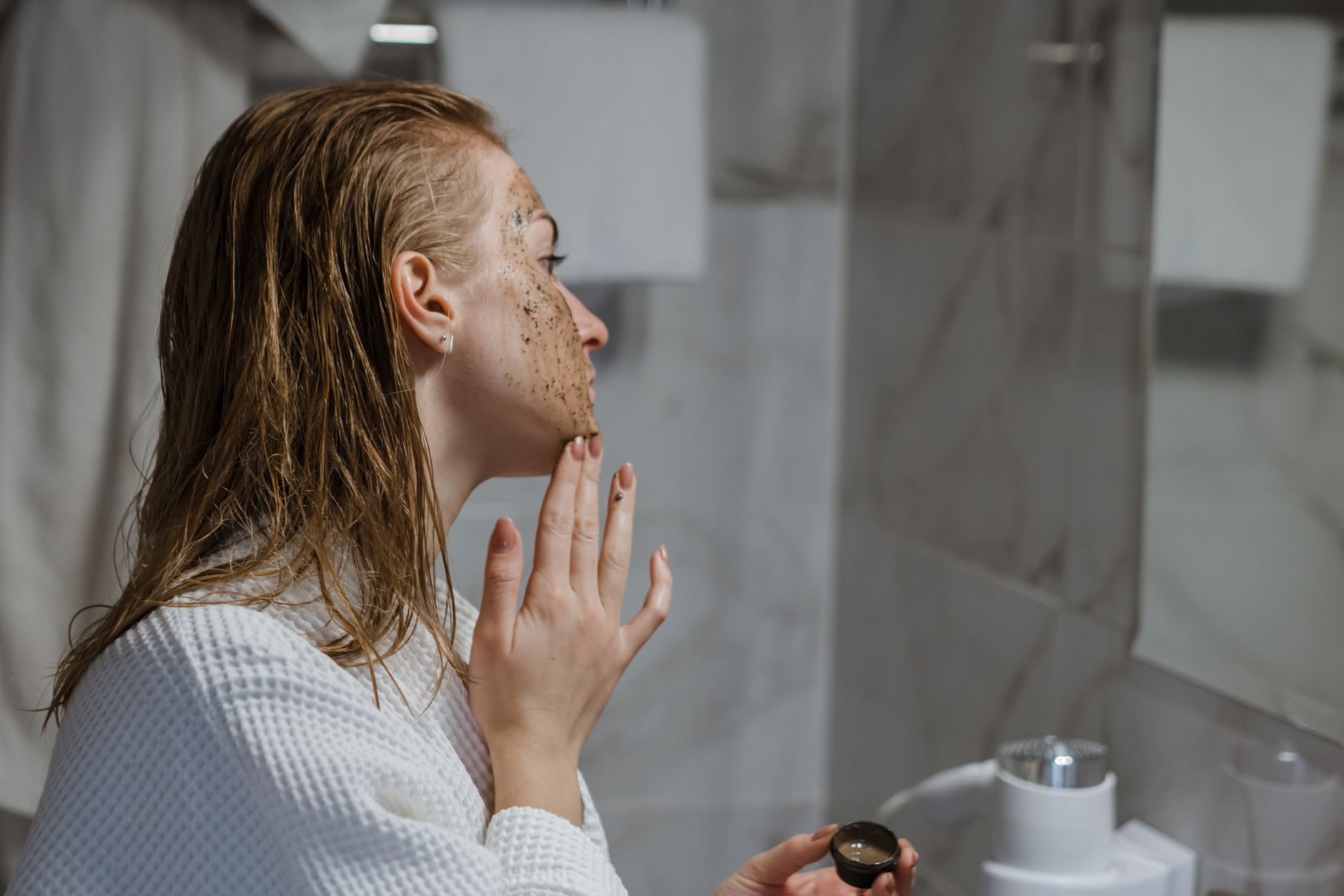
Exfoliation can help some people with acne, but it is not a proven stand-alone treatment. In 2026, the clearest evidence supports topical salicylic acid, while evidence for professional chemical peels remains insufficient. Exfoliation removes or loosens cells at the skin's surface or inside pores. The practical choice depends on acne severity, skin sensitivity, current treatments, and the risk of irritation or dark spots.
Medical information disclaimer: This article is for general educational purposes only and does not provide medical advice, diagnosis, or treatment. Always consult a physician or other qualified health professional about symptoms, medications, tests, or treatment decisions.
Table of Contents
- Why acne develops and who it affects
- What the evidence says about salicylic acid
- Scrubs and chemical peels have important limits
- Who should be especially cautious
- What to do next
Why acne develops and who it affects
acne begins when pores become clogged. During puberty, androgens enlarge oil glands and increase oil production, which helps explain why acne is especially common among teenagers. Acne affects up to 50 million Americans each year.
About 85% of people ages 12–24 experience at least minor acne, while persistent adult acne affects up to 15% of women, according to the American Academy of Dermatology's statistics. exfoliation may be most relevant when clogged pores are prominent. However, "acne" includes different lesion types and levels of severity, so one exfoliating product cannot address every case.
What the evidence says about salicylic acid
Salicylic acid is an over-the-counter exfoliant that helps unclog pores, a process described as comedolytic action. It is available in concentrations from 0.5% to 2%. The 2024 AAD acne guideline conditionally recommends topical salicylic acid.
In one 12-week randomized trial, it produced a 25% greater reduction in inflammatory lesions and an 11% greater reduction in open comedones than the inactive vehicle. That is evidence of benefit, but it comes from one trial cited by the guideline. A conditional recommendation carries more uncertainty than the guideline's strong recommendations for benzoyl peroxide and topical retinoids.
Scrubs and chemical peels have important limits
Mechanical exfoliation uses friction, such as a scrub or textured tool. The AAD warns that this method can irritate acne-prone skin, making aggressive scrubbing a poor response to breakouts. Professional chemical peels apply exfoliating acids at higher strengths under supervision. Yet the AAD found insufficient evidence to recommend peels for acne.
A systematic review included only 12 randomized trials with 387 participants, and differences among the studies prevented researchers from combining their results. One split-face trial compared 30% glycolic and 30% salicylic peels in 20 people with mild-to-moderate facial acne. Both improved lesions, but glycolic acid caused more initial adverse events. The study supports considering peels as adjuncts, not replacements for established acne treatment.
Who should be especially cautious
Dry, sensitive, or acne-prone skin may become more irritated with exfoliation. People with darker skin tones also need care because aggressive exfoliation can increase dark spots, according to the AAD's guidance on safe exfoliation. Treatment overlap matters as much as skin type.
People using tretinoin should avoid hard scrubbing. Combining tretinoin with salicylic acid or other potentially irritating acne products may increase dryness, redness, and peeling. Watch for signs that the routine is too harsh:.
- Increasing redness, burning, or tenderness
- Persistent dryness or peeling
- More irritation after adding a scrub, acid, or peel
- New or worsening dark spots
- Several irritating products being used at the same time
What to do next
Choose a plan based on the acne rather than assuming more exfoliation will work better. Seek clinical care when acne is severe, causes scars, creates substantial psychological distress, or does not improve with treatment. In those situations, the AAD strongly recommends isotretinoin rather than escalating exfoliation, as summarized in its updated acne-management guidance.
- For clogged pores or mild acne, consider an OTC salicylic-acid product within the 0.5%–2% range.
- Avoid adding abrasive scrubs, especially if the skin is already inflamed or sensitive.
- If using tretinoin, stop hard scrubbing and reassess irritating OTC products when redness, dryness, or peeling develops.
- Consider treatments with different mechanisms rather than relying on exfoliation alone. The AAD strongly recommends benzoyl peroxide and topical retinoids and supports combining appropriate topical treatments.
- Treat chemical peels as possible adjuncts with limited evidence, not as definitive acne care.