
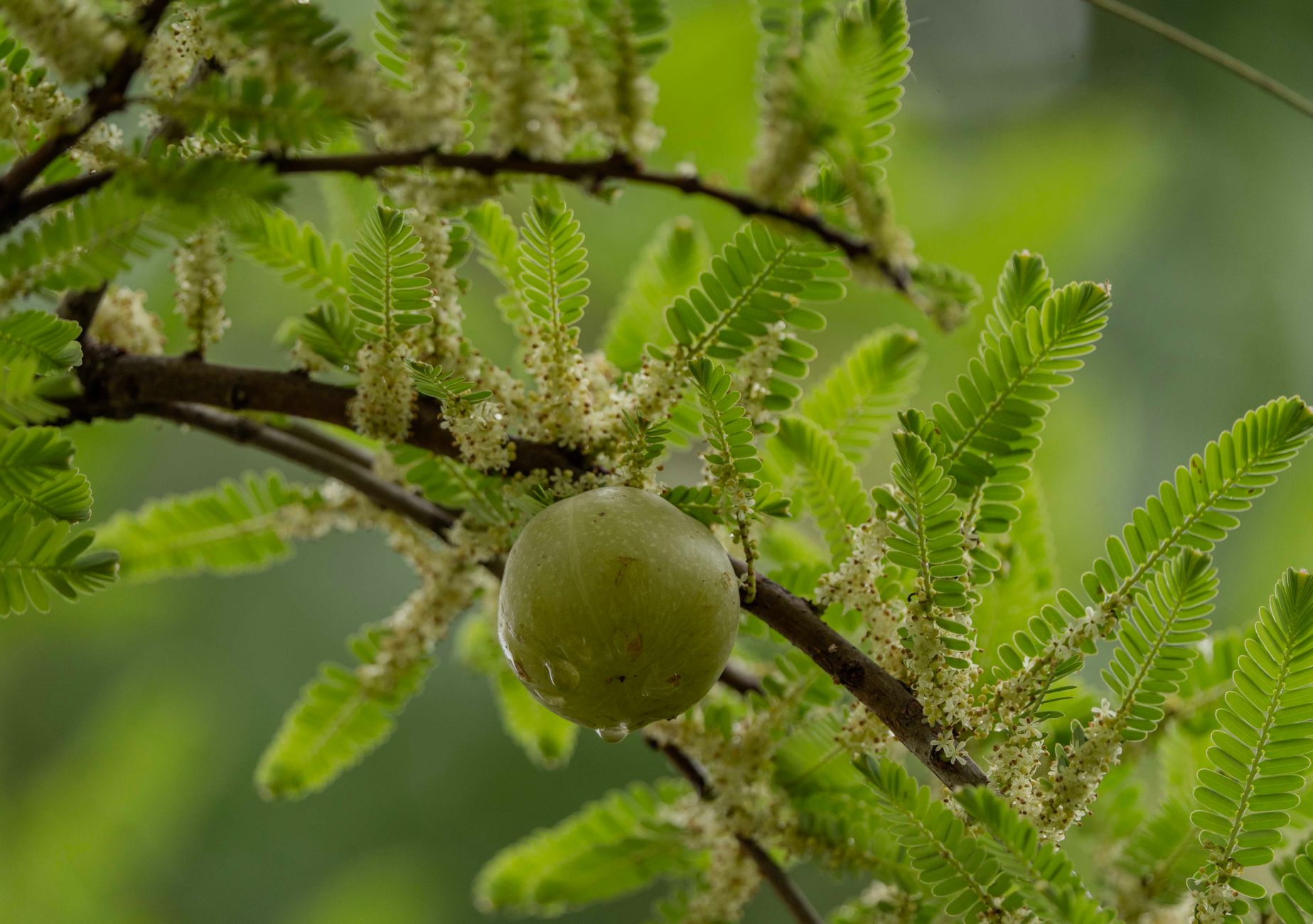
The 2026 trial did not prove that oral Phyllanthus emblica plus Tinospora cordifolia clears persistent adult acne. Ask a dermatologist about the study's limited relevance, Tinospora's liver risks, and better-established treatment options. The 12-week study found dose-related lesion reductions, but none differed significantly from placebo. That distinction matters: an encouraging pattern is not evidence of a reliable treatment effect.
Medical information disclaimer: This article is for general educational purposes only and does not provide medical advice, diagnosis, or treatment. Always consult a physician or other qualified health professional about symptoms, medications, tests, or treatment decisions.
Table of Contents
- What did the trial actually find?
- Does this evidence apply to your acne?
- Is a commercial amla or giloy supplement equivalent?
- What safety questions matter most?
- What should you ask about proven alternatives?
What did the trial actually find?
Researchers randomized 88 volunteers with postadolescent acne to placebo or 300 mg, 400 mg, or 500 mg daily of a standardized botanical combination. The trial was randomized and double-blind, meaning treatment assignment was controlled and concealed from participants and researchers. Lesion counts fell more as the dose increased.
However, no treatment group achieved a statistically significant advantage over placebo, according to the 2026 paper indexed by PubMed. The trial therefore did not establish that the combination works for acne. Quality-of-life scores improved significantly from baseline in all three botanical groups. That finding may justify further research, but it does not replace the unsuccessful treatment-versus-placebo comparison.
Does this evidence apply to your acne?
The study covered a narrow population: adults older than 25 with mild-to-moderate facial acne who were not using acne treatment. It excluded people who were pregnant or had significant illness, hormonal therapy, long-term medicines or supplements, PCOS, or Cushing's-type acne.
Ask your dermatologist: The registered trial also involved only 12 weeks of treatment. Its findings cannot answer how the combination performs in excluded patients or during longer use.
- Does my acne match the type and severity studied?
- Could hormones, another condition, or a medicine be contributing?
- Would pausing my current treatment to imitate the trial be unsafe or counterproductive?
- Are painful lesions, scarring, or persistent marks reasons to choose a more established treatment?
Is a commercial amla or giloy supplement equivalent?
No equivalence was established. The registered study used a specific oral decoction made from dried Nelli, or P. emblica, fruit and fresh Rasakinda, or T. cordifolia, stem—not generic retail amla or giloy products.
Ask whether a product matches the studied species, plant parts, preparation, standardization, and daily dose. A label sharing the same common plant name does not show that its contents reproduce the trial formulation. The study also deserves cautious interpretation because Link Natural Products funded and sponsored it. The Sri Lanka Clinical Trials Registry lists the principal investigator as a consultant in the company's research-and-development center. Sponsorship does not invalidate research, but it strengthens the case for independent confirmation.
What safety questions matter most?
Blood, liver, and kidney measures remained normal during the trial. No serious or treatment-related adverse events were reported. Those results offer limited reassurance for the tested participants over 12 weeks, not proof of broader or long-term safety.
Tinospora has been linked to clinically apparent liver injury. NIH's LiverTox review describes more than 50 published cases since 2017 and some fatalities, particularly among people with preexisting liver disease. Before considering the combination, tell your dermatologist about liver disease and every medicine or supplement you take. Ask whether baseline or follow-up liver testing would meaningfully reduce risk—and whether the uncertain benefit justifies exposure at all.
What should you ask about proven alternatives?
Ask how this unproven botanical option compares with care supported by acne guidelines. The American Academy of Dermatology recommends treatments such as benzoyl peroxide, topical retinoids, selected antibiotics, hormonal options, and isotretinoin when clinically appropriate.
Useful questions include: In the United States, an herbal product sold as a dietary supplement is not FDA-approved to treat or prevent acne. Product claims should not replace a diagnosis, especially when adult acne is persistent or changing.
- Which treatment fits my acne severity and risk of scarring?
- How long should I try it before judging the response?
- Which side effects or interactions apply to me?
- Could the botanical interfere with the treatment plan?
- What is the next step if the first option fails?
You Might Also Like
- The 2026 Trial of Phyllanthus Emblica and Tinospora for Acne: What the Findings Mean for Adults With Persistent Acne
- The 2026 Trial of Phyllanthus Emblica and Tinospora for Acne: Study Design and Evidence Limits for Adults With Persistent Acne
- Herbal Acne Trial Safety and Evidence Limits in 2026: What the Findings Mean for Adults With Persistent Acne