
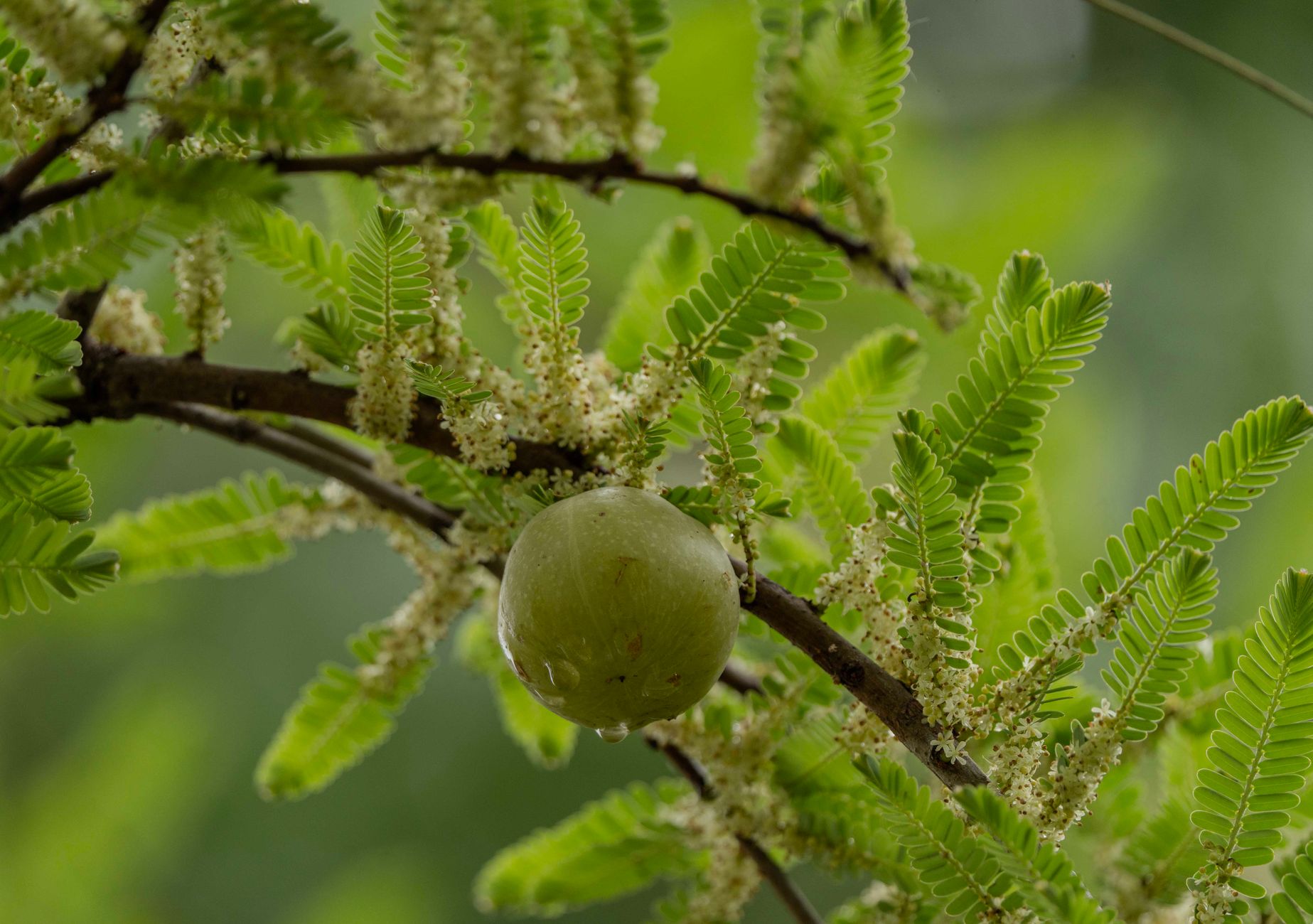
A 2026 randomized trial of an herbal formulation containing Phyllanthus emblica and Tinospora cordifolia did not prove it works better than placebo for reducing acne lesions—its main goal. The study, published in JAMA Dermatology, tested a product called Link Natural Swastha Amurtha (LNSA) in 88 adults over 12 weeks and found a dose-related trend toward improvement, but this trend did not reach statistical significance, meaning the observed changes could have happened by chance alone. Headlines calling this a "breakthrough" or suggesting these herbs are now proven for acne miss the central finding: the trial's primary endpoint did not reach statistical significance, and the study's authors explicitly stated that "further adequately powered studies are warranted." The takeaway for someone considering these herbs alongside or instead of proven acne treatments is clear—a trend is not yet evidence.
Medical information disclaimer: This article is for general educational purposes only and does not provide medical advice, diagnosis, or treatment. Always consult a physician or other qualified health professional about symptoms, medications, tests, or treatment decisions.
Table of Contents
- What the Trial Actually Measured
- Why Sample Size and Study Design Limit What We Can Conclude
- What We Actually Know About These Herbs
- What Evidence-Based Options Actually Exist Today
- Why Headlines Overstate This Research
- Frequently Asked Questions
What the Trial Actually Measured
The 2026 JAMA Dermatology trial measured two different outcomes, and they told different stories. The primary endpoint—total acne lesion count reduction—showed a dose-dependent trend but did not reach statistical significance compared to placebo. In plain language: participants taking LNSA at 300 mg, 400 mg, or 500 mg daily appeared to have fewer lesions than the placebo group, but this difference was small enough that it could easily have been due to random variation rather than the treatment itself. A secondary outcome painted a different picture.
Patient-reported quality of life did improve significantly across all three treatment doses compared to baseline, meaning people reported feeling better about themselves and their skin. This matters—quality of life is worth measuring—but it is not the same as measuring acne severity. Someone might feel better because they were in a study and received attention, or because the placebo effect is powerful, or because the social support around treatment helped. The critical distinction: the lesion count (the objective measure of acne) did not significantly improve, but the feeling-better part did.
Why Sample Size and Study Design Limit What We Can Conclude
The 88 participants were divided across four groups—approximately 22 per arm—which is smaller than typical Phase 3 acne efficacy trials that recruit 200–400+ participants per group. Smaller studies have less statistical power, meaning they can miss moderate treatment effects even when those effects are real. Think of it like trying to spot a trend in monthly weather data versus ten years of data: the shorter dataset is noisier and may hide real patterns.
Statistical significance and clinical significance are distinct concepts. A result can show a numerical trend—as this trial did—yet fail the statistical test because the effect size is too small to reliably distinguish from chance, or too small to matter in real life. This study's dose-dependent trend is real data and worth noting, but it is the opposite of proof.
What We Actually Know About These Herbs
Phyllanthus emblica (Indian gooseberry) contains high concentrations of vitamin C, gallic acid, ellagic acid, and polyphenolic compounds with documented antioxidant and anti-inflammatory properties in laboratory studies. These are genuine bioactive compounds. However, there is a crucial gap: what happens in a test tube does not automatically translate to what happens in skin.
In-vivo acne-specific mechanisms—how these compounds would actually prevent or reduce acne breakouts in a living person—remain incompletely understood. The formulation was safe and well tolerated with no serious or treatment-related adverse events reported, and all laboratory parameters stayed within normal ranges. Safety is a prerequisite for any treatment, but it is not the same as efficacy. A substance can be perfectly safe and still ineffective for acne.
What Evidence-Based Options Actually Exist Today
Adults with persistent acne have effective, evidence-based options including retinoids, benzoyl peroxide, and topical antibiotics. These treatments have been tested in large trials and are recommended by dermatologists because they work for many people. Herbal adjuncts—supplements or topical products used alongside these proven options—may provide additional benefit, but the evidence from this single, underpowered trial is not yet strong enough to recommend LNSA as a substitute for or even as a reliable complement to established treatments.
If you are considering adding this or similar herbal products, discuss it with a dermatologist. A trend in a small trial is worth watching but not worth betting your acne management on. If you are already using proven treatments and they are not working as well as you'd like, adjust the dose, switch medications, or combine approaches—all with professional guidance.
Why Headlines Overstate This Research
Media outlets often lead with the most eye-catching finding. In this case, a headline might emphasize the "dose-dependent improvement trend" or the "significant quality-of-life gains" without mentioning that the primary measure—actual acne lesion reduction—did not reach statistical significance. A reader skimming a headline could easily come away thinking the herbs are proven to reduce acne when the actual evidence says: possibly, but we do not know yet.
The 2026 trial is a stepping stone, not a destination. The study's authors explicitly acknowledged that this work does not support standalone use of LNSA as primary acne therapy. A responsible takeaway for adults with persistent acne: monitor this research, remain skeptical of early headlines, and continue with treatments that have already demonstrated benefit.
- —
Frequently Asked Questions
If the trial showed a dose-dependent trend, doesn't that mean the herbs work?
A trend means participants improved slightly more at higher doses, but the improvement was small enough that it could be due to chance. Statistical significance is the tool used to distinguish a real effect from random variation. This trial did not meet that threshold for acne lesion count.
The study said quality of life improved significantly—isn't that important?
Yes, quality of life matters. But it measures how you feel, not whether your acne actually improves. Feeling better during a trial can happen for many reasons: placebo effect, attention, support, or natural skin fluctuations. The acne lesion count—the objective measure—did not significantly change.
Should I use this product if I have persistent acne?
Not as a primary treatment. Stick with proven options like retinoids, benzoyl peroxide, or topical antibiotics, ideally under dermatologist supervision. If you want to try a herbal adjunct, discuss it with your dermatologist first and do not replace established treatments with it based on this preliminary trial.
When will we know if this treatment actually works?
Larger, properly powered trials would need to enroll 200–400+ participants per arm and demonstrate statistical significance on acne lesion count. This 2026 trial was a pilot study. Future research may prove LNSA effective, or it may not. For now, it is a candidate for further investigation, not a proven therapy. —
You Might Also Like
- The 2026 Trial of Phyllanthus Emblica and Tinospora for Acne: Questions Adults With Persistent Acne Can Ask a Dermatologist
- The 2026 Trial of Phyllanthus Emblica and Tinospora for Acne: How Adults With Persistent Acne Can Compare Treatment Options
- The 2026 Trial of Phyllanthus Emblica and Tinospora for Acne: Study Design and Evidence Limits for Adults With Persistent Acne