
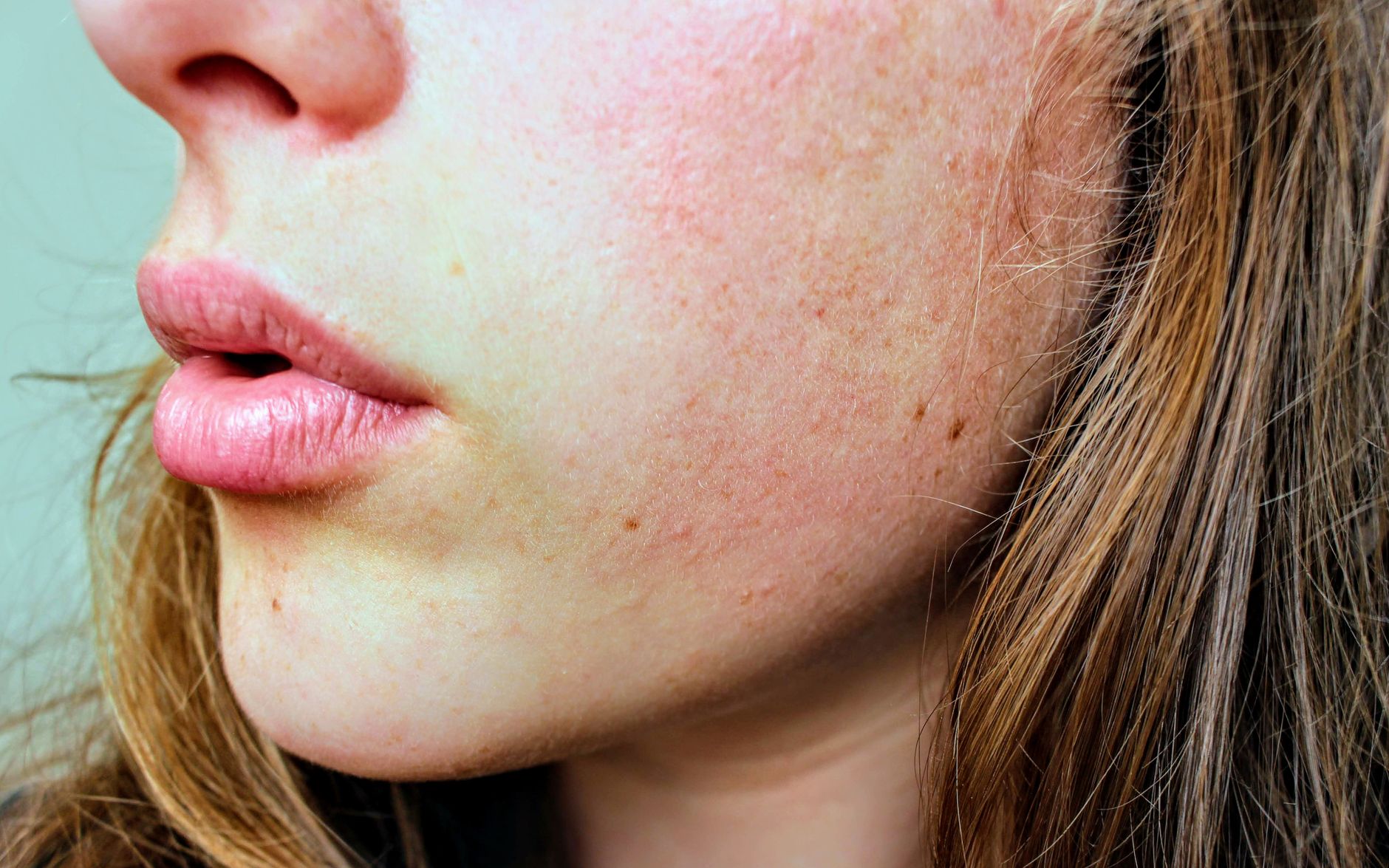
To verify rosacea and acne claims in 2026, check whether a product is an FDA-approved drug with published evidence, not a cosmetic or supplement making unproven statements. The FDA, Federal Trade Commission, and American Academy of Dermatology each define what counts as proof, and marketing language often hides the difference between approved treatment and marketing copy.
Rosacea and acne are distinct inflammatory conditions often confused in product marketing, yet they require different diagnoses and treatments. Readers encounter claims about "cures," overnight results, and products that treat both conditions equally—all of which signal either misleading marketing or misunderstanding of dermatology itself. This guide walks you through what to check, where to look, and which red flags demand verification before you spend money or apply an unproven product to your skin.
Medical information disclaimer: This article is for general educational purposes only and does not provide medical advice, diagnosis, or treatment. Always consult a physician or other qualified health professional about symptoms, medications, tests, or treatment decisions.
Official resources:
- Read the official guidance from NIH — Use this primary source to verify the official guidance.
- Read the original research from NIH — Use this page to review the original research.
Table of Contents
- FDA Approval Is Not One Answer
- Red Flags in Marketing Language
- Rosacea and Acne Are Different Conditions, Not Interchangeable
- What Evidence Supports a Treatment Claim
- How to Verify a Claim Before You Buy
- Why "One Treatment for All" Claims Don't Hold
- Frequently Asked Questions
FDA Approval Is Not One Answer
The FDA does not pre-approve cosmetics the way it approves drugs, which is why you see marketing language like "FDA approved" used differently across products. The FDA's OTC monograph for acne products specifies that only three active ingredients are recognized as safe and effective: benzoyl peroxide (2.5–10%), salicylic acid (0.5–2%), and sulfur (3–10%). Any product claiming acne efficacy must use one of these at the specified concentration or be a prescription drug with its own approval pathway.
Rosacea treatments follow the same rule for prescription and OTC options. The FDA has approved specific drugs including azelaic acid 15% foam, ivermectin cream, sodium sulfacetamide with sulfur, benzoyl peroxide, metronidazole, and low-dose minocycline for oral use. A product making a rosacea claim without one of these active ingredients, or without a prescription from a provider, is either mislabeled or making an unsupported claim. If you see "FDA approved" on a serum, cleanser, or supplement not containing these ingredients, that claim needs verification against the actual ingredient list.
Red Flags in Marketing Language
"FDA approved," "clinically proven," and "overnight cure" are common in skincare marketing but each is an investigation trigger, not proof. The FTC requires that every acne or rosacea product claim be backed by competent, reliable evidence *before* it appears in advertising, and sent warning letters to approximately 670 companies in 2024–2025 for unsubstantiated OTC drug and supplement claims. A product can be legally sold in stores yet lack strong evidence for specific claims about rosacea, acne, or both.
When you see these phrases, ask yourself what evidence the brand is relying on. "Clinically proven" might mean a small, unpublished study or a study done by the brand's own lab. "Overnight cure" violates basic dermatology—inflammatory lesions take days to weeks to resolve even with the strongest approved treatments. If the product has a website, look for a link to actual trial data or a systematic review; if none exists, the claim is likely marketing without substantiation.
Rosacea and Acne Are Different Conditions, Not Interchangeable
Rosacea is diagnosed clinically by two distinct phenotypes: fixed centrofacial erythema with flushing, papules, pustules, or telangiectasia, or phymatous changes with possible ocular involvement. Acne is a separate inflammatory condition of the pilosebaceous unit (hair follicles and oil glands), most common in adolescents and young adults. Both can present as pustules, which is why they are confused, but the underlying pathophysiology, diagnostic process, and treatment are distinct.
Published dermatology research identifies rosacea mischaracterization as a documented red flag, including false claims that rosacea is caused by makeup or diet, and misleading "cure" claims. A product claiming to treat "acne and rosacea equally" or marketed as a cure for either is contradicting dermatology evidence. If you have been diagnosed with one, check the diagnosis against the clinical phenotype before buying a product labeled for both. A dermatologist can confirm which condition you have; products found at a drugstore cannot.
What Evidence Supports a Treatment Claim
When a brand or website cites evidence, check what kind of study it is. The American Academy of Dermatology's 2024 acne guidelines applied GRADE methodology, producing 18 evidence-based recommendations from board-certified dermatologists. This is the current evidence standard for acne; any acne guideline citing "AAD-based" should link to this official document, not to a brand's marketing source.
For new prescription drugs, the FDA requires two Phase 3 clinical trials meeting primary endpoints before approval—for example, IDP-126, the first triple-combination acne gel approved in 2026, was approved after two controlled trials measuring inflammatory lesion-count reduction. A product marketed as "new" or "breakthrough" for rosacea or acne should come with published trial data, not testimonials or in-vitro lab studies. If the brand has no trial data to show you, the product is not clinically proven by the FDA standard.
How to Verify a Claim Before You Buy
Start by identifying the active ingredient and checking whether it's on the FDA's list for your condition. For acne, that list is the OTC monograph (benzoyl peroxide, salicylic acid, or sulfur at specific concentrations). For rosacea, the approved options are azelaic acid, ivermectin, sulfacetamide with sulfur, benzoyl peroxide, metronidazole, or low-dose minocycline. If the product contains one of these, it may be legitimate; if not, any efficacy claim is unsupported.
Next, check the brand's website for trial data or links to published studies. Reliable brands cite sources you can access or link to systematic reviews. If the brand mentions the AAD, FTC guidance, or FDA approval, click those links yourself—don't assume the brand quoted accurately. If a claim has no link or source, assume it's marketing without evidence. Finally, if you have rosacea or acne, a dermatologist can tell you whether a product fits your diagnosis and phenotype; this is faster and more reliable than checking claims online yourself.
Why "One Treatment for All" Claims Don't Hold
Treatment for rosacea must be tailored to phenotype and individual disease severity because symptom combinations vary—flushing drives different choices than pustules or ocular involvement. The same is true for acne; mild comedonal acne needs different treatment than severe inflammatory acne. A product claiming to treat "all rosacea" or "all acne" is contradicting dermatology evidence and likely overstating efficacy for some presentations while being ineffective for others.
This is why verified marketing often includes phrases like "for mild to moderate" or specific phenotypes rather than claiming universal efficacy. If a product sounds like it solves everyone's rosacea or acne problem, it is either not accurate or not tailored to your specific presentation. The more a claim narrows to specific severity, phenotype, or stage, the more likely it reflects actual clinical evidence.
Frequently Asked Questions
Is a product sold at a drugstore automatically FDA approved?
No. Drugstores sell cosmetics, supplements, and OTC drugs all on the same shelf. Only products containing GRASE acne ingredients or FDA-approved rosacea drugs have actual approval for efficacy claims; the rest may be legal to sell but lack proof that they work. Check the active ingredient against the FDA lists above.
Can a product treat both acne and rosacea?
Some FDA-approved active ingredients—benzoyl peroxide and sulfacetamide with sulfur—appear on both the acne monograph and rosacea treatment lists, so yes, under specific conditions. However, a product claiming to treat "all acne and rosacea" is overstating efficacy; treatment must be matched to your specific phenotype and severity, which a dermatologist can determine.
What should I do if a brand won't provide trial data?
Ask directly whether the product has published clinical trial data. If the answer is no, the product may still be safe to use, but claims about efficacy are unsubstantiated. You can also file a complaint with the FTC if a brand is making specific drug claims (acne reduction, rosacea treatment, etc.) without evidence.