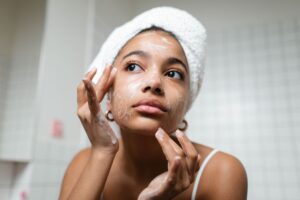
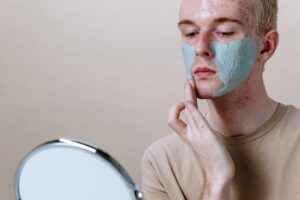
A barrier-friendly teen acne routine for back-to-school in 2026 should be simple: use a gentle cleanser, an evidence-based acne treatment, a plain moisturizer, and daytime sunscreen. For example, a student using over-the-counter adapalene can cleanse after evening practice, apply a thin layer across the acne-prone area once daily, and follow with moisturizer instead of stacking scrubs, acids, and spot treatments. The year 2026 does not introduce a verified, broadly applicable FDA approval that changes this basic approach. One 2026 ClinicalTrials.gov entry involving 1% clascoterone is a Phase III trial, not an FDA approval or new U.S.
indication. Current American Academy of Dermatology guidance still strongly recommends topical benzoyl peroxide, topical retinoids, and appropriate combinations of topical therapies. “Barrier-friendly” is not an FDA-regulated approval category or a standardized clinical claim. Here it describes practical measures—such as moisturizing from the start and reducing treatment frequency when irritation develops—not proof that a product treats acne or will be non-irritating for everyone. Research for this article was checked July 25, 2026, and is reporting material rather than individualized medical advice.
Medical information disclaimer: This article is for general educational purposes only and does not provide medical advice, diagnosis, or treatment. Always consult a physician or other qualified health professional about symptoms, medications, tests, or treatment decisions.
Table of Contents
- What Makes a Teen Acne Routine Barrier-Friendly for Back-to-School?
- Evidence-Based Acne Treatments and Their Irritation Tradeoffs
- Prescription Retinoids for Facial and Truncal Teen Acne
- How to Build a Practical Morning and Evening Routine
- Combination Prescriptions Are Effective but Not Automatically Gentle
- Managing the First Month of Treatment at School
- When a Teen Should See a Dermatologist
- Frequently Asked Questions
What Makes a Teen Acne Routine Barrier-Friendly for Back-to-School?
A barrier-conscious routine pairs effective treatment with steps that make treatment easier to tolerate. That matters for a large audience: the AAD estimates that acne affects about 85% of adolescents. It also matters during the school year, when sports, makeup, shaving, heat, and rushed mornings can complicate an already demanding routine. A practical morning might include gentle cleansing, moisturizer, and sunscreen.
The evening adds one acne treatment used as directed. Compare that with a routine containing an exfoliating cleanser, a leave-on acid, benzoyl peroxide, a retinoid, and an astringent toner: the longer routine is not automatically more effective, but it creates more opportunities for burning, peeling, and skipped applications. Product labels such as “gentle,” “clean,” or “barrier-supporting” should not substitute for ingredient and drug-label review. A moisturizer may help limit treatment-related dryness, but it does not become an acne medication unless it contains an approved active ingredient and is labeled for that use.
Evidence-Based Acne Treatments and Their Irritation Tradeoffs
The current AAD guideline strongly recommends topical benzoyl peroxide and topical retinoids, including adapalene, tretinoin, tazarotene, and trifarotene. It also supports combinations of topical therapies. When topical or oral antibiotics are prescribed, the AAD advises using benzoyl peroxide alongside them to reduce the risk of antibiotic resistance. Over-the-counter adapalene 0.1% gel is labeled for adults and children age 12 and older. The Drug Facts label directs users to apply a thin layer over the entire affected area once daily—not only on visible pimples.
Using it more than once a day will not produce faster results and may increase irritation. Improvement can take up to three months, which means a teen starting shortly before classes should not expect clear skin by the first week of school. Adapalene can cause dryness or irritation, particularly early in treatment. Its label says to stop and consult a doctor if severe irritation develops and to stop and ask a doctor if pregnancy begins or is planned. Adding other strong leave-on products during the first few weeks can make it difficult to tell whether the retinoid itself or the product combination is causing a reaction.
Prescription Retinoids for Facial and Truncal Teen Acne
Prescription trifarotene 0.005% cream, sold as AKLIEF, is FDA-indicated for acne in patients age 9 and older. It is applied once daily in the evening and may be used on both the face and trunk. Its prescribing information specifically recommends using moisturizer from the start of treatment as often as needed—a concrete example of barrier-conscious care tied to an FDA-reviewed label. The evidence included adolescents and body acne. Two 12-week Phase III trials enrolled 2,420 participants age 9 and older with moderate facial and truncal acne; 47% were ages 12–17.
Participants were allowed to use moisturizer with roughly one hour between moisturizer and the study treatment. For a teen with forehead and upper-back acne, that face-and-trunk indication may be more relevant than repeatedly improvising with products labeled only for facial use. Irritation remains possible. Redness, scaling, dryness, and stinging or burning generally peaked during the first four weeks. Depending on severity, the label permits moisturizer, less-frequent application, or a temporary pause. In controlled trials, application-site irritation occurred in 7.5% of AKLIEF users versus 0.3% with vehicle, while sunburn occurred in 2.6% versus 0.5%.
How to Build a Practical Morning and Evening Routine
In the morning, cleanse gently or rinse with water if cleanser twice daily feels drying, then apply moisturizer and sunscreen. A student with an early bus might keep the routine to three products rather than attempting multiple treatment layers before leaving home. Sunscreen is particularly important when a prescribed label warns about sun sensitivity or sunburn, and outdoor athletes may need to reapply according to the sunscreen label. At night, remove sunscreen or makeup, cleanse, allow uncomfortable stinging from washing to settle, and apply the selected medication exactly as directed.
Moisturizer can be applied as instructed by the clinician or product label. The tradeoff is straightforward: a more gradual schedule may take patience, but forcing nightly use through substantial burning can lead to a longer interruption when the skin becomes too irritated. Benzoyl peroxide can be useful as a leave-on product, wash, or part of a prescription combination, but it may dry the skin and bleach towels, pillowcases, or clothing. A teen using it before bed can reserve white towels and let the product dry before touching fabric. Changing three products at once is less informative than introducing one treatment while keeping the cleanser and moisturizer stable.
Combination Prescriptions Are Effective but Not Automatically Gentle
Twyneo is not a generic “gentle” substitute for a basic retinoid routine. It is a prescription fixed-dose cream containing tretinoin 0.1% and benzoyl peroxide 3%, FDA-approved in 2021 for acne in patients age 9 and older. In two 12-week trials involving 858 participants age 9 and older, Investigator’s Global Assessment success was 33.9% versus 14.3% with vehicle in one trial and 26.8% versus 15.1% in the other. Those efficacy results come with tolerability considerations.
Reported application-site effects included pain in 10.6%, dryness in 4.9%, exfoliation in 4.1%, and erythema in 4.0%. A teen already experiencing burning from several over-the-counter products should not assume that a combination prescription will feel milder simply because two treatments are packaged in one cream. Cabtreo is another prescription combination, containing clindamycin phosphate 1.2%, adapalene 0.15%, and benzoyl peroxide 3.1%. It is approved for acne in patients age 12 and older. Although its pivotal studies enrolled some children ages 10–11, the FDA label explicitly states that it is not approved below age 12; trial participation and labeled age eligibility are not interchangeable.
Managing the First Month of Treatment at School
Early irritation can collide with school photos, performances, tournaments, or daily concealer use. If a new retinoid causes mild dryness, a plain moisturizer and label-consistent frequency adjustment may be more useful than adding a scrub to remove flakes.
Severe swelling, blistering, marked pain, or persistent irritation calls for stopping the suspected product and seeking medical guidance rather than covering the reaction with more actives. A simple backpack or locker plan can include sunscreen, lip balm, and a non-medicated moisturizer if permitted by school rules. Acne medication is generally better used on its labeled schedule at home than reapplied impulsively after gym class; the adapalene label specifically warns that using it more than once daily will not work faster.
When a Teen Should See a Dermatologist
Professional evaluation is appropriate when acne is painful, deep, scarring, widespread across the chest or back, causing significant distress, or failing to improve after a consistent trial of an appropriately labeled routine. A dermatologist can distinguish acne from conditions such as folliculitis, perioral dermatitis, or irritation caused by hair and skincare products, which may require a different plan.
Age and pregnancy considerations also affect product choice. OTC adapalene 0.1% is labeled for age 12 and older, prescription trifarotene for age 9 and older, Twyneo for age 9 and older, and Cabtreo for age 12 and older; Cabtreo’s inclusion of 10- and 11-year-olds in trials does not extend its FDA-approved age range below 12.
Frequently Asked Questions
Should a teen use adapalene only as a spot treatment?
The OTC adapalene 0.1% label directs users age 12 and older to apply a thin layer to the entire affected area once daily. Applying extra product to individual pimples or using it more often does not make it work faster and can increase irritation.
Does “barrier-friendly” mean a product cannot cause irritation?
No. “Barrier-friendly” is not an FDA-regulated or standardized clinical category. A product may be described that way when its use includes measures such as moisturizing or adjusting frequency, but individual reactions still vary.
Can benzoyl peroxide be used with an antibiotic acne treatment?
The AAD recommends using benzoyl peroxide with topical or oral antibiotics to help reduce antibiotic resistance risk. The exact schedule should follow the prescription and clinician’s directions.
Is peeling proof that a retinoid is working?
No. Peeling is a possible adverse effect, not a required sign of effectiveness. Persistent burning, severe irritation, or worsening skin damage deserves a pause and medical advice rather than more frequent application.
Is there a new 2026 acne approval that replaces standard teen routines?
No broadly applicable FDA approval identified in the verified 2026 research makes the year itself a treatment breakthrough. The cited 2026 study of 1% clascoterone is a Phase III trial, not an approval or new U.S. indication.
You Might Also Like
- At Least 81% of People Who Use OTC Acne Products Have Never Been Told That Switching Products Every 2 Weeks Prevents Any Treatment From Working
- At Least 31% of Women Over 40 With Acne Don’t Know That Their Hair Products May Be Causing Forehead and Temple Breakouts
- Treasury Yield Forecasts 2026: Analyzing Potential Breakout Scenarios
Browse more: Acne | Acne Scars | Adults | Back | Blackheads