
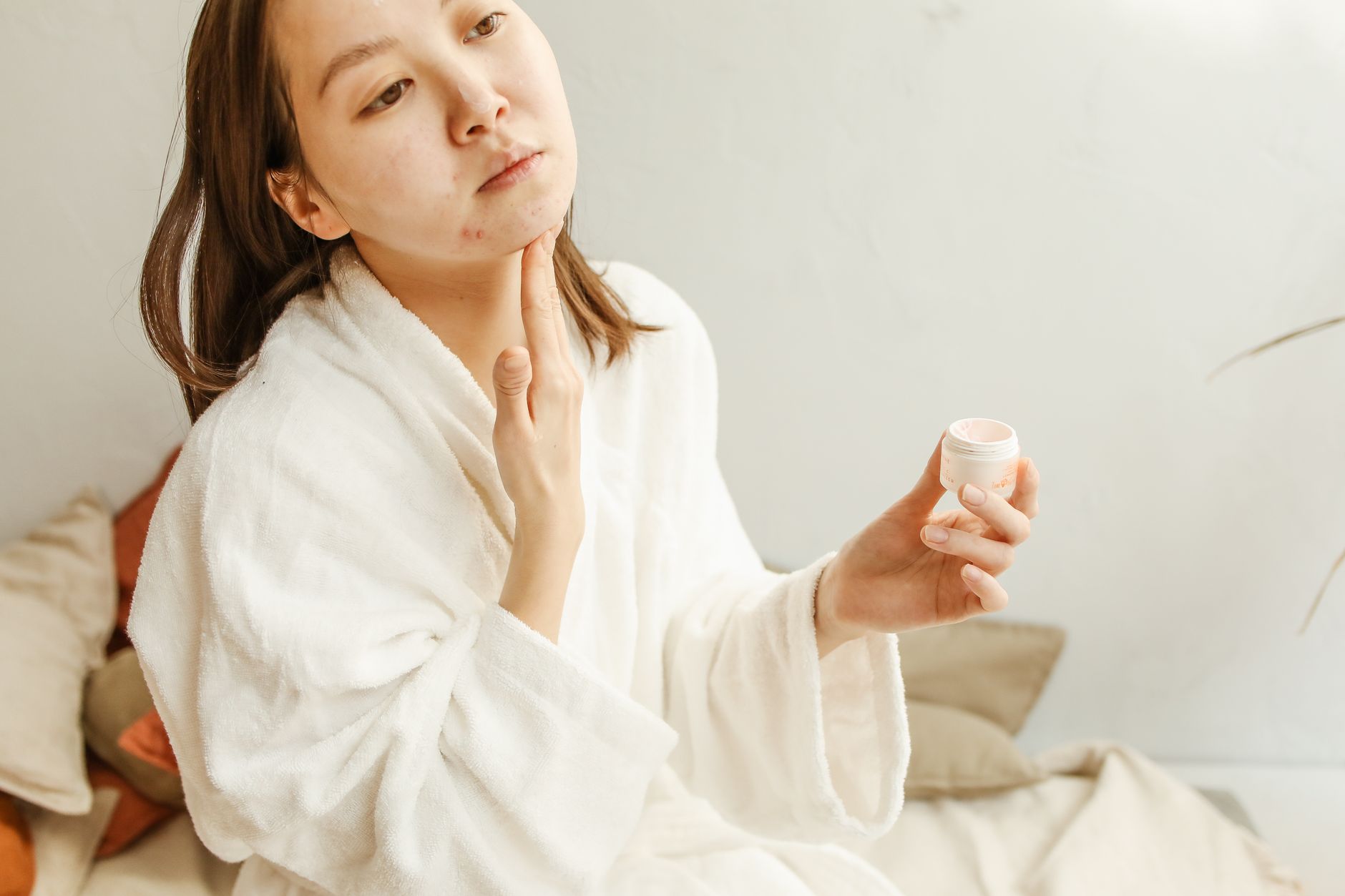
Simplify to three steps: gentle cleanser, one acne treatment, then moisturizer with sunscreen. That single treatment slot replaces overlapping serums, toners, scrubs, and spot products. Non-comedogenic means made not to clog pores. Fewer harsh layers means less dryness and irritation while the active ingredient works.
Medical information disclaimer: This article is for general educational purposes only and does not provide medical advice, diagnosis, or treatment. Always consult a physician or other qualified health professional about symptoms, medications, tests, or treatment decisions.
Table of Contents
- What does a simple routine include?
- What should you cut first?
- Can one product replace several?
- How long should you give it?
What does a simple routine include?
The American Academy of Dermatology advises a three-step order: cleanse, treat, then moisturize or protect. Apply acne medication right after cleansing unless directed otherwise, as explained in this dermatologist guide to getting the most from products.
Wash twice daily and after sweating. Use fingertips and lukewarm water, not washcloths or sponges. The American Academy of Dermatology warns that scrubbing and repeated washing irritate skin and can worsen breakouts.
- Wash with a gentle cleanser morning and night.
- Apply one acne treatment in a thin layer.
- Finish with moisturizer, plus broad-spectrum SPF 30+ in daytime.
What should you cut first?
Choose gentle, alcohol-free, non-comedogenic products. Avoid astringents, toners, and exfoliants because they dry skin and make acne look worse. Details are in this AAD acne-care summary via Newswise.
Keep one cleanser and one moisturizer. Pause extra toners, scrubs, masks, and second or third spot treatments. If two products both contain benzoyl peroxide or a retinoid, keep one. Layering duplicates raises irritation without adding a new action.
Can one product replace several?
Current acne guidelines from the American Academy of Dermatology strongly recommend topical benzoyl peroxide, retinoids, and antibiotics and their fixed-dose combinations. One combination product can therefore replace several separate actives and help adherence. For example, an adapalene plus benzoyl peroxide gel combines two actions in one layer.
Use a thin once-daily layer as directed. The FDA labeling in the National Library of Medicine DailyMed database warns that using more or more often will not clear acne faster. Extra amount may increase dryness, peeling, burning, and irritation, as stated in the FDA label for adapalene plus benzoyl peroxide gel.
How long should you give it?
Most topical acne medicines need 4 to 8 weeks of steady use before improvement, with 6 to 8 weeks commonly cited. Harvard Health gives that timeline in its acne overview. FDA labeling for benzoyl peroxide products calls for sunscreen when outdoors after use.
Retinoid-benzoyl peroxide combinations cause sun sensitivity, so daily broad-spectrum SPF 30+ belongs in a minimal routine. Keep the pared-down routine rather than switching or stacking after two weeks. If there is no improvement after about 6 weeks, or if acne is severe, nodular, scarring, or worsening, a Pharmacy Times clinical review says OTC simplification is not enough and a dermatologist should change therapy.