
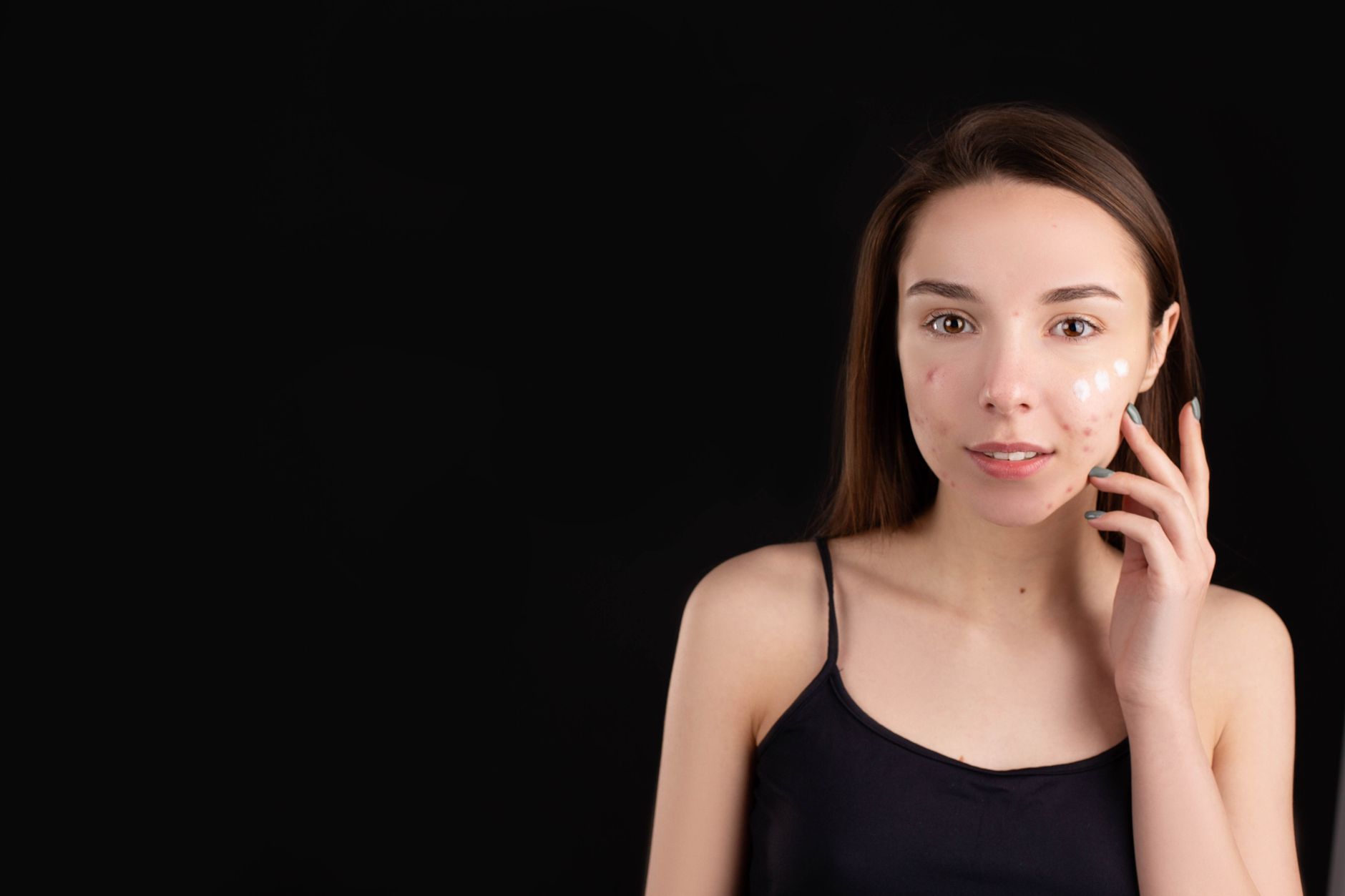
If your face clears but your back does not, reassess dose coverage, mechanical triggers, correct diagnosis, and need for stronger care. Truncal acne — acne on the chest, back, and shoulders — often needs more product, wider spread, and trigger removal. Back skin is thicker with larger oil glands. Hard-to-reach areas also lead to missed spots and stopped treatment.
Medical information disclaimer: This article is for general educational purposes only and does not provide medical advice, diagnosis, or treatment. Always consult a physician or other qualified health professional about symptoms, medications, tests, or treatment decisions.
Table of Contents
- Why does the same product fail on the back?
- Is friction and sweat keeping it active?
- How should application change for large areas?
- When is it not acne or needs stronger care?
Why does the same product fail on the back?
The Journal of Clinical Medicine review explains that face and trunk acne share a similar cause, so facial treatments can suit the back, but surface area and skin traits must shape choice Journal of Clinical Medicine review. Back skin is thicker with larger oil follicles. A pea-sized facial amount rarely covers the trunk.
Reach lowers results too. Middle-back zones get thin, skipped, or irregular coats. Poor coverage looks like treatment failure when dose is the problem.
Is friction and sweat keeping it active?
Shoulders, chest, and back are prone to acne mechanica. Pressure, occlusion, friction, and heat worsen lesions despite good facial control. The Practical Dermatology clinical focus names sports pads, backpacks, tight clothing, and sweat as common triggers Practical Dermatology clinical focus.
Check what touches skin for hours. Heavy gym bags, shoulder pads, tight bras, and sweaty shirts trap heat and rub. Change out of sweaty clothes soon, loosen straps, and clean gear that presses the same spot.
How should application change for large areas?
Large trunk areas need spreadable products and simpler routines. A benzoyl peroxide foam and wash study summary reports that foams improve spread and P.
acnes reduction, while washes ease use and limit fabric bleaching benzoyl peroxide foam and wash study summary. Leave-on foams, lotions, and gels cover wide skin better than thick spot creams.
- Treat the full affected zone, not single pimples
- Use a short-contact benzoyl peroxide wash for hard-to-reach areas
- Ask a clinician about a foam, lotion, or gel for leave-on coverage
- Get help for the center back rather than stretching and missing
When is it not acne or needs stronger care?
Suspect Malassezia folliculitis when bumps are itchy, uniform, and lack blackheads or whiteheads. The Journal of Clinical Medicine review and Dermato-Endocrinology review describe this fungal mimic as poorly responsive to antibiotics and better treated with antifungal care. Do not keep raising acne dose when itch and uniform pustules dominate. Act faster for deep, painful nodules or early scars.
Drugs and Therapy Perspectives reports high risk of hypertrophic scarring and pigment change on the trunk, which are harder to treat than facial scars. The PubMed summary reports trifarotene 50 mcg/g cream, a fourth-generation RAR-gamma retinoid FDA-approved in Oct. 2019 for face and trunk acne in patients 9 years and older, beat vehicle for lesion count and global improvement in two 12-week PERFECT phase 3 trials PubMed summary. Ask promptly about prescription or systemic care when topical coverage fails, nodules persist, or scars form.
You Might Also Like
- Marsai Martin’s Acne Skincare Routine: What Products Did She Share?
- Recovery and Pigment Safety in the 2026 Split-Face Acne Scar Trial: Who Was Studied and Who Was Not for People With Atrophic Acne Scars
- Microbiome-Friendly Acne Care Questions Raised in 2026: Why the Findings May Not Change Acne Care Yet for Adults With Persistent Acne