
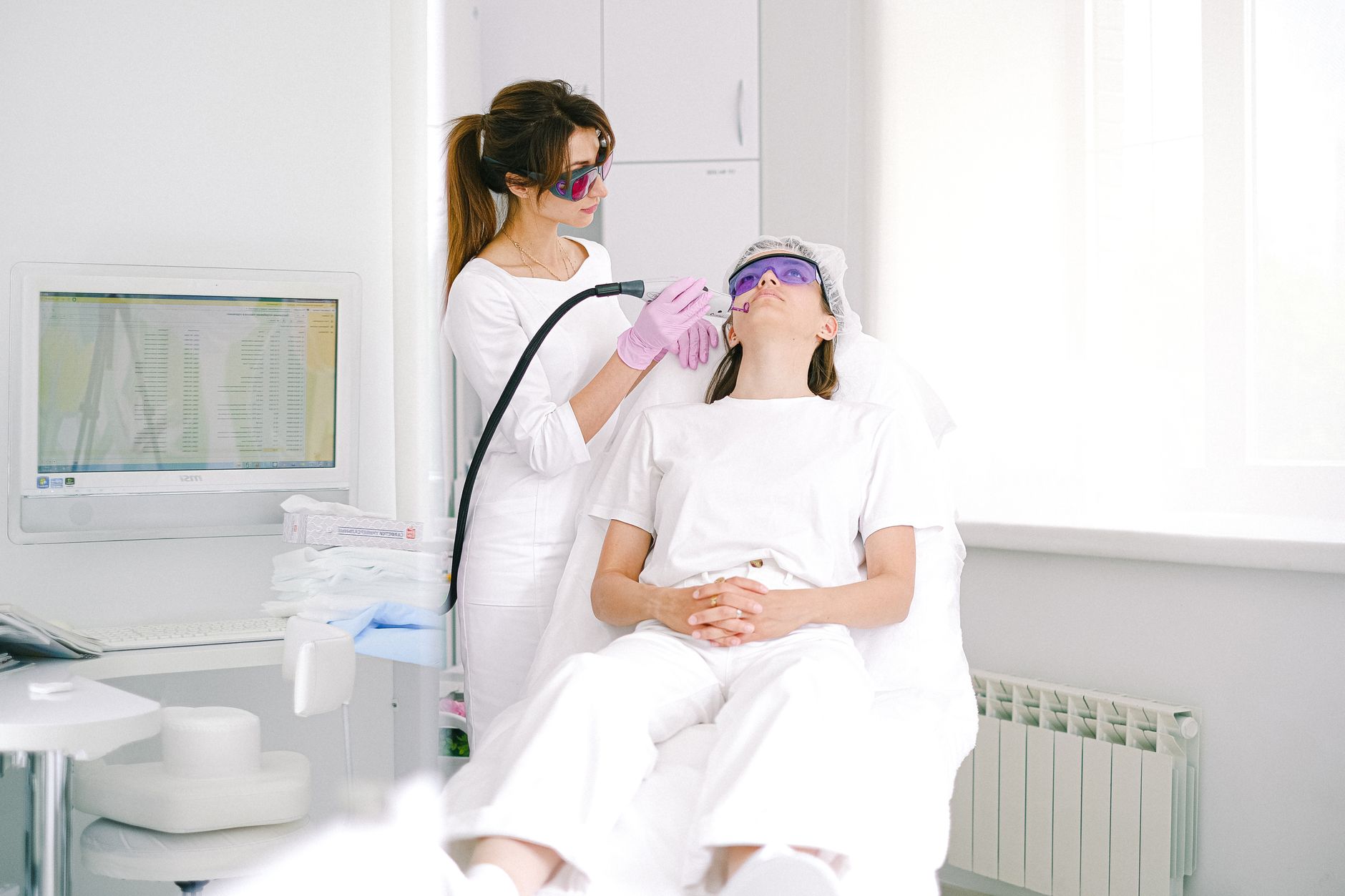
In adults with moderate-to-severe inflammatory acne — red, tender pimples and deep bumps — IPL, PDL and Q-switched 1064-nm Nd:YAG performed similarly in a 36-patient three-arm randomized trial, with no significant differences in lesion counts or severity scores. Safety monitoring found minimal harms, with mild redness in one PDL participant and lower procedural pain with Nd:YAG, according to the U.S.
National Library of Medicine listing in the PubMed trial record. IPL delivers broad-spectrum light, PDL targets small blood vessels, and Nd:YAG uses 1064-nm light that reaches deeper skin. For adults with acne that persists past the teen years, the choice turns on comfort, downtime and close follow-up.
Medical information disclaimer: This article is for general educational purposes only and does not provide medical advice, diagnosis, or treatment. Always consult a physician or other qualified health professional about symptoms, medications, tests, or treatment decisions.
Table of Contents
- What did the head-to-head comparison measure?
- Which option felt easier?
- What skin changes need monitoring?
- How should adults use this evidence?
What did the head-to-head comparison measure?
The trial assigned adults to IPL, pulsed-dye laser or Q-switched Nd:YAG and tracked inflammatory lesions and severity scores through two weeks after the third treatment. Between-group differences were not significant.
Disability scores also fell in all three arms. The Cardiff Acne Disability Index captures how acne affects daily activities and mood, so the drop points to better daily life after treatment.
Which option felt easier?
Pain scores were lower with Nd:YAG than with IPL or PDL, while only one PDL participant developed mild redness. That comfort gap can matter when several sessions are planned. A separate 34-patient split-face trial in skin phototypes III-IV found 1064-nm Nd:YAG and 595-nm PDL equally reduced inflammatory lesions and redness, with fewer side effects on Nd:YAG sides and greater patient preference for Nd:YAG, according to the Laser & Health Academy in its summary of the Jung split-face study.
What skin changes need monitoring?
Short-term redness, swelling, pain and pigment change can follow light and laser sessions. PDL carries a higher chance of purpura, or purple bruise-like spots, plus redness, swelling, pain and post-inflammatory darkening.
A five-year facial-laser safety review reports purpura in about 29% of PDL cases, mainly pigmentary changes with Q-switched Nd:YAG, and redness and blistering with long-pulsed 1064-nm Nd:YAG, according to Springer Nature in the Lasers in Medical Science safety review. Tell the clinic promptly about blisters, spreading redness, severe pain or dark or light patches.
How should adults use this evidence?
The American Academy of Dermatology's 2024 acne guidelines found evidence insufficient to recommend laser and light devices, and conditionally recommended against adding pneumatic broadband light to adapalene 0.3% gel, according to the Academy in its updated guidelines announcement via Newswise. Devices remain an optional adjunct, not a replacement for proven care. Ask the clinic to record the same measures at each visit: Bring your current retinoids, antibiotics, hormonal treatments and sun exposure history, and confirm eye protection, aftercare and when to call.
- inflammatory lesion count and type
- dated photos in the same light
- disability and pain scores
- redness, bruise-like spots, swelling and pigment change
You Might Also Like
- Microneedle Radiofrequency With Low-Dose Isotretinoin in 2026: Safety and Monitoring Questions for Adults With Persistent Acne
- Omega-3 Balance and Acne Questions in the 2026 Diet Review: Balanced-Nutrition Questions for Adults With Persistent Acne
- Diet and Acne Facts and Controversies in the 2026 Review: Balanced-Nutrition Questions for Adults With Persistent Acne