
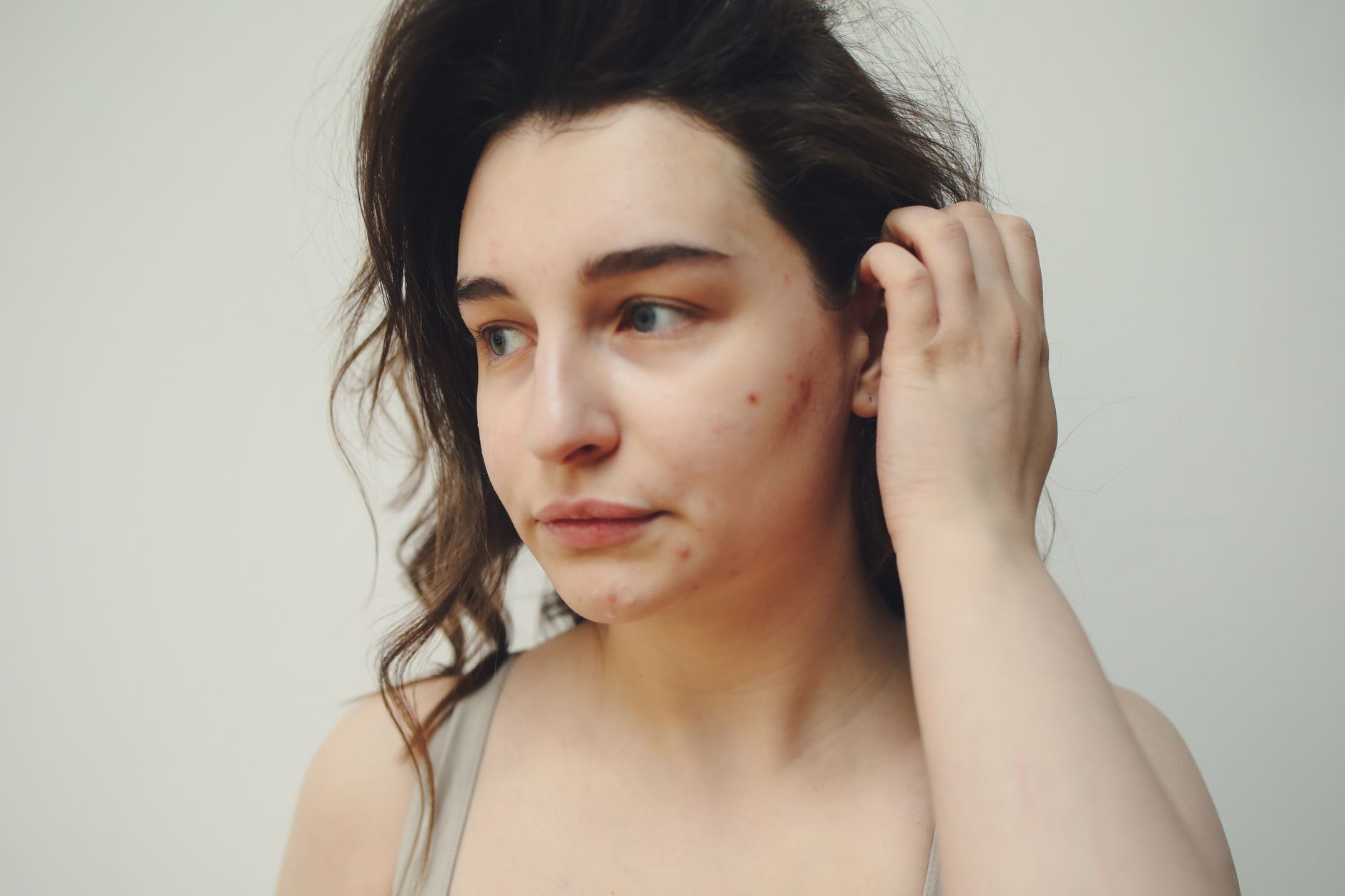
The best washes for body acne in hot weather are those containing proven acne-fighting actives like benzoyl peroxide, salicylic acid, or sulfur—formulated specifically for the chest, back, and shoulders, where heat and friction create ideal conditions for breakouts. If you’re experiencing painful pustules or cysts across your chest and back during warmer months, you’re dealing with acne mechanica, a condition triggered not just by sweat, but by the inflammatory compounds in that sweat itself. Research from the NIH shows that eccrine sweat contains pro-inflammatory cytokines like IL-1α and IL-1β that activate skin cells and worsen acne beyond simple heat and humidity.
The challenge with body acne is that standard facial acne treatments often don’t translate to larger surface areas like the back and shoulders. Clothing friction, occlusion from tight fabrics, and the confined microenvironments created by sweat buildup create perfect conditions for *Cutibacterium acnes* to proliferate. Fortunately, several FDA-approved OTC options are specifically designed for these zones and are supported by robust clinical evidence. The key is matching the right active ingredient to your skin type and acne severity, and understanding how to use it effectively—many people fail to see results not because the product is ineffective, but because they’re not using adequate contact time or they’re using conflicting actives.
Medical information disclaimer: This article is for general educational purposes only and does not provide medical advice, diagnosis, or treatment. Always consult a physician or other qualified health professional about symptoms, medications, tests, or treatment decisions.
Table of Contents
- What Causes Body Acne to Spike in Hot Weather?
- Benzoyl Peroxide for Hot-Weather Body Acne—The Gold Standard
- Salicylic Acid Body Washes—Gentle Yet Effective
- Sulfur-Based Products for Stubborn Body Acne
- Evidence-Based Combination Approaches
- Application Technique—The Missing Link in Treatment Success
- Ingredients to Avoid and Common Mistakes
What Causes Body Acne to Spike in Hot Weather?
acne mechanica—the form of acne triggered by friction, pressure, and occlusion—is the primary culprit behind summer body breakouts on the chest, back, and shoulders. When you exercise, sweat accumulates under your shirt, and tight clothing creates a warm, moist microenvironment that accelerates bacterial growth and sebum oxidation. But the problem extends beyond mechanical irritation. Sweat itself is not just water; eccrine sweat contains inflammatory compounds including IL-1α, IL-1β, and IL-31, which activate epidermal keratinocytes and exacerbate acne severity independent of heat alone.
This explains why some people experience worsening breakouts even when they shower immediately after sweating. The humidity and occlusion factor compounds the issue. On the chest and shoulders, where skin is thicker and sebaceous glands are denser than on the face, the buildup of oil, sweat, and dead skin cells happens faster under clothing. A person wearing a tight workout shirt or a backpack in summer heat creates a pressure-and-occlusion scenario that would be difficult to replicate on the face. Shoulder acne specifically often worsens with backpack use or tight bra straps because the constant friction and pressure trigger inflammatory responses that standard facial routines cannot manage.
Benzoyl Peroxide for Hot-Weather Body Acne—The Gold Standard
Benzoyl peroxide, available in concentrations from 2.5% to 10%, is the most rigorously studied acne-fighting ingredient for body skin and carries over 50 years of safety data as an fda GRASE (Generally Recognized As Safe and Effective) over-the-counter agent. It works by generating free oxygen radicals that disrupt the cellular membranes of *Cutibacterium acnes*, essentially killing the bacteria before it can establish deeper infections. It also has mild keratolytic effects, meaning it helps slough off dead skin cells that would otherwise clog pores—particularly valuable on the back and shoulders where cell turnover is slower than on facial skin.
The American Academy of Dermatology specifically recommends a benzoyl peroxide emollient foam wash applied daily to the chest and back, with contact time of 2 to 5 minutes for optimal effect. Foam formulations are preferable to gels or liquids on body skin because they distribute evenly across larger surface areas and don’t drip as easily from vertical zones like the back. A limiting factor is that benzoyl peroxide can cause irritation, dryness, and bleaching of fabrics—a significant practical concern for someone using it daily on their chest or back. Starting with 2.5% and working up to 5% or 10% helps minimize irritation while maintaining efficacy.
Salicylic Acid Body Washes—Gentle Yet Effective
Salicylic acid, a beta hydroxy acid available in 0.5–2% concentrations, is FDA-approved for OTC acne and offers a gentler alternative to benzoyl peroxide for people with sensitive or easily irritated skin. A 21-day clinical trial published in 2025 evaluated a 2% salicylic acid gel on acne-prone patients and found a 23.81% improvement in acne severity with only 5% of participants reporting mild itching—a safety profile that makes it well-suited for prolonged daily use on larger body areas. The same study found a 49.26% reduction in transepidermal water loss, meaning the product helped maintain skin hydration while treating acne, an advantage for people prone to dryness.
Salicylic acid works as a chemical exfoliant, penetrating the oil-filled pores to dissolve sebaceous plugs from within. On the chest and shoulders, where skin is naturally oilier than the face in many people, this penetrating action is particularly valuable. The tradeoff is that salicylic acid works more slowly than benzoyl peroxide; most studies show measurable improvement over 3 to 4 weeks rather than days. For mild-to-moderate body acne in hot weather, a 2% salicylic acid wash used twice daily is often sufficient, whereas more severe inflammatory acne may require combining salicylic acid with a second active.
Sulfur-Based Products for Stubborn Body Acne
Sulfur, approved by the FDA at concentrations of 3–10%, is one of the oldest acne treatments still in modern use and demonstrates antimicrobial, antifungal, and keratolytic activity. This triple action makes it particularly useful for people whose body acne is accompanied by yeast or fungal involvement—a common scenario on the chest and back where moisture and occlusion favor fungal colonization. FDA-approved formulations include sulfur alone (3–10%) or sulfur combined with resorcinol (2% resorcinol + 3–8% sulfur) or resorcinol monoacetate (3% + 3–8% sulfur).
The primary limitation of sulfur is its odor and cosmetic acceptability; many people find sulfur products unpleasant to apply and difficult to incorporate into daily routines. Additionally, sulfur is less commonly used than benzoyl peroxide or salicylic acid in modern practice, meaning fewer elegant formulations and body-specific delivery systems exist. Adverse events from sulfur are rare, though mild application site reactions such as erythema can occur, and skin irritation or dryness may increase if sulfur is combined with other acne actives simultaneously—a critical consideration if you’re already using benzoyl peroxide or salicylic acid elsewhere on your body.
Evidence-Based Combination Approaches
A network meta-analysis of 179 randomized controlled trials involving approximately 35,000 participants found that retinoids, azelaic acid, and topical antimicrobials were the most effective treatment classes across both inflammatory and non-inflammatory acne lesions. More specifically, eight rigorous randomized controlled trials with 4,596 total participants established strong efficacy data for benzoyl peroxide combined with adapalene (a retinoid), a combination that acts synergistically—benzoyl peroxide kills bacteria while adapalene normalizes cell turnover and reduces sebum production. A 2023 split-face RCT compared this two-drug approach against a three-step regimen combining azelaic acid, salicylic acid, and retinol, finding both approaches equally effective for mild-to-moderate acne.
The critical warning here is that body skin is more prone to irritation than facial skin when multiple actives are stacked, particularly if contact time is prolonged or if products are not adequately spaced apart. Using benzoyl peroxide in the morning and salicylic acid at night, followed by a retinoid, can be effective—but this approach requires starting conservatively and monitoring closely for signs of barrier damage like excessive dryness, erythema, or sensitization. Many people accelerate their improvement by overloading with actives, then abandon treatment entirely when irritation develops.
Application Technique—The Missing Link in Treatment Success
The American Academy of Dermatology’s recommendation of 2 to 5 minutes of contact time for benzoyl peroxide is not arbitrary; this duration allows the active ingredient to penetrate the follicle and exert its bactericidal effect. On the chest and back, where application surface area is large, many people apply the wash quickly and rinse immediately, achieving perhaps 30 seconds of contact—insufficient for efficacy.
A practical approach is to apply the wash, work it into a lather across the affected area, and then leave it sitting while you wash your face or perform other shower tasks, ensuring the full contact window. Foam formulations are superior to gels or liquid washes for body acne because they cling better to vertical surfaces like the back and shoulders, reducing runoff and improving distribution. If your preferred active ingredient (benzoyl peroxide, salicylic acid, or sulfur) is available only as a liquid or gel, applying it to a damp back and chest, allowing it to sit, and then gently rubbing it in can extend contact time compared to a quick rinse application.
Ingredients to Avoid and Common Mistakes
Zinc pyrithione (ZnPT), commonly found in anti-dandruff and anti-fungal body products, is FDA-approved as an antimicrobial but is specifically indicated for dandruff and seborrheic dermatitis, not acne vulgaris. Despite its antimicrobial properties, zinc pyrithione has not demonstrated efficacy for acne in clinical trials and is often included in products marketed toward body skin without scientific justification. If you’re using a zinc pyrithione product hoping to treat acne, you’re likely wasting time and money, and should switch to a benzoyl peroxide, salicylic acid, or sulfur-based wash instead.
A second common mistake is combining sulfur with other acne actives simultaneously. The FDA guidance on topical acne products notes that skin irritation and dryness may increase significantly if sulfur is used in combination with benzoyl peroxide, salicylic acid, or retinoids without adequate spacing or dilution. If you’re exploring a sulfur product, use it alone for the initial treatment period—at least 2 to 4 weeks—before introducing a second active. Similarly, do not mix different wash formulations within a single shower; using both a salicylic acid wash and a benzoyl peroxide wash on the same day, even at different times, increases the risk of cumulative irritation on sensitive chest or shoulder skin.
- —