
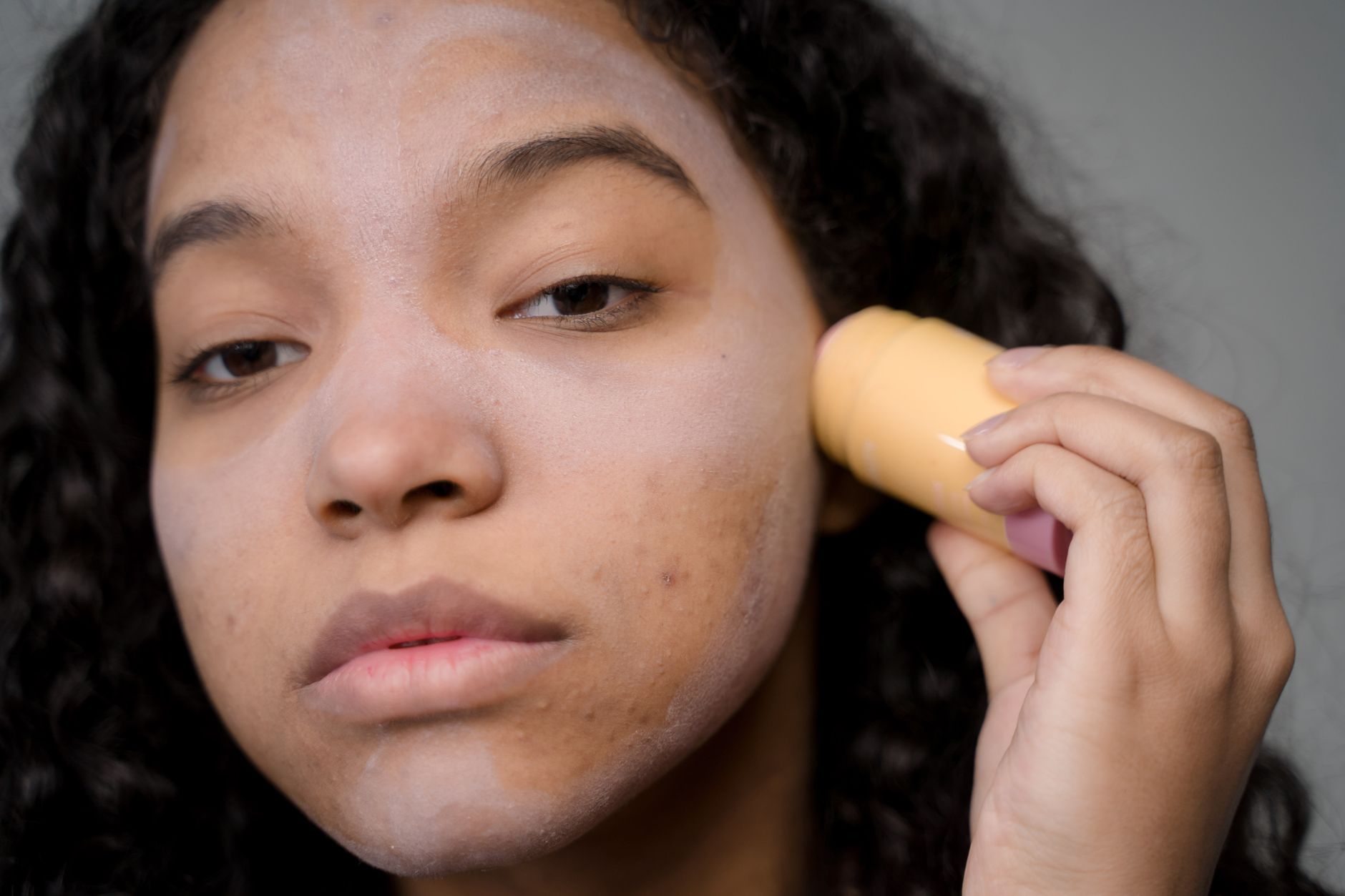
A sunscreen that suits both fungal acne and ordinary acne is a broad-spectrum SPF 30 or higher product built on mineral filters, with as short an oil-and-ester list as the formula allows. In practice that means zinc oxide and/or titanium dioxide, a thin non-greasy base, and a label you read for lipids rather than for the word "non-comedogenic." The reason the two conditions pull in slightly different directions is that they have different causes. Ordinary acne involves clogged pores and *C. acnes*; "fungal acne" is Malassezia folliculitis, an inflammation of hair follicles driven by a yeast that cannot make its own fats and has to take them from your skin — or from whatever you put on it.
Medical information disclaimer: This article is for general educational purposes only and does not provide medical advice, diagnosis, or treatment. Always consult a physician or other qualified health professional about symptoms, medications, tests, or treatment decisions.
Table of Contents
- Why the yeast makes sunscreen a special case
- Which ingredients actually matter
- The limits of the avoid-list
- What to buy
- Telling the two problems apart first
- How to test a new sunscreen on yourself
- Frequently Asked Questions
Why the yeast makes sunscreen a special case
Malassezia is a normal skin yeast. The crucial quirk is metabolic: as the review of Malassezia infections in humans and animals in *Clinical Microbiology Reviews* describes, almost every species lacks a working fatty acid synthase and therefore has an absolute requirement for long-chain fatty acids from outside itself. It grows where lipids are.
That is the whole mechanistic basis for avoiding rich sunscreen vehicles. A thick emollient layer is both an occlusive film over the follicle and a food source sitting on top of it. The clinical picture backs up the pairing. A review of Malassezia folliculitis lists occlusive topical products — make-up, lotions and sunscreens specifically — alongside hot humid weather, sweating and occlusive clothing as aggravating factors, with the yeast's lipase splitting triglycerides into irritating free fatty acids inside the follicle.
Which ingredients actually matter
The common online rule is to avoid all fatty acids and esters with 12 to 24 carbons. The underlying chemistry is more interesting than that blanket version suggests, and it is also less settled. Mayser's work on Malassezia lipolysis found the yeast's esterase has only minor substrate specificity, and that how fast an ester is broken down depends mainly on its alcohol part.
That work, summarised in a 2020 *Mycoses* paper indexed on PubMed, is why ester emollients are suspect and not only free plant oils — isopropyl palmitate and similar ingredients are plausible lipid sources, not inert carriers. But the same research group showed the category is not uniformly bad. Medium-chain fatty acid ethyl esters are activated by the yeast's own enzymes and act *against* Malassezia rather than feeding it, with 3-hydroxypropyl octanoate and undecylenate the most effective tested. So "contains an ester" is not the same finding as "will flare you.".
The limits of the avoid-list
This is the part most ingredient checkers leave out. The avoid-everything-C12-to-C24 rule rests on in vitro culture work — yeast grown in a dish with measured lipids — and no controlled clinical trial has tested specific sunscreen ingredients in patients with Malassezia folliculitis. That does not make the rule useless. It makes it a reasonable precaution rather than a tested standard, which matters when you are deciding whether to reject an otherwise excellent SPF over one mid-list ester.
The label language is weaker still. The FDA notes it does not define or pre-approve terms like "hypoallergenic", and manufacturers need not submit substantiation for cosmetic claims. "Non-comedogenic" sits in the same bucket: a marketing claim, not a standard. Read the ingredient list; treat the front of the bottle as a hint.
What to buy
Mineral filters are the best-documented choice on safety grounds. In its sunscreen order, the FDA proposed zinc oxide and titanium dioxide as generally recognized as safe and effective at up to 25%, while PABA and trolamine salicylate were found not GRASE and twelve other filters still need more data. Products at SPF 15 and above must also meet broad-spectrum requirements.
For acne-prone skin, the American Academy of Dermatology's selection criteria are SPF 30 or higher, broad-spectrum UVA/UVB protection and water resistance, plus packaging that reads non-comedogenic, non-acnegenic, won't clog pores, or oil-free. A practical checklist for both conditions: Sun protection is not optional here. The AAD points out that sun exposure worsens acne by darkening post-acne marks and making them last longer, and it recommends a mineral sunscreen with titanium dioxide and/or zinc oxide for anyone on isotretinoin.
- SPF 30+, broad-spectrum, water-resistant
- Zinc oxide and/or titanium dioxide as the active filters
- A short lipid list — ideally no plant oils, butters or free fatty acids near the top
- Fluid, gel or lotion textures over creams and balms
- Reapplied rather than layered thickly once
Telling the two problems apart first
Choosing the right sunscreen depends on knowing which condition you have, and the two look similar at a glance. A 2025 review in *J Fungi* describes Malassezia folliculitis as mildly itchy, 1–2 mm follicular papules and pustules that are strikingly uniform in size, with no comedones — no blackheads or whiteheads. That last detail is the useful one.
Itchy, monomorphic bumps that do not respond to acne treatment point toward the yeast rather than toward a comedogenic product, and the fix is antifungal treatment, not a different SPF. If you do have both, the mineral, low-lipid formula above satisfies each. If you only have ordinary acne, the fatty-acid restrictions do not apply to you, and ruling out good sunscreens on that basis narrows your options for no benefit.
How to test a new sunscreen on yourself
Because the ingredient rules are precautionary rather than trial-tested, your own skin is the better evidence. Introduce one new sunscreen at a time and give it two to three weeks before judging it — long enough for follicular flares to appear, short enough to notice what changed. Apply it to a limited area first if you have flared badly before: one cheek, or the jawline where fungal folliculitis often shows.
Keep the rest of your routine fixed during the trial, since a new moisturiser or a humid week will confound the result. Watch the heat and sweat side too. The folliculitis review lists hot humid weather, sweating and occlusive clothing as aggravators in their own right, so a flare during a heatwave may be the climate rather than the bottle.
Frequently Asked Questions
Is a chemical sunscreen off-limits with fungal acne?
No. The concern with fungal acne is the lipid vehicle, not the UV filter. Mineral filters have the strongest FDA safety documentation, but a lightweight chemical sunscreen with few oils and esters is a reasonable option.
Does "oil-free" mean Malassezia-safe?
Not reliably. Oil-free rules out plant oils but not ester emollients, which Mayser's work suggests the yeast can also break down. Scan the full list rather than the front label.
Should I avoid every ingredient on a fungal-acne blocklist?
Treat those lists as a starting filter, not a verdict. They derive from culture studies, no clinical trial has tested sunscreen ingredients in patients, and some medium-chain esters are actively antifungal.