
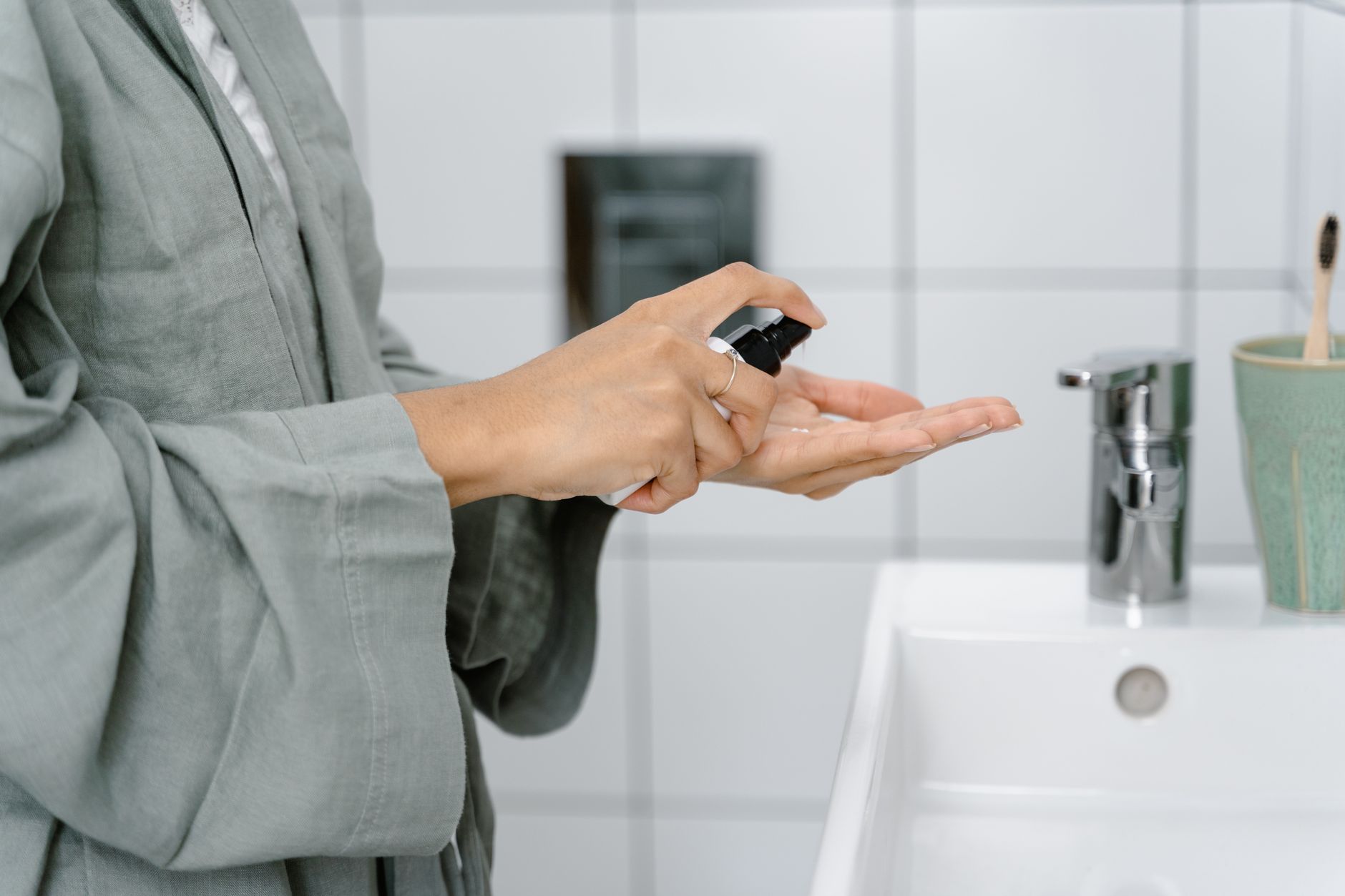
No, overusing hand sanitizer does not trigger fungal acne on the hands. Cleveland Clinic describes fungal acne as Malassezia folliculitis, an overgrowth of yeast inside hair follicles that forms clusters of uniform, often itchy bumps Cleveland Clinic overview.
Heavy sanitizer use injures surface skin instead, so new hand bumps fit irritant contact dermatitis or hand eczema. Typical yeast breakouts favor sebum-rich, hair-bearing areas such as the forehead, scalp, chest, back, shoulders and upper arms. Hands lack that oily follicle environment, so they fall outside the usual pattern.
Medical information disclaimer: This article is for general educational purposes only and does not provide medical advice, diagnosis, or treatment. Always consult a physician or other qualified health professional about symptoms, medications, tests, or treatment decisions.
Table of Contents
- Why hands do not fit the pattern
- What heavy sanitizer use does to skin
- How irritation looks different
- A hand routine that protects skin
Why hands do not fit the pattern
Cleveland Clinic places yeast folliculitis on the forehead, scalp, chest, back, shoulders and upper arms. Those sites offer dense follicles and sebum that support yeast growth. Palms and most hand surfaces carry little of that mix.
The Journal of Clinical and Aesthetic Dermatology lists heat, humidity, sweat, oily or occlusive products, prolonged antibiotics, topical steroids and weakened immunity as drivers. Frequent sanitizer use is absent from that trigger set. A new hand rash after overuse fits barrier injury more closely.
What heavy sanitizer use does to skin
Alcohol formulas strip surface lipids and increase water loss from the outer layer. The MicroBiome Bank guide links repeated use to dryness, cracking, redness and irritant dermatitis, especially with fragrance or cracked skin guide to alcohol sanitizers and skin.
Heavy use also shifts the amount, diversity and mix of hand microbes. A Cureus review connects that disruption to eczema, atopic dermatitis and easier colonization by harmful bacteria.
How irritation looks different
Irritation centers on exposed hand skin, with dryness, roughness, redness, tightness and sting after the next pump. Yeast breakouts form many small, uniform follicle bumps in oily zones and often itch after heat and sweat. Cracked knuckles that burn, flake or bleed point away from follicle infection.
Swap scented products for plain cleansers and avoid scrubbing sore skin. Watch for spreading redness, blisters, oozing, severe itch or pain that limits work and sleep. Those signs call for prompt dermatology care rather than acne treatment.
A hand routine that protects skin
The American Academy of Dermatology advises reserving sanitizer with at least 60% alcohol for times without soap and water dermatologists' tips for dry skin. Let it dry fully, then apply fragrance-free cream or ointment.
Fragrance-free care lowers added irritation on cracked skin. Keep nails short, wear gloves for harsh chores and reapply cream after washing.
- Wash with soap and water first when possible.
- Use 60% alcohol sanitizer only without a sink.
- Let sanitizer dry, then seal with plain cream.
- Stop scented products while hands heal.
- Seek dermatology care for rash that persists.