
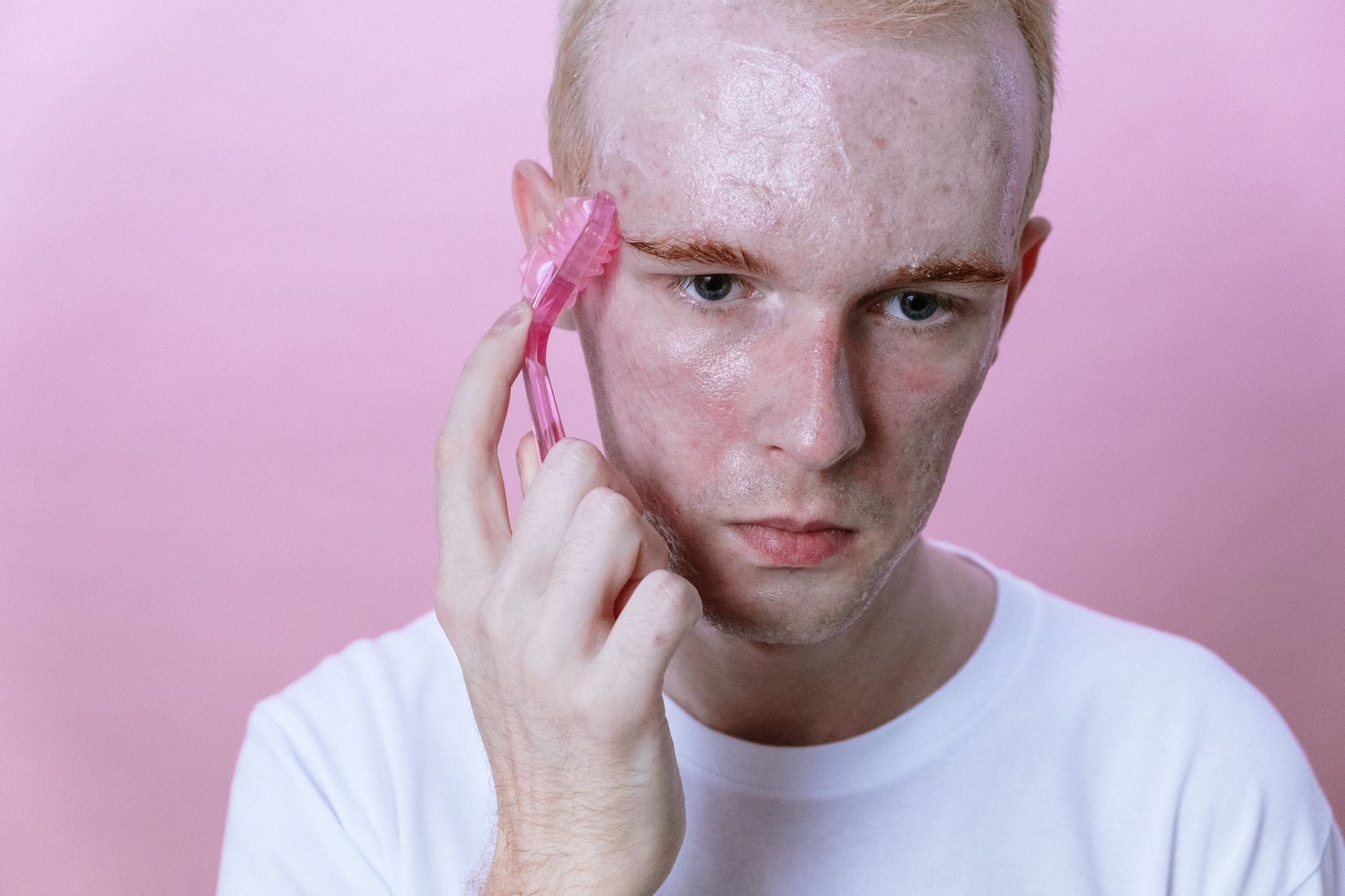
A moisturizer that is safe for both fungal acne and ordinary acne is an oil-free, non-occlusive product that avoids the long-chain fatty acids and heavy emollients Malassezia yeast feeds on. In practice that means a light water-based gel or lotion labeled "oil-free" and "non-comedogenic," with no added plant oils or fatty-acid-derived emollients high on the ingredient list. Fungal acne — properly Malassezia folliculitis — is an itchy eruption of small uniform papules and pustules, usually on the upper trunk, caused by yeast inside the hair follicle rather than by acne bacteria. It can sit alongside true acne, which is why one product has to satisfy both sets of rules at once.
Medical information disclaimer: This article is for general educational purposes only and does not provide medical advice, diagnosis, or treatment. Always consult a physician or other qualified health professional about symptoms, medications, tests, or treatment decisions.
Table of Contents
- Why moisturizer ingredients matter more here than cleansing
- Which ingredients actually feed the yeast
- What the labels do and do not promise
- Moisturizing during an active flare
- Who needs to be most careful
- When to stop swapping products and get a diagnosis
- Frequently Asked Questions
Why moisturizer ingredients matter more here than cleansing
Malassezia cannot make its own fatty acids. A 2022 review of Malassezia lipases in PubMed Central explains that the yeast lacks the fatty acid synthase gene and must scavenge lipids from its environment — your sebum, and whatever you apply. That is the biological reason the leave-on product outranks the wash.
A cleanser is on the skin for a minute; a moisturizer sits in the follicle all day supplying either food or nothing. It also explains why the product can be the aggravator. DermNet's page on Malassezia folliculitis states the condition is worse in warm, humid conditions and is made worse by applying occlusive emollients and sunscreens.
Which ingredients actually feed the yeast
"All oils feed it" is too crude. In defined-medium growth testing reported in a 2025 study in PubMed Central, *Malassezia furfur* and *M.
pachydermatis* grew efficiently on a minimal medium supplemented with palmitic acid (a 16-carbon fatty acid) but barely grew at all on myristic acid (14 carbons). So the yeast's appetite is chain-length specific. Practical reading of an ingredient list:.
- Plant oils and butters, and esters built on long-chain fatty acids, are the ones to screen out first.
- Occlusive finishes matter independently of chemistry — a heavy film traps sweat and sebum, which is food already on your skin.
- Humectants and water-phase ingredients like glycerin and hyaluronic acid are not fatty acids and are not the problem.
- The shorter the ingredient list, the easier the screen.
What the labels do and do not promise
For acne-prone skin, the American Academy of Dermatology tells patients to look for "oil-free," "non-comedogenic," or "won't clog pores," and to moisturize daily, because benzoyl peroxide, salicylic acid and retinoids dry and irritate the skin. Moisturizing is what makes acne treatment tolerable enough to continue. The AAD is equally clear about the limits: the label is not a guarantee, some products marked non-comedogenic still cause acne in a few people, and trying different products is expected. In studies, most patients saw less acne four to eight weeks after starting an acne-friendly moisturizer.
The terms carry no regulatory force. The FDA's guidance on cosmetics labeling claims states the agency keeps no list of approved or accepted claims and that manufacturers need not submit substantiation; claims must only be truthful and not misleading. The FDA's own attempt to define a comparable term, hypoallergenic, was struck down in court. Read the ingredient list, not the front of the jar.
Moisturizing during an active flare
DermNet's folliculitis guidance takes the stricter line during treatment: avoid moisturizers, stop any antibiotics, and use topical or oral antifungals for several weeks. If a moisturizer is still needed, choose an oil-free product, because it is less likely to cause occlusion.
That is worth separating from maintenance. During a treated flare, less is better. Once the skin is clear — or if you are using a drying acne treatment and cannot skip moisturizer — a light oil-free product daily is the sustainable position.
Who needs to be most careful
Documented risk factors go beyond products. DermNet lists high sebum production, excessive sweating, antibiotic use, and immunosuppression, including topical or oral steroids and HIV.
Two of those overlap directly with acne care. Anyone on oral antibiotics for acne, or using topical steroids for another condition, is in the group most likely to develop Malassezia folliculitis and most likely to need a yeast-conscious moisturizer rather than a generic one.
When to stop swapping products and get a diagnosis
The condition follows a chronic-relapsing course. A 2025 review in PubMed Central describes it responding quickly to antifungals but recurring frequently, which is why maintenance — such as weekly antifungal application — plus a non-occlusive daily moisturizer matters more than any single treatment course.
Moisturizer choice is adjunctive, not curative. A 2024 review in PubMed Central notes there is no internationally approved treatment guideline for Malassezia folliculitis and that topical azoles or selenium sulfide clear most cases. Use that as your stopping rule: persistent "acne" that itches, looks uniform, and does not respond to acne therapy warrants a dermatology appointment and a diagnosis, not a fourth moisturizer.
Frequently Asked Questions
Can one moisturizer really work for both fungal acne and regular acne?
Yes. An oil-free, non-comedogenic, water-based product with no plant oils or long-chain fatty-acid emollients satisfies both the AAD's acne advice and DermNet's non-occlusion rule.
Does "non-comedogenic" mean fungal acne safe?
No. Comedogenicity testing is about pore blockage, not yeast nutrition, and the FDA does not regulate the term at all. A product can be non-comedogenic and still contain fatty acids Malassezia uses.
Should I skip moisturizer entirely if I suspect fungal acne?
DermNet advises avoiding moisturizers during antifungal treatment. If a drying acne treatment makes that impossible, use an oil-free product sparingly and raise the conflict with a clinician.
How long before I know a moisturizer is working for my acne?
The AAD reports most patients in studies saw less acne four to eight weeks after starting an acne-friendly moisturizer, so judge it over weeks rather than days.