
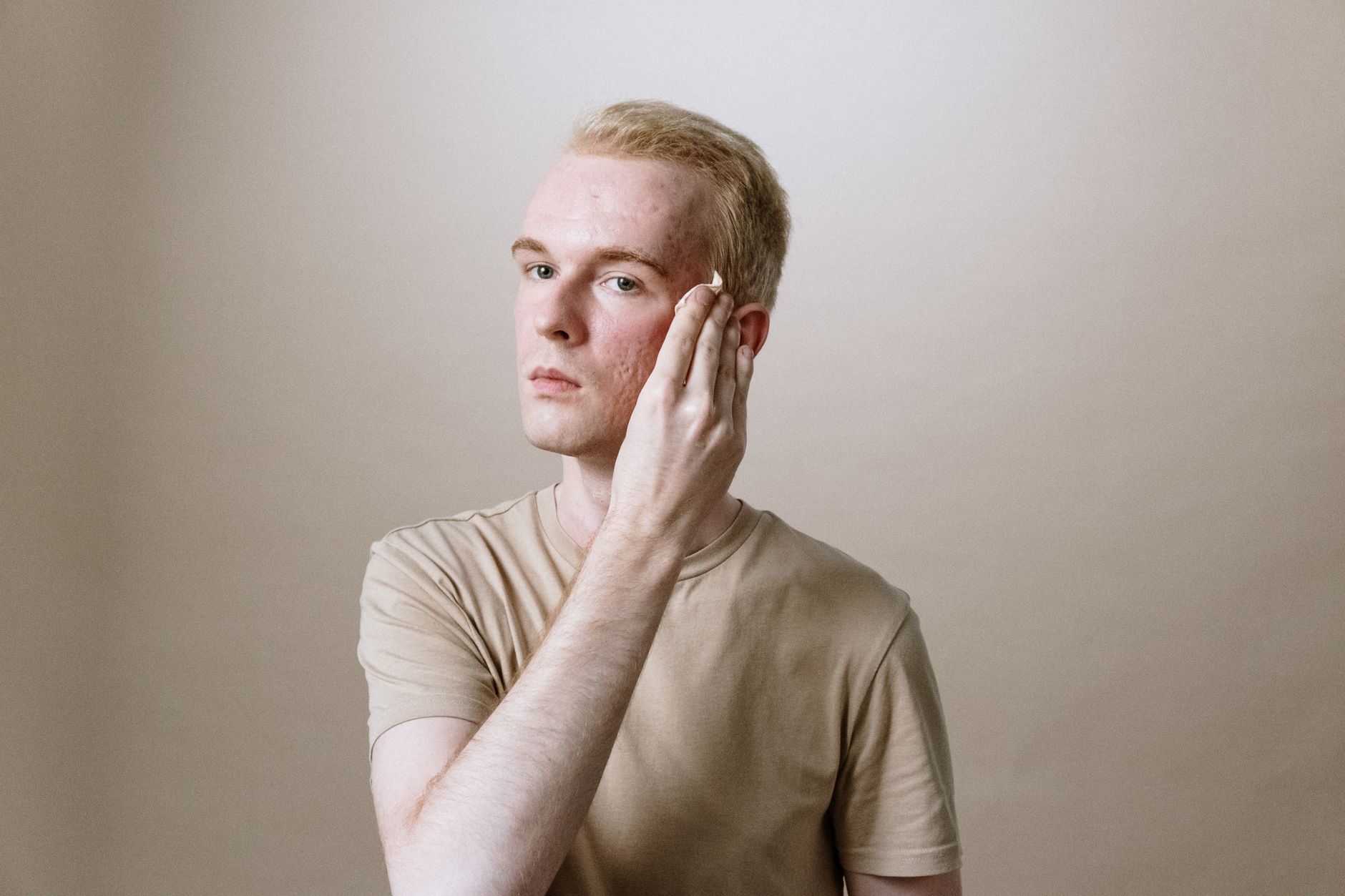
There is no dermatologist-endorsed brand of "fungal acne safe" foundation, because no regulator tests or certifies that claim. What dermatology guidance does support is a narrower rule: for acne-prone skin, use makeup labeled non-comedogenic or "won't clog pores," skip heavy oily formulas, apply it with clean tools, and remove it fully before bed — advice the American Academy of Dermatology gives directly to acne patients. "Fungal acne" is the common name for Malassezia folliculitis, an itchy, uniform bumpy rash caused by yeast in the hair follicles. The reason people hunt for oil-free, ester-free foundation is a real biological fact about that yeast — but foundation choice is a comfort and maintenance decision, not a treatment.
Medical information disclaimer: This article is for general educational purposes only and does not provide medical advice, diagnosis, or treatment. Always consult a physician or other qualified health professional about symptoms, medications, tests, or treatment decisions.
Table of Contents
- Why oils in foundation matter for Malassezia
- Is it fungal acne or ordinary acne?
- What foundation cannot do
- How strong is the evidence against foundation?
- What the labels on the bottle are worth
- A practical routine for Malassezia-prone skin
- Frequently Asked Questions
Why oils in foundation matter for Malassezia
Malassezia yeasts cannot build their own long-chain fatty acids. Research published in the International Journal of Molecular Sciences notes they lack the fatty acid synthase gene and must scavenge lipids from the skin around them. That single gap is the entire logic behind avoiding oils, fatty esters and rich emollients in a "fungal acne safe" routine. The yeast also makes lipases — enzymes that split triglycerides into free fatty acids.
A 2024 review of Malassezia folliculitis pathogenesis describes the condition as follicular blockage plus inflammation, with those released fatty acids feeding the inflammatory side. Occlusive, oil-rich face products are a plausible aggravator on that mechanism. Plausible is the honest word. The biology explains why an oil-free foundation is a reasonable choice; it does not show that switching foundation clears a rash.
Is it fungal acne or ordinary acne?
These are two different targets, and the foundation question is not the same for each. A 2025 review in the Journal of Fungi reports that Malassezia folliculitis remains underdiagnosed, is most common in warm humid climates and in immunosuppressed people, favors the trunk, chest and back, and is distinguished from acne vulgaris by the absence of comedones. That last point is the practical test.
Blackheads and whiteheads point to acne vulgaris. Dozens of same-sized itchy papules, often below the jaw and onto the chest and back, point toward the yeast. Signs worth taking to a clinician:.
- Itch, which ordinary acne rarely causes
- Uniform small bumps with no blackheads among them
- Flares after sweating, humidity, or occlusive clothing
- A rash that got worse, not better, on antibiotics for acne
What foundation cannot do
Skincare and makeup choices are not curative in significant cases. The same Journal of Fungi review notes that more severe or immunocompromised cases are treated with oral itraconazole or fluconazole, and that one prospective series cleared 75% of patients with systemic ketoconazole and all 20 of 20 with systemic plus topical treatment.
Read that as a boundary. If the rash is established, an oil-free foundation changes what you put on top of it; the antifungal is what treats it. Spending weeks auditing ingredient lists before seeing a clinician delays the step that actually works.
How strong is the evidence against foundation?
Weaker than the internet suggests. A case-control study of 151 women — 81 with acne, 70 controls, run at Sun Yat-sen Memorial Hospital between October 2022 and April 2023 — found foundation use in 26.5% of cases versus 14.6% of controls, an unadjusted odds ratio of 2.13 (1.09–4.15), P=0.03. Then the signal thinned.
In the published analysis, only powder products (OR 3.47, 1.58–7.59) and comedogenic facial cleansers (OR 2.49, 1.23–4.90) stayed significant after adjustment. Foundation was the weakest of the three associations, and a case-control design cannot establish cause. Two things follow. Your cleanser may matter more than your foundation, and a single small study of 151 women is not grounds for discarding a product that is working for you.
What the labels on the bottle are worth
"Non-comedogenic" has no required test behind it. A 2025 clinical review in JAAD Reviews states that comedogenicity may be assessed by the rabbit ear model or by cyanoacrylate biopsy, but that "there is still no universal industry standard that determines the veracity of a noncomedogenic label" — and that rabbit-ear ratings gave inconsistent results on human skin. "Fungal acne safe" is looser still.
The FDA states that it keeps no list of approved or accepted cosmetic claims and does not define terms such as "hypoallergenic"; claims need only be truthful and not misleading. No agency verifies that a foundation is safe for Malassezia-prone skin, and the third-party ingredient checkers people rely on are hobbyist tools, not regulatory ones. So treat the label as a starting filter and your own skin as the evidence. Introduce one new foundation at a time and give it three to four weeks before judging it.
A practical routine for Malassezia-prone skin
The AAD's makeup guidance for acne patients transfers cleanly here: choose products labeled non-comedogenic or "won't clog pores," avoid heavy oily makeup, apply with clean tools rather than fingers, never share products, and remove everything before bed with an oil-free remover. Add the two adjustments the yeast's biology justifies: If the bumps are itchy, uniform, and comedone-free, book the appointment rather than the next foundation. Diagnosis is made on clinical pattern and, when needed, microscopy — and the treatment that cleared 20 of 20 patients in that series was a prescription, not a product swap.
- Wash brushes and sponges weekly — they hold oils and skin lipids from previous use
- Remove makeup promptly after workouts, not hours later
- Prefer a light coverage you can wear thinly over a full-coverage formula applied in layers
- Keep the rest of the routine oil-free too, since the foundation sits on top of whatever is beneath it
Frequently Asked Questions
Can a foundation cause Malassezia folliculitis?
No study shows that. The mechanism — Malassezia needing external lipids and releasing free fatty acids through its lipases — makes oil-rich occlusive products a plausible aggravator of an existing rash, not a documented cause.
Are powders safer than liquid foundations?
Not according to the 2025 case-control study. Powder products were the one cosmetic category whose association with acne stayed significant after adjustment, at OR 3.47.
Should I stop wearing makeup entirely while treating fungal acne?
Dermatology guidance does not require that. The AAD's advice is to switch to non-comedogenic products, apply with clean tools, and remove them fully each night.