
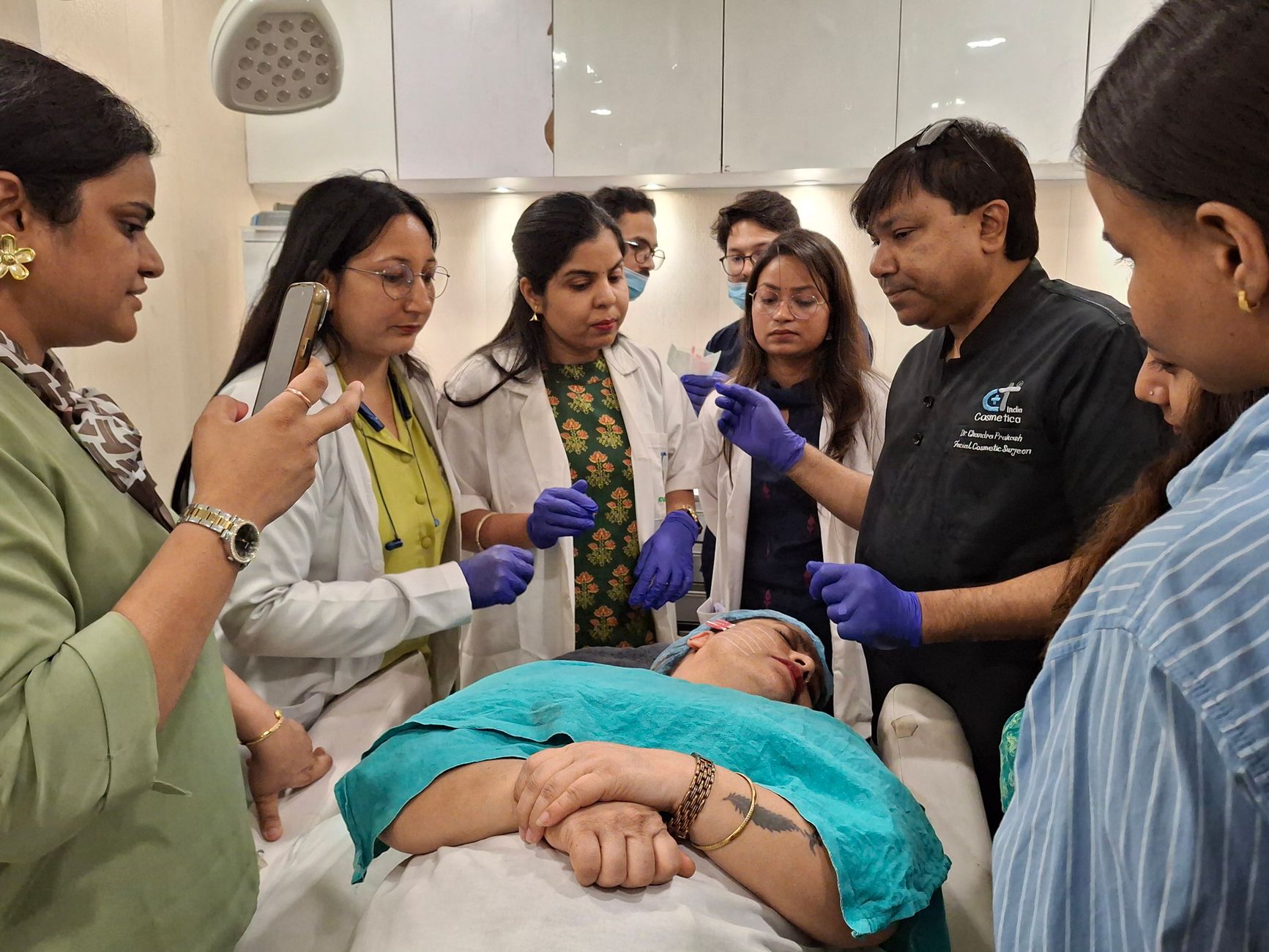
A 2026 randomized split-face trial found both subcision alone and suction-assisted subcision improved atrophic acne scars (depressed scars). The suction-treated side earned higher physician-rated and patient-rated improvement scores, so people comparing procedures need both viewpoints. Doctor scores and patient scores do not always move together. Knowing what each measures helps you ask better questions at a consult.
Medical information disclaimer: This article is for general educational purposes only and does not provide medical advice, diagnosis, or treatment. Always consult a physician or other qualified health professional about symptoms, medications, tests, or treatment decisions.
Table of Contents
- What did the trial compare?
- Why did suction score higher?
- What do scar counts miss?
- How should you compare options?
What did the trial compare?
The trial used a split-face design. One side received subcision alone. The other side received subcision plus suction. The U.S. National Library of Medicine / PubMed lists the study as a 2026 Dermatologic Surgery trial published Oct.
1, 2026, after e-publication Apr. 23, 2026. Both sides improved significantly in the people studied 2026 trial record. Skin Therapy Letter explains subcision rasps under the dermis to sever fibrous bands. That controlled injury triggers reactive fibrosis. The new tissue gradually lifts the depressed scar upward over weeks subcision explainer.
Why did suction score higher?
In that PubMed record, physician-rated Acne Scar Improvement Grading Scale scores were higher on the suction side, p=.002. Patient-rated scores were also higher on the suction side, p=.026.
The authors concluded subjective assessments favored suction-assisted subcision. They suggested the benefit was perceptible in the clinic even when scar counts changed less.
What do scar counts miss?
The Cochrane Library notes objective measurement often uses the Goodman and Baron quantitative global scale. It scores severity by scar type and number of lesions Cochrane review of scar treatments. A lower lesion count does not always mean skin looks better to the person living with it.
Texture, unevenness, and daily appearance can matter more than the count. A Research Square preprint reports dermatologists found no difference at 1 and 4 months in a related rater-blinded split-face trial. Patients rated suction higher only at 1 month preprint split-face results.
How should you compare options?
Practically, request both blinded objective counts and patient satisfaction data. Ask also about bruising and downtime.
The 2026 results show these outcomes do not move together. Bring photos taken in the same lighting to your visit. Ask the clinic how it tracks both doctor-measured change and patient-rated change.
- Ask for physician-rated improvement scores by procedure
- Ask for patient-rated improvement and satisfaction rates
- Ask about bruising, swelling, downtime, and sessions needed
You Might Also Like
- Subcision With Suction for Acne Scars in a 2026 Split-Face Trial: How People With Atrophic Acne Scars Can Compare Acne Scar Procedures
- The 33-Patient RF Microneedling vs CO2 Acne Scar Trial in 2026: Questions People With Atrophic Acne Scars Can Ask Before a Procedure
- Recovery and Pigment Safety in the 2026 Split-Face Acne Scar Trial: Pigment, Pain, and Recovery Questions for People With Rolling Acne Scars