
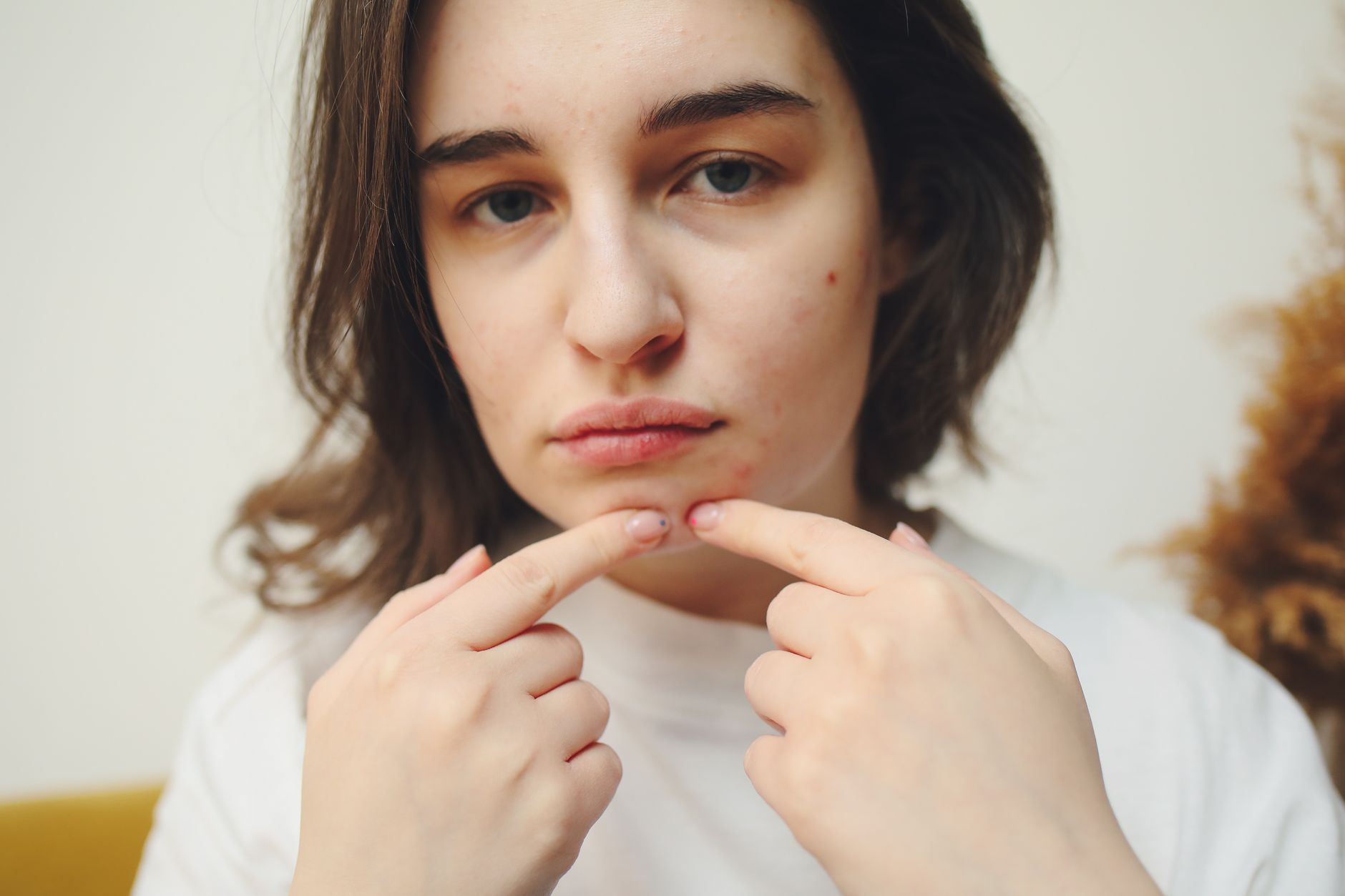
Yes, people with acne can wear makeup, but some products can trigger acne cosmetica—breakouts linked to cosmetics. The safest approach combines non-comedogenic products, gentle cleansing, and careful makeup hygiene. Makeup can also help people feel comfortable while acne treatment works. These answers explain what to choose, how to apply it, and when cosmetics may be worsening breakouts.
Medical information disclaimer: This article is for general educational purposes only and does not provide medical advice, diagnosis, or treatment. Always consult a physician or other qualified health professional about symptoms, medications, tests, or treatment decisions.
Table of Contents
- Which makeup is least likely to worsen acne?
- How should you apply makeup while using acne treatment?
- What is the right way to remove makeup?
- Can makeup brushes or cosmetics spread acne?
- Frequently Asked Questions
Which makeup is least likely to worsen acne?
Look for products labeled "oil-free," "non-comedogenic," or "won't clog pores." The American Academy of Dermatology recommends these labels for acne-prone consumers, but no label guarantees that every product will suit every person. American Academy of Dermatology guidance on makeup and acne Acne cosmetica can result from foundation, concealer, blush, or lip products. Breakouts may appear days after exposure or develop gradually over as long as six months, making the trigger difficult to identify. If a new product seems connected to breakouts, stop using it and simplify your routine.
Reintroduce products one at a time after your skin settles so you can identify possible problem products more clearly. "FDA-approved makeup" is not a useful shopping standard in the United States. The FDA generally does not preapprove cosmetics, cosmetic ingredients, or cosmetic labeling before sale; companies remain responsible for product safety and truthful labeling. U.S. Food and Drug Administration cosmetics FAQ.
How should you apply makeup while using acne treatment?
Apply acne medication before makeup, allowing the treatment to form the first skincare layer. Use makeup gently rather than rubbing or repeatedly touching active breakouts. Cleanse gently twice daily and after sweating.
Scrubbing can irritate the skin and worsen breakouts, so a rough cloth, abrasive scrub, or forceful rubbing is not a better treatment strategy. Common over-the-counter acne ingredients work in different ways: The American Academy of Dermatology notes that improvement from these over-the-counter options may take four to eight weeks. Changing products too quickly can make it harder to judge whether a routine is helping.
- Benzoyl peroxide helps address acne-causing bacteria and inflammation.
- Salicylic acid helps loosen dead skin and oil within pores.
- Adapalene helps regulate clogged pores and acne development.
What is the right way to remove makeup?
Remove all makeup before bed, including eye makeup. Use an oil-free makeup remover, then follow with a gentle cleanser to remove remaining product and daily buildup. Sleeping in makeup prolongs contact with cosmetics that may clog pores or irritate the skin.
Removing it at night also reduces the chance that makeup, oil, and sweat remain on the face for many hours. Keep the routine simple: Makeup removal does not replace acne treatment. It prevents continued exposure to products that may contribute to breakouts while the treatment addresses the acne itself.
- Remove eye and face makeup without rubbing.
- Cleanse gently with lukewarm water.
- Pat the skin dry instead of scrubbing.
- Apply prescribed or over-the-counter acne treatment as directed.
Can makeup brushes or cosmetics spread acne?
Clean makeup brushes weekly. Brushes collect oil, dead skin cells, and microorganisms, which can be transferred back to the skin during later applications. Do not share makeup, brushes, sponges, or other applicators. The American Academy of Dermatology warns that shared cosmetics and tools can transfer material from another person's skin and may spread pink eye or cold sores.
American Academy of Dermatology advice on makeup hygiene A 2021 questionnaire study of 539 Korean acne patients found that 38.1% of patients whose treatment had failed reported worsening from continued cosmetics, compared with 26.3% of treatment-naive patients. The observational design shows an association, not proof that cosmetics caused the worsening. Journal of Cosmetic Dermatology study Dermocosmetics may help reduce lesion counts, oiliness, or treatment-related irritation as add-ons or maintenance products. An international consensus review rated the supporting evidence low to moderate, so these products should complement—not replace—an effective acne plan. 2024 international acne consensus review.
Frequently Asked Questions
Can wearing makeup cause acne?
Some cosmetics can cause acne cosmetica, especially when they clog pores or remain on the skin overnight.
Should I stop wearing makeup during acne treatment?
Not necessarily. Choose oil-free or non-comedogenic products, apply medication first, and remove makeup before bed.
How often should I wash makeup brushes?
Clean them weekly, and never share brushes or cosmetics with another person.