
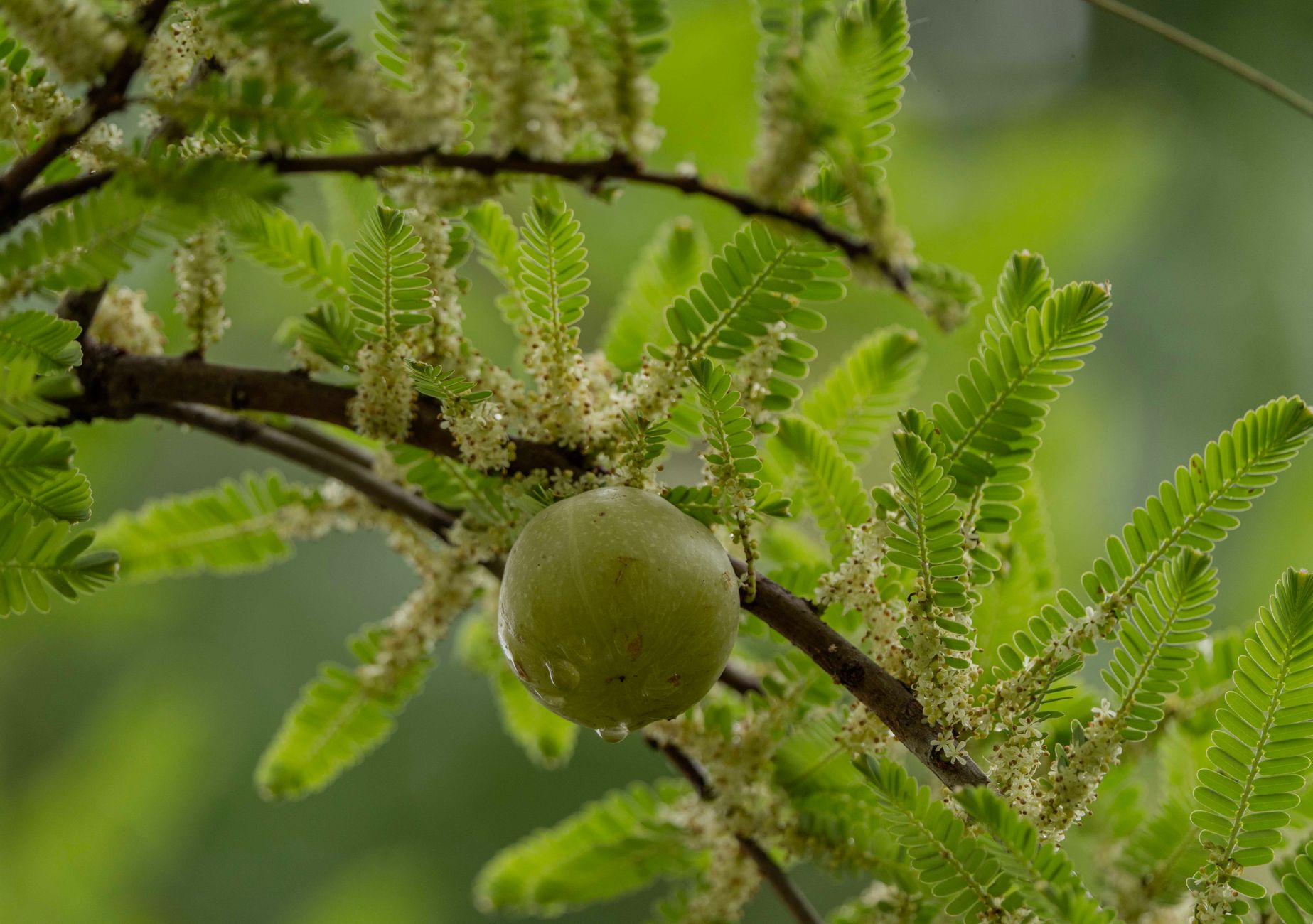
The 2026 trial did not establish that Phyllanthus emblica and Tinospora cordifolia treat persistent adult acne better than placebo. It found reassuring 12-week safety results for one specific oral formulation, but separate evidence links Tinospora to potentially severe liver injury. Phyllanthus emblica, often called amla, is a fruit-bearing plant; Tinospora cordifolia, sometimes called giloy, is a medicinal vine. Adults considering these botanicals should weigh the uncertain acne benefit against the need for liver-risk screening and monitoring.
Medical information disclaimer: This article is for general educational purposes only and does not provide medical advice, diagnosis, or treatment. Always consult a physician or other qualified health professional about symptoms, medications, tests, or treatment decisions.
Table of Contents
- What did the acne trial test?
- Did the treatment improve acne?
- How reassuring are the safety findings?
- Why does Tinospora require extra caution?
- What should adults discuss before taking it?
What did the acne trial test?
The randomized, double-blind, placebo-controlled Phase 2 study enrolled 88 volunteers. Participants received placebo or 300, 400, or 500 mg daily of Link Natural Swastha Amurtha for 12 weeks. The tested decoction contained dried P. emblica fruit and fresh T.
cordifolia stem, according to the Sri Lanka Clinical Trials Registry. Each group had 22 participants. Investigators assessed acne lesions, quality of life, adverse events, and laboratory results. The findings apply only to a narrow population: adults over 25 with mild-to-moderate facial acne who were not taking acne medicines. They do not establish results for severe, cystic, infected, hormonally driven, or treatment-resistant acne.
Did the treatment improve acne?
Lesion counts fell more at higher doses, suggesting a dose-related pattern. However, none of the three treatment groups performed significantly better than placebo on the primary lesion-count outcome. The PubMed study record therefore does not establish clinical efficacy.
Quality-of-life scores improved from baseline in all active-treatment groups. That may reflect a benefit perceived by participants, but it cannot replace a successful comparison with placebo on the main acne measure. For a reader making a treatment decision, the key distinction is simple: improvement within a treatment group does not prove the product caused the improvement. The placebo comparison is designed to address that question, and it was not significant.
How reassuring are the safety findings?
During the 12-week study, investigators reported normal blood, liver, and kidney laboratory values. They also reported no serious or treatment-related adverse events. Those findings support short-term tolerability of the exact formulation studied.
They cannot rule out uncommon reactions in a larger population or harms that emerge after longer use. With only 22 people in each active-dose group, the trial had limited ability to detect rare problems. The results also should not be generalized automatically to amla or giloy powders, capsules, extracts, or mixtures made differently. Dose, plant part, preparation, and manufacturing may differ from the trial product.
Why does Tinospora require extra caution?
NIH LiverTox rates Tinospora cordifolia as a well-established cause of clinically apparent liver injury. Cases may develop after weeks or months, can be severe, and occur more often in people with preexisting liver disease, according to the NIH/NIDDK LiverTox review. A multicenter Indian study described 43 patients with Tinospora-associated liver injury.
The median time to symptoms was 46 days, and presentations included acute hepatitis, acute-on-chronic liver disease, and acute liver failure. This evidence does not mean every user will develop liver injury. It does mean that a small acne trial without treatment-related adverse events cannot settle Tinospora's safety for broader or longer use.
What should adults discuss before taking it?
Anyone considering a Tinospora-containing acne supplement should tell their clinician the exact product, dose, ingredients, and planned duration. Existing liver disease deserves particular attention because it may increase the risk of serious injury. The trial's monitoring schedule offers a concrete discussion point.
Investigators checked participants at baseline, week 6, and week 12 using: These tests cover liver, kidney, urinary, and blood-related safety domains. They are not proof that the product is safe, and the trial does not establish a universal testing schedule for consumers. In the United States, oral botanical dietary supplements do not receive FDA approval for safety or effectiveness before sale. The FDA's dietary-supplement guidance helps explain why results from one standardized trial product cannot be assumed to apply to every amla-and-giloy supplement.
- AST, ALT, alkaline phosphatase, GGT, bilirubin, and albumin
- Creatinine and estimated GFR
- Urinalysis
- Blood counts
You Might Also Like
- The 2026 Trial of Phyllanthus Emblica and Tinospora for Acne: Questions Adults With Persistent Acne Can Ask a Dermatologist
- The 2026 Trial of Phyllanthus Emblica and Tinospora for Acne: What the Findings Mean for Adults With Persistent Acne
- The 2026 Trial of Phyllanthus Emblica and Tinospora for Acne: Study Design and Evidence Limits for Adults With Persistent Acne