
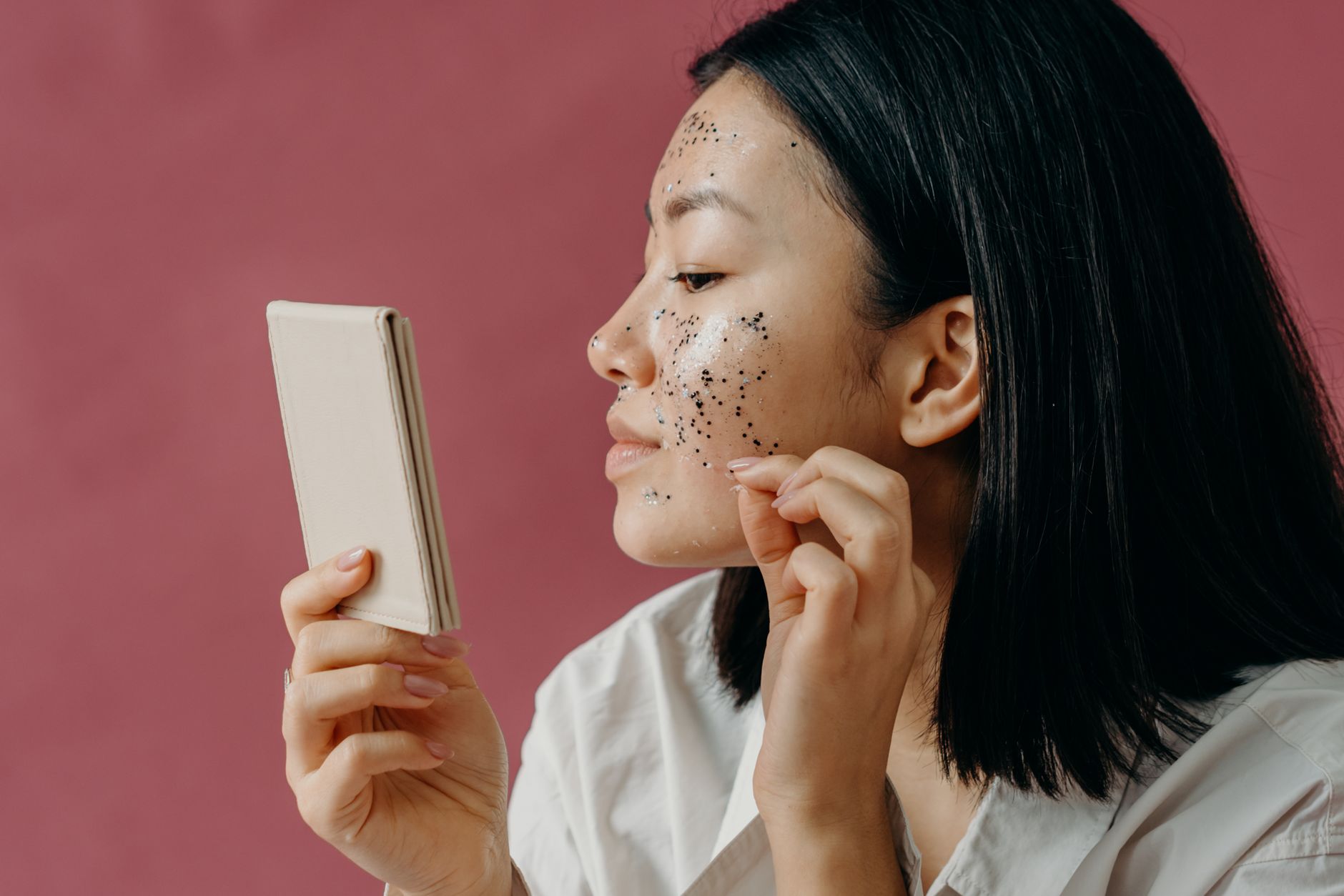
To verify exfoliation and acne claims in 2026, separate promises of cosmetic smoothing from claims to treat acne, then check the Drug Facts panel and clinical evidence. Trust an acne claim only when the product follows applicable drug rules, identifies a recognized active ingredient, and gives safety advice consistent with dermatology guidance. Exfoliation removes or sheds cells from the skin's surface. That may change texture or appearance, but an exfoliating effect alone does not prove that a product treats acne.
Medical information disclaimer: This article is for general educational purposes only and does not provide medical advice, diagnosis, or treatment. Always consult a physician or other qualified health professional about symptoms, medications, tests, or treatment decisions.
Official resources:
- direct source — Use this primary source to verify the official guidance.
- direct source — Use this primary source to verify the official guidance.
Table of Contents
- Is the product a cosmetic or an acne drug?
- What should appear on an OTC acne product?
- How strong is the acne evidence?
- Could more exfoliation make acne worse?
- Red flags and reasons to seek dermatology care
Is the product a cosmetic or an acne drug?
Start with the exact wording on the package or product page. Claims about surface exfoliation describe a cosmetic purpose. A claim that the product "treats acne" creates a drug purpose, even when the same product is also marketed as a cosmetic, according to the FDA guidance on alpha hydroxy acids.
This distinction matters because cosmetics and drugs face different requirements. A brand cannot turn a cosmetic into a proven acne treatment by using medical-sounding language. Be skeptical when a cosmetic exfoliant calls itself "FDA-approved." The FDA does not pre-approve cosmetic claims or keep a list of approved cosmetic claims, as its cosmetics-labeling guidance explains. The phrase needs product-specific regulatory context, not just a logo, badge, or general statement about an ingredient.
What should appear on an OTC acne product?
Look for a Drug Facts panel, not merely a cosmetic ingredient list. FDA rules require that panel to identify the acne-drug active ingredient separately from inactive cosmetic ingredients. For products relying on the U.S.
OTC acne monograph, the FDA recognizes benzoyl peroxide at 2.5% to 10% and salicylic acid at 0.5% to 2%, provided the product meets all other monograph conditions. Those ranges appear in FDA OTC Monograph M006. Use this quick package check: A familiar ingredient name is not enough. The concentration, labeled use, directions, and remaining drug requirements all matter.
- Find the words "Drug Facts."
- Identify the active ingredient and its percentage.
- Confirm that acne is the stated use, rather than assuming every acid treats acne.
- Read the warnings and directions before comparing marketing claims.
- Treat an acne claim backed only by a cosmetic ingredient list as a regulatory red flag.
How strong is the acne evidence?
The 2024 American Academy of Dermatology guideline strongly recommends benzoyl peroxide and topical retinoids for acne. It conditionally recommends salicylic acid, meaning the supporting evidence is less certain or the expected balance of benefits and limitations is less decisive. For salicylic acid, the guideline found one moderate-certainty randomized controlled trial. At 12 weeks, 0.5% salicylic acid produced a 25% greater reduction in inflammatory lesions and an 11% greater reduction in open comedones than the vehicle, with no difference in closed comedones. These findings and recommendation strengths appear in the 2024 acne guideline published in JAAD.
That result does not mean every salicylic acid exfoliant will clear acne. It concerns a specific concentration, comparison, treatment period, and set of outcomes. It also should not be transferred automatically to unrelated acids, scrubs, peels, or finished formulas. When a brand says "clinically proven," look for the tested product, active concentration, comparator, study length, and lesion outcomes. Evidence about an ingredient in one formulation does not necessarily validate every product containing it.
Could more exfoliation make acne worse?
Yes. The AAD's February 2026 safety guidance says retinoids, retinol, and benzoyl peroxide can increase sensitivity or peeling. Adding exfoliation may then worsen dryness or acne rather than improve it. The AAD also advises that acne-prone or sensitive skin may tolerate mild chemical exfoliation better than mechanical scrubbing. "Chemical" does not mean risk-free; it describes how the surface cells are loosened rather than physically scrubbed away.
Alpha hydroxy acids require particular attention to sun exposure. The FDA reports that volunteers had an 18% increase in sensitivity to ultraviolet-induced redness after four weeks of AHA use. Follow label directions for sunscreen and sun avoidance instead of assuming that "daily peel" means daily use is appropriate for everyone. Before adding an exfoliant, account for the acne treatments already in the routine. A second peeling or drying product may add irritation without adding meaningful acne control.
Red flags and reasons to seek dermatology care
Reject shortcuts that substitute presentation for proof. Common warning signs include: OTC products also have practical limits.
According to current AAD consumer guidance, large painful deep pimples, acne scarring, or failure to get the desired improvement after weeks of OTC treatment are reasons to see a dermatologist. Store-bought exfoliants are unlikely to treat those cases effectively.
- "FDA-approved" on a product presented only as a cosmetic.
- An acne-treatment promise without a Drug Facts panel.
- No active-ingredient percentage for a claimed OTC acne drug.
- Evidence from a different ingredient, strength, formula, or outcome.
- "Exfoliating" presented as if it automatically means "acne treating."