
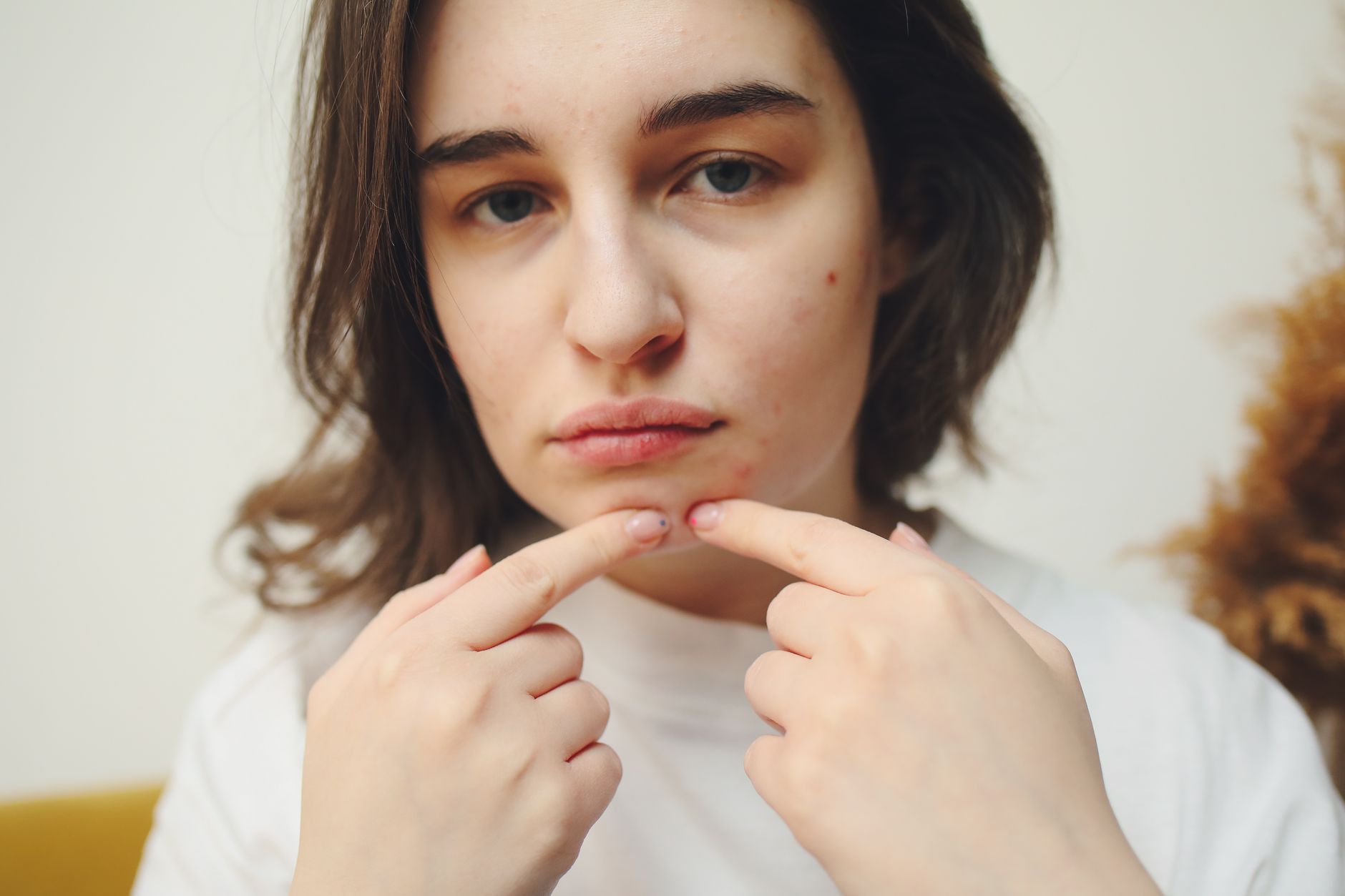
Hormonal acne in women flares before a period because late-cycle hormone shifts raise sebum and inflammation. Estrogen falls low while progesterone and relatively stronger testosterone drive oilier, easily clogged pores. Hormonal acne here means cycle-related breakouts that worsen in the premenstrual week. They often appear as tender, inflamed pimples on the chin, jawline, cheeks, neck, shoulders or back, according to the Cleveland Clinic how period acne forms.
Medical information disclaimer: This article is for general educational purposes only and does not provide medical advice, diagnosis, or treatment. Always consult a physician or other qualified health professional about symptoms, medications, tests, or treatment decisions.
Table of Contents
- What changes in the week before bleeding?
- How does extra oil turn into tender pimples?
- How common are premenstrual flares?
- What helps when breakouts follow your cycle?
What changes in the week before bleeding?
Estrogen drops to its lowest premenstrual level while progesterone dominates the second half of the cycle. Progesterone stimulates sebaceous glands to make more oil that can clog pores, according to the Cleveland Clinic why premenstrual oil rises.
As estrogen and progesterone fall at cycle end, testosterone becomes relatively more pronounced. That shift amplifies androgen-driven sebum production and premenstrual breakouts, according to Ducray Dermatological Laboratories how testosterone affects breakouts.
How does extra oil turn into tender pimples?
Androgens enlarge sebaceous glands and increase sebum output. They also promote abnormal shedding of follicle skin cells, which plugs the opening. Plugged follicles trap oil and debris where Cutibacterium acnes thrives.
Bacterial growth then fuels inflammation and painful lesions. Period-related acne often forms deeper cysts or papules without heads. Clusters favor the lower third of the face, especially chin and jawline.
How common are premenstrual flares?
About 44% of 400 women with acne reported premenstrual flares. A separate quantitative study found 63% developed more inflammatory lesions in the late luteal phase. Typical flares bring more red, swollen papules rather than a few small blackheads.
The chin, jawline, cheeks, neck, shoulders and back are common sites. The pattern is frequent but not universal. Some cycles flare more than others in the same person.
What helps when breakouts follow your cycle?
Track bleeding dates and breakout days for two or three cycles. A clear premenstrual pattern helps you time gentle cleansing, noncomedogenic moisture and proven acne care. Ask a dermatologist about hormonal options if flares are frequent, deep or scarring.
Options discussed in current care include combined oral contraceptives or topical anti-androgen clascoterone noted in the 2024 acne-guideline update. Cycle phase alone does not predict every breakout. Flare risk was not explained by acne severity, ethnicity or oral-contraceptive use, and timing varies from days to weeks.