
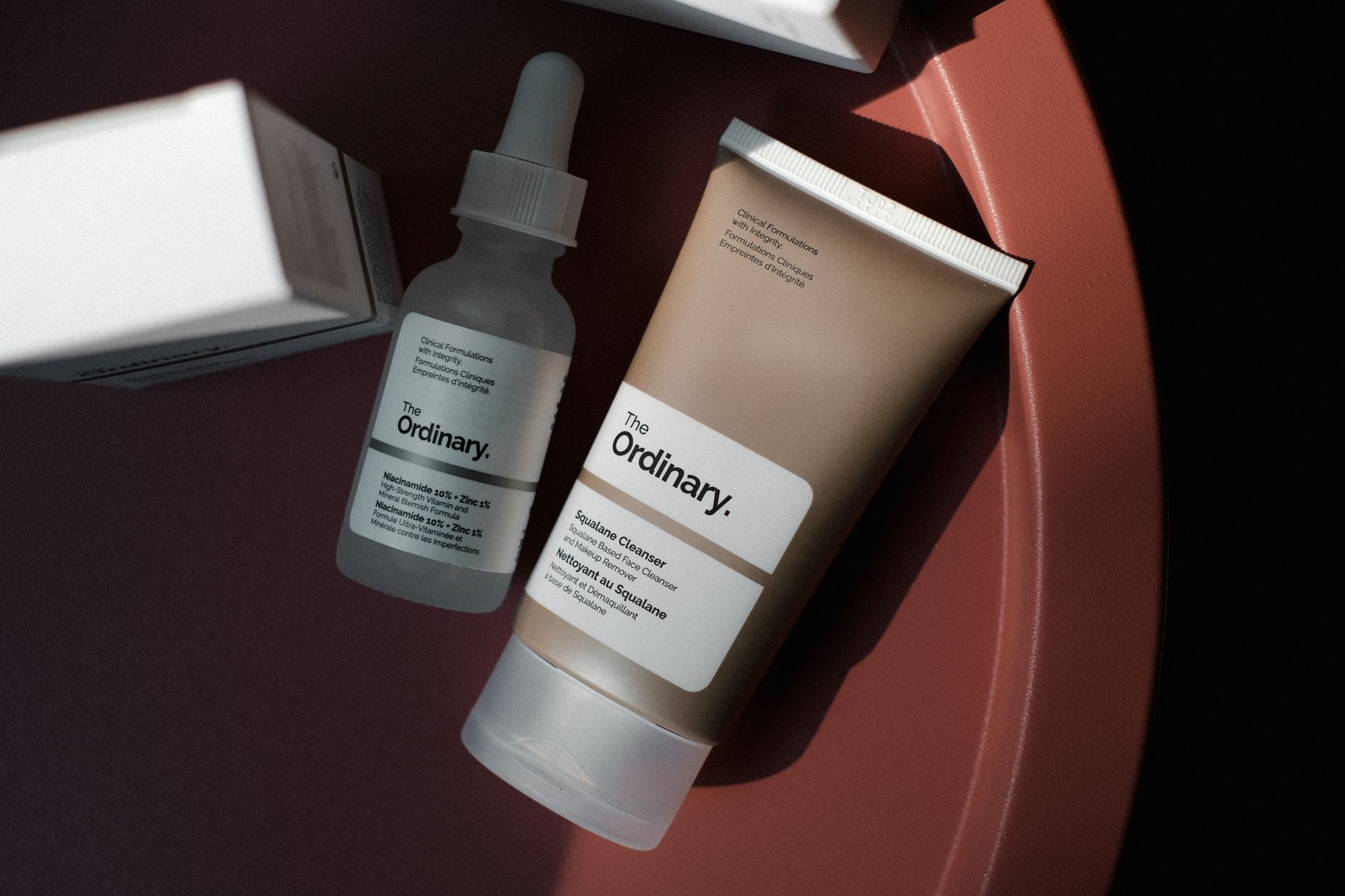
Yes, niacinamide helps flat dark marks and red marks from acne fade over time. It does not rebuild deep pits or flatten raised scars. Niacinamide is topical vitamin B3. Dermatologists use it to brighten tone, support the skin barrier, calm redness, regulate oil, and improve texture in acne-prone skin, according to Cleveland Clinic's niacinamide overview.
Medical information disclaimer: This article is for general educational purposes only and does not provide medical advice, diagnosis, or treatment. Always consult a physician or other qualified health professional about symptoms, medications, tests, or treatment decisions.
Table of Contents
Which marks improve?
Flat discoloration responds best. Niacinamide helps dark post-inflammatory hyperpigmentation and red post-inflammatory erythema fade over time.
These are flat spots left after a breakout heals. It does not erase raised hypertrophic scars or keloids. It is not a substitute for procedural scar treatment, according to KINS Clinic's review of niacinamide and acne scars.
What can it not fix?
Niacinamide cannot rebuild collagen lost in deep atrophic scars. That group includes ice-pick, boxcar, and rolling scars. Those indentations generally need microneedling, lasers, peels, subcision, or fillers rather than topical niacinamide alone.
Texture can look smoother because tone evens out and the barrier works better. The shadow inside a deep pit may look softer. The pit itself stays.
What does research show over weeks?
Laboratory and clinical testing found 2%-5% niacinamide inhibited melanosome transfer from melanocytes to keratinocytes by 35%-68%. The same program found less hyperpigmentation and greater lightness than vehicle after four weeks, as recorded in the National Library of Medicine record for the 2002 British Journal of Dermatology study. A 12-week double-blind split-face trial tested 5% niacinamide moisturizer in 50 women ages 40-60.
It significantly reduced hyperpigmented spots, red blotchiness, fine lines and wrinkles, and yellowing versus control and was well tolerated. A 2025 formula with retinol, niacinamide, ceramides, and dipotassium glycyrrhizinate improved acne symptoms and eased acne-caused post-inflammatory hyperpigmentation in Chinese women. The report listed no adverse events.
How should you use it?
Most over-the-counter niacinamide is 2%-10%. Much hyperpigmentation and aging research used 5%, with little published evidence of added benefit above that strength. Consistent daily use for weeks plus sunscreen is the practical approach, according to City Skin Clinic's niacinamide ingredient guide.
Use it once or twice daily after cleansing. Apply a pea-sized amount of serum or a thin layer of moisturizer to the full affected area, not only on dark dots. Stop picking, reduce harsh scrubbing, and wear broad-spectrum sunscreen every morning because sun keeps dark marks darker.
- Cleanse gently, then apply niacinamide to slightly dry skin
- Add moisturizer if skin feels tight
- Use sunscreen each morning and reapply during long sun exposure
- Keep the same product for eight to 12 weeks before judging fading
- Ask a dermatologist about procedures if pits, raised scars, or persistent redness remain