
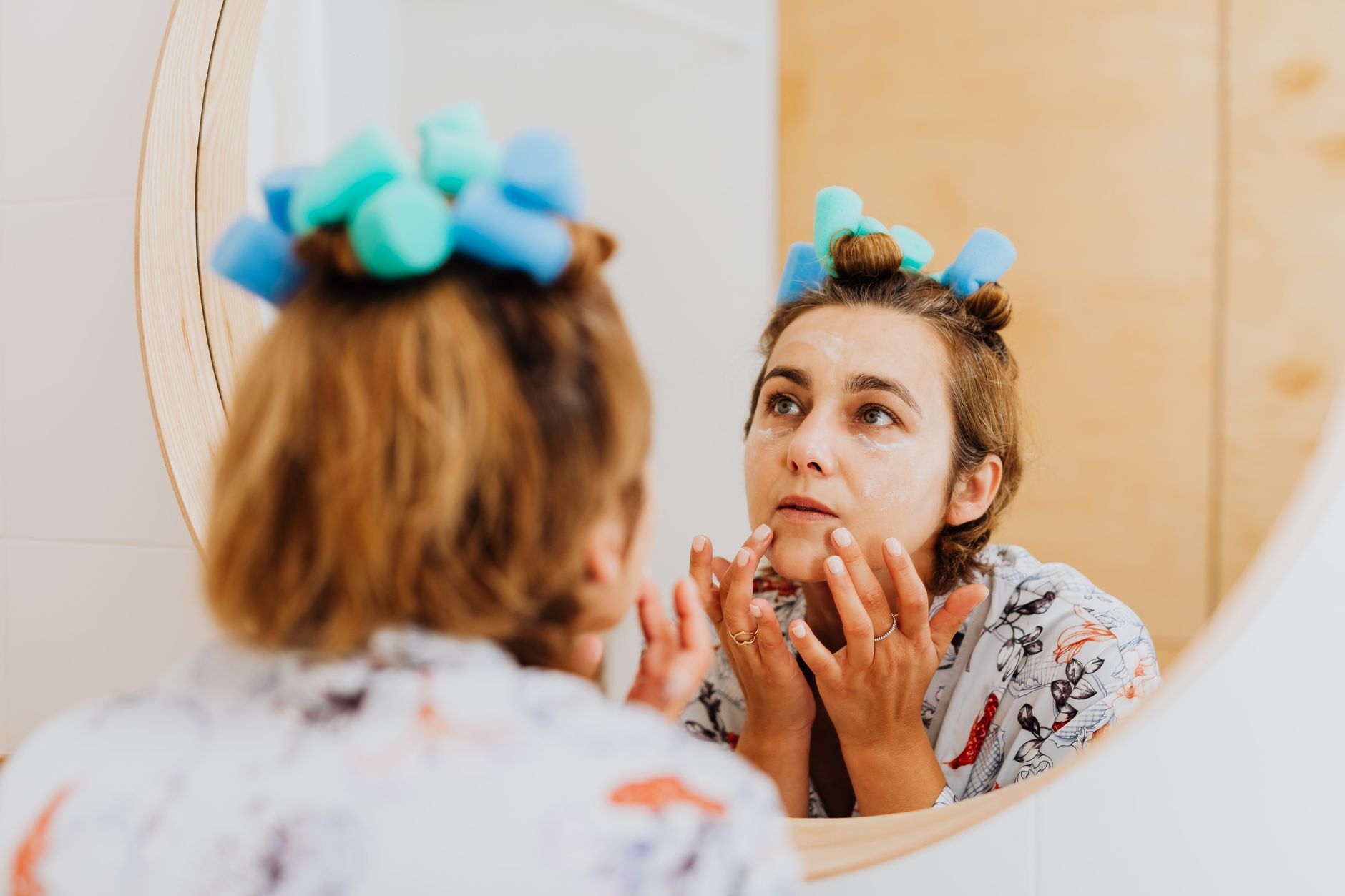
Period breakouts worsen because estrogen and progesterone fall before bleeding while testosterone stays steady, leaving androgen signals relatively stronger. That shift raises sebum, clogs pores, and feeds inflammation. WebMD and the U.S.
Office on Women's Health describe this hormone-oil-inflammation chain. Hormonal breakouts here mean acne flares tied to the menstrual cycle. The UK NHS lists period-related hormone shifts among acne causes, mainly in menstruating women and girls.
Medical information disclaimer: This article is for general educational purposes only and does not provide medical advice, diagnosis, or treatment. Always consult a physician or other qualified health professional about symptoms, medications, tests, or treatment decisions.
Table of Contents
- Why does oil rise before bleeding?
- How does extra oil turn into sore spots?
- What do period breakouts look like?
- How common and predictable are flares?
Why does oil rise before bleeding?
In a typical 28-day cycle, estrogen leads the first half and progesterone leads the second. Testosterone stays fairly steady, so it runs relatively higher before and during bleeding. WebMD, quoting ob-gyn Elizabeth Gutrecht Lyster, describes this crossover in a hormone pattern across the cycle.
The mid-cycle progesterone rise boosts sebum, or skin oil. Then estrogen and progesterone fall before bleeding. That drop leaves androgen-driven oiliness, pore clogging, and microflora growth unopposed, according to WebMD.
How does extra oil turn into sore spots?
Androgens enlarge sebaceous glands, the tiny oil glands around follicles. They also raise sebum output. The U.S.
Office on Women's Health explains how excess oil and dead skin plug follicles. Trapped material lets normal skin bacteria multiply inside the plug. That growth triggers inflammation and pain. A lightly clogged pore may look small, while a heavily clogged one swells and hurts.
What do period breakouts look like?
Period lesions often appear a few days before bleeding. They tend to ease after bleeding starts. Cleveland Clinic describes them as often deep, tender cysts or papules in its guide to period acne.
Usual sites are the chin, jawline, and lower face. The neck, chest, shoulders, and back can flare too. Cleveland Clinic and the U.S. Office on Women's Health list these sites.
How common and predictable are flares?
Perimenstrual worsening is common. A Journal of Clinical and Aesthetic Dermatology review counted 177 of 400 acne patients ages 12–52 reporting premenstrual flares, about 44%. A separate lesion-count study in the same review found 63% developed more inflammatory lesions in the late luteal phase.
Those counts appear in this review of cycle-related acne. Timing and duration vary by person and month, from days to weeks. Cycle tracking helps anticipate a flare but cannot precisely predict it. Cleveland Clinic notes this variability.