
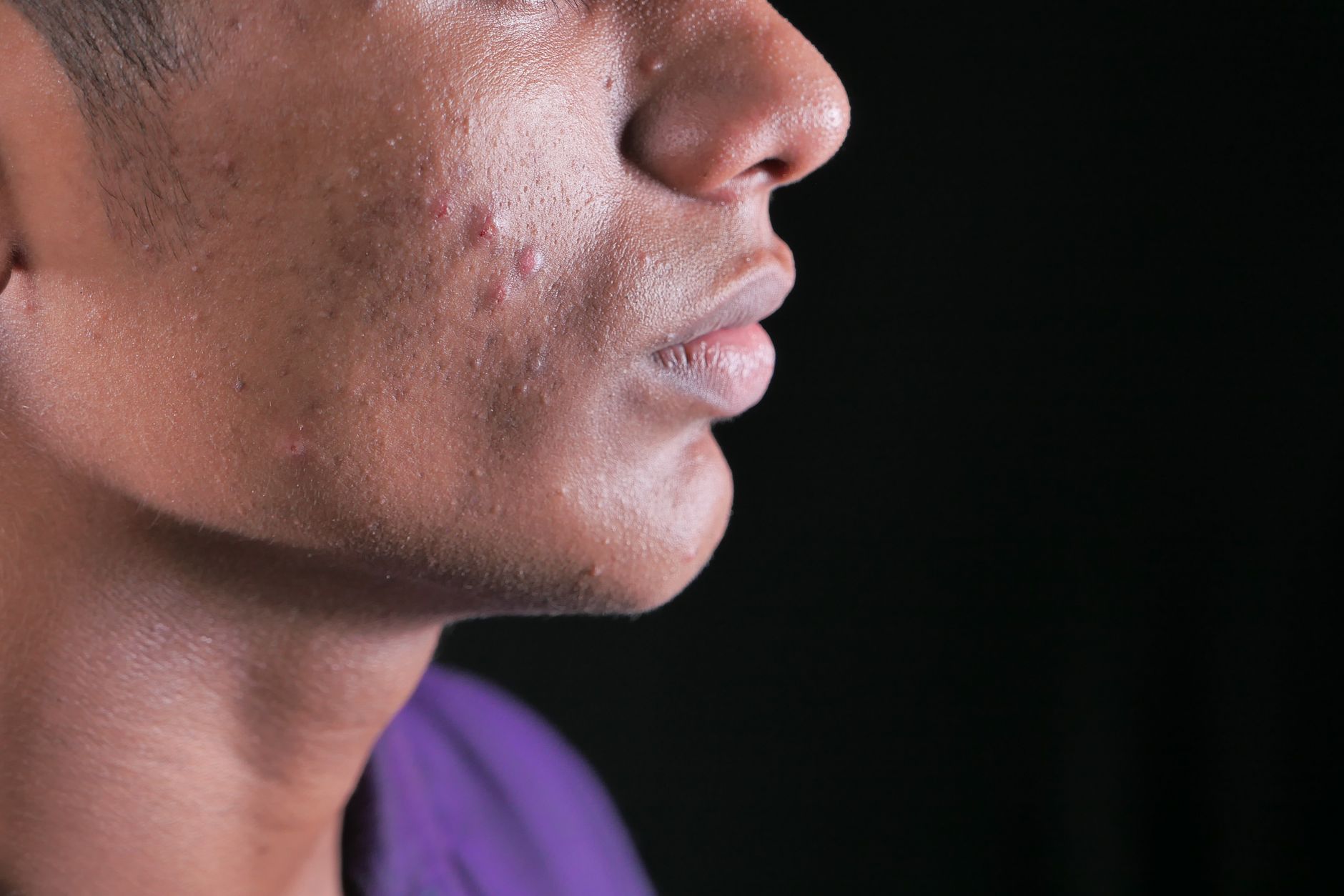
Testosterone acne is acne that starts or worsens after testosterone exposure raises androgen activity. Current evidence supports a real, dose-related increase in risk, highest soon after starting. Androgens enlarge sebaceous glands, increase sebum output, clog follicles, and trigger inflammation. An NIH/PMC review describes that chain as driving Cutibacterium acnes growth and breakouts the NIH/PMC review of androgens and acne.
Medical information disclaimer: This article is for general educational purposes only and does not provide medical advice, diagnosis, or treatment. Always consult a physician or other qualified health professional about symptoms, medications, tests, or treatment decisions.
Table of Contents
- How testosterone drives breakouts
- How common is it and when does it appear?
- Does dose and testosterone level matter?
- How severe can it get?
- What treatment approach has support?
How testosterone drives breakouts
Testosterone acts directly on oil glands and pore lining. Higher androgen signaling makes glands larger and oil flow heavier.
Thicker pore lining traps oil and dead cells. Trapped oil enables bacterial growth, then redness, swelling, and pus-filled lesions follow.
How common is it and when does it appear?
Risk rises quickly after starting testosterone. A 2026 gender-affirming-care cohort found 15.8% of transmasculine patients developed acne within five years, versus 3.8% of matched cisgender men and 10.5% of cisgender women.
Another longitudinal study in transgender men reported acne in 9% by three months, 18% by six months, and 38% by 24 months, according to Medical Bag reporting. Medscape reporting on the 2026 study found about 8.6-fold higher acne hazard versus matched cisgender men in year one the Medscape report on first-year acne hazard. That first-year peak supports counseling before starting and close skin monitoring after.
Does dose and testosterone level matter?
FDA testosterone-gel labeling from a 180-day trial showed dose-related acne: 1% at 50 mg, 3% at 75 mg, and 8% at 100 mg the FDA testosterone-gel label. Acne was among the most common reactions. Blood level also matters.
Serum testosterone above 630 ng/dL raised acne odds about eightfold in transgender men on masculinizing therapy. These patterns point to exposure intensity, not chance alone. A dose change does not guarantee clear skin, but higher exposure carries higher risk.
How severe can it get?
Most exposed people do not develop moderate-to-severe disease. A Harvard/Brigham clinician reported about 30% of transmasculine testosterone users develop acne and about 15% have moderate-to-severe disease. Rare cases turn severe.
Exogenous testosterone can trigger acne fulminans with ulcerative, necrotic lesions and systemic symptoms, documented in twins with Kallmann syndrome after starting testosterone. Seek prompt care for rapidly worsening nodules, open sores, crusting, fever, joint pain, or scarring lesions. Those signs fall outside routine breakouts.
What treatment approach has support?
Current AAD guidance strongly recommends benzoyl peroxide, topical retinoids, topical or oral antibiotics including doxycycline, and oral isotretinoin for severe acne, according to American Academy of Dermatology guidance via Newswise the AAD updated acne guidelines. Stopping testosterone alone is not the recommended plan. Practical steps to discuss with a clinician: Keep using prescribed gender-affirming therapy unless the prescribing clinician advises a change.
- Track new breakouts monthly during the first year.
- Ask whether current acne therapy fits severity and scarring risk.
- Ask about isotretinoin promptly for severe, scarring, or treatment-resistant acne.