
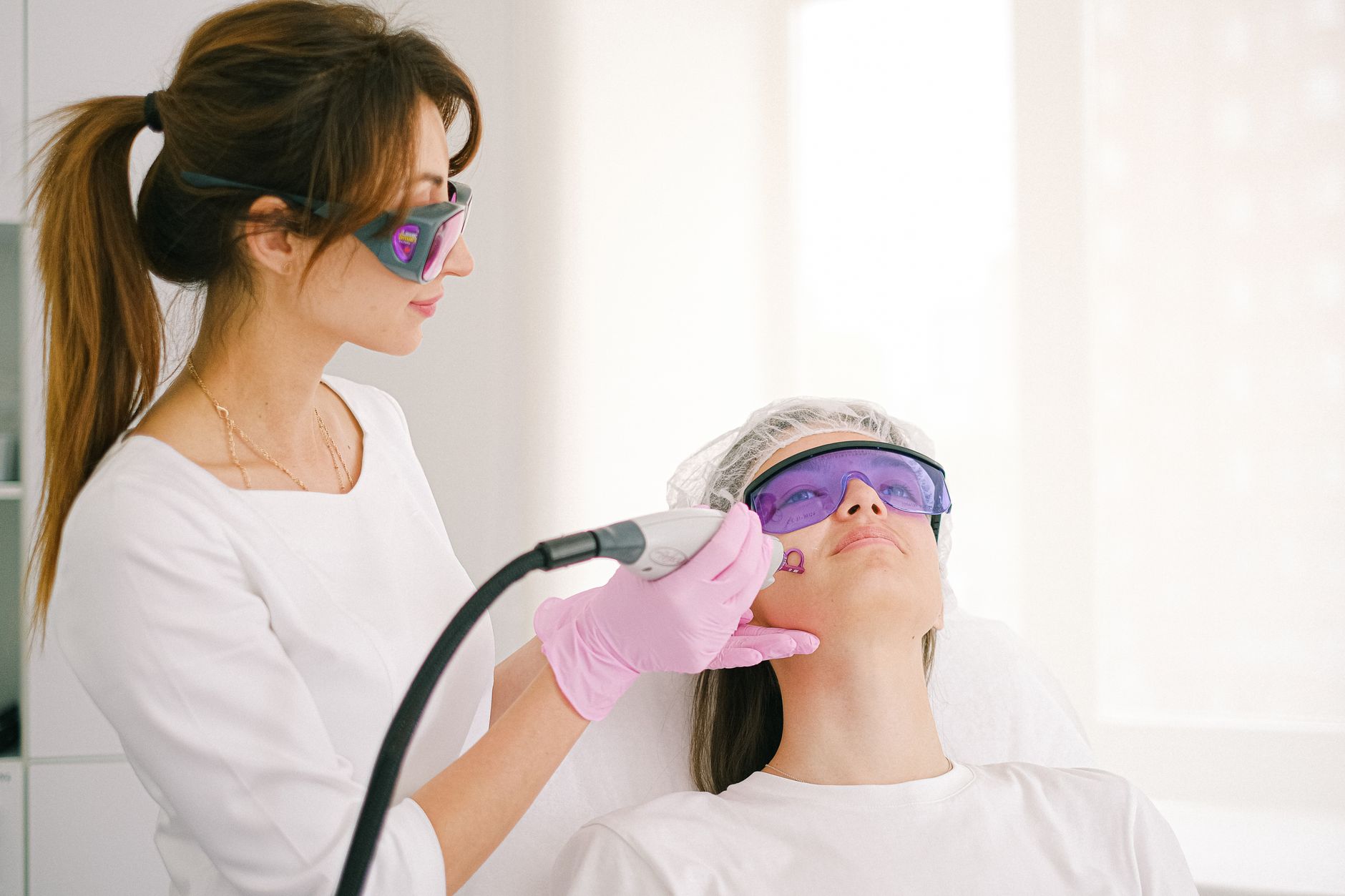
Picosecond lasers remain an FDA-cleared choice for acne scars in 2026 for mild to moderate atrophic scars with minimal downtime. They soften texture over a series, while deeper pitted scars often respond more to ablative fractional lasers. A picosecond laser delivers ultra-short, high-peak-power pulses that break pigment with less surrounding heat. A focus lens array spreads the beam into tiny high-intensity spots to remodel scar tissue without removing the skin surface.
Medical information disclaimer: This article is for general educational purposes only and does not provide medical advice, diagnosis, or treatment. Always consult a physician or other qualified health professional about symptoms, medications, tests, or treatment decisions.
Table of Contents
- How does it remodel scar tissue?
- What change do studies show?
- How does it compare with stronger fractional lasers?
- Who is the best candidate now?
- What should you ask at consultation?
How does it remodel scar tissue?
Candela Medical states its current PicoWay device uses ultra-short pulses to fragment pigment with less heat in nearby tissue. For scars, clinicians use a diffractive or micro-lens array that concentrates the pulse inside the skin. A 2022 histology review summarized on PubMed describes the result as laser-induced optical breakdown with small vacuoles in epidermis and dermis.
Those controlled zones trigger new collagen and longer, denser elastin. The added elastin matters because scars often feel stiff and look shadowed when skin loses stretch. Softer, more elastic tissue reflects light more evenly and moves more naturally.
What change do studies show?
A JAMA Dermatology study of 755-nm picosecond laser with diffractive lens array reported improved acne-scar appearance and texture at 3 months after the last treatment, with objective results similar to published fractional ablative-laser series in the PubMed record. The timing matters because collagen remodeling continues after treatment ends. A Medscape summary of a PubMed abstract from 2022 reported one 1064-nm fractional picosecond session with microlens array in 59 phototype III-IV patients.
Atrophic-scar volume fell 22.03% and enlarged-pore count fell 15.13% versus baseline. Those numbers signal visible softening rather than erasure. Pores may look smaller as nearby edges tighten, but pore change is secondary to scar change.
How does it compare with stronger fractional lasers?
A 20-week randomized split-face pilot in Asian patients in Frontiers in Medicine found 1064-nm picosecond with micro-lens array reduced ECCA scores 39.11% versus 43.73% for ablative fractional 2940-nm Er:YAG, judged comparable efficacy with better safety in the full report. For a reader, comparable means fewer dramatic single-session shifts but easier recovery. Comparative trials summarized in an MDPI review found fractional CO2 and 1550-nm nonablative fractional lasers significantly outperformed 755/1064-nm picosecond lasers for atrophic-scar scores.
The same comparison found significantly fewer adverse events on picosecond sides, including less pain, crusting and hyperpigmentation. The trade-off is direct. Choose picosecond when lower risk and short redness matter most. Choose ablative fractional when maximum smoothing of deeper scars matters more and longer healing is acceptable.
Who is the best candidate now?
Cynosure announced in a BioSpace notice that its PicoSure workstation with FOCUS lens array received FDA 510(k) clearance for acne scars, the first picosecond clearance for that use after studies showed visible improvement in as little as three treatments in the FDA clearance announcement. Candela Medical separately states its PicoWay device is FDA-cleared for acne scars, wrinkles, pigmented lesions and tattoos. Darker skin tones and tight work schedules shape the 2026 use case.
A retrospective photographic review summarized by Medscape reported post-inflammatory hyperpigmentation in only 4.7% of 42 Asian patients after 755-nm picosecond series, with spontaneous resolution. Most picosecond redness resolves in 24-48 hours in 2025 practice reviews, versus 5-7 days downtime with high-fluence or ablative protocols. That short recovery suits broad atrophic texture, early scarring and patients with prior dark marks.
What should you ask at consultation?
Bring your scar age, prior peels or lasers, pigmentation history and available recovery days. Ask the clinician to map which scars are shallow and which are deep, tethered or sharply pitted.
Ask to see before-and-after photos for patients near your skin tone and scar type. Book only when the plan names the device, lens mode and backup option if response is slow.
- My scar depth and skin phototype, plus prior brown marks or melasma
- Expected number of sessions, spacing and what each session should change
- Likely redness, crusting and pigmentation risk for my skin
- Aftercare, sun protection and what pauses retinoids or exfoliants
- When to switch to CO2, Er:YAG or 1550-nm fractional treatment instead