
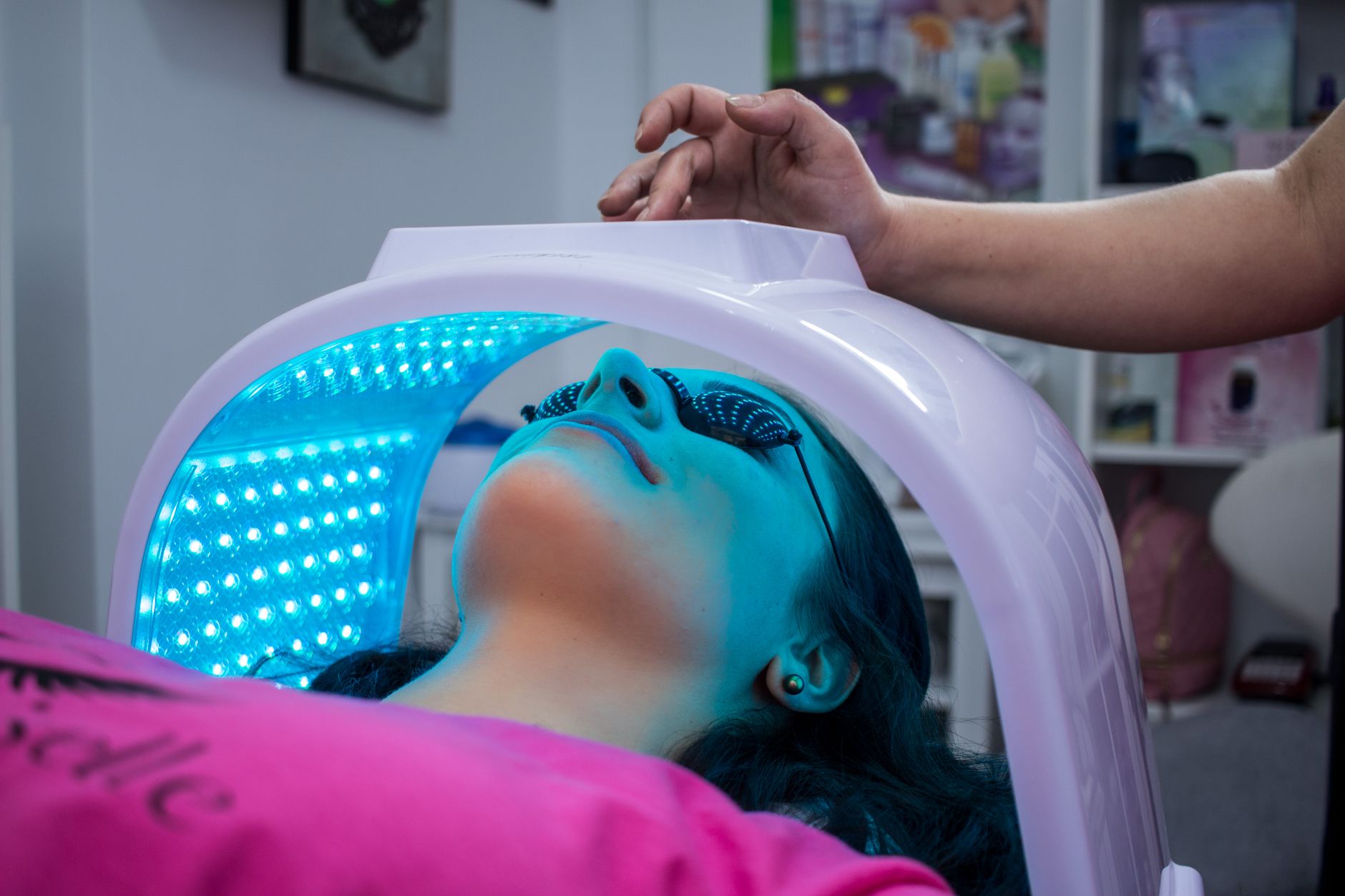
LED light therapy for acne is a skin treatment that shines specific colors of light on breakouts. LED means light-emitting diode, a small bulb that makes one narrow color.
For beginners, it is a low-irritation option for mild-to-moderate acne when safety steps are followed. It does not rely on prescriptions or harsh scrubbing. This overview explains how it works, what results to expect, and how to stay safe.
Medical information disclaimer: This article is for general educational purposes only and does not provide medical advice, diagnosis, or treatment. Always consult a physician or other qualified health professional about symptoms, medications, tests, or treatment decisions.
Table of Contents
- How do blue and red light work?
- What results can beginners expect?
- Who is it for, and who should pause?
- How can beginners use home devices safely?
How do blue and red light work?
Blue LED light around 415 nm targets acne bacteria. Red LED light around 630 nm calms inflammation and aids healing.
Medical News Today describes this split role in its Medical News Today overview. Many devices combine both wavelengths for a broader effect. Dermatology Times notes that evidence favors blue-plus-red for acne over red alone.
What results can beginners expect?
A 2025 JAMA Dermatology systematic review looked at 6 randomized trials with 216 participants ages 12-50. It found at-home red and blue LED devices safely reduced mild-to-moderate acne lesions versus control. Active devices produced 45.3 percent greater reduction in inflammatory lesions and 47.7 percent greater reduction in noninflammatory lesions.
Global improvement was greater after 4-12 weeks, according to the March 2025 JAMA Dermatology review. Reported side effects were generally mild and short-term. They were mainly dryness, redness, or discomfort during light exposure, as reported in the same JAMA Dermatology review.
Who is it for, and who should pause?
The studied use is mild-to-moderate inflammatory acne vulgaris. Innolitics FDA records show FDA 510(k) clearance K093963 for a blue and violet home-use system for that use in its FDA clearance record.
That clearance does not cover severe or cystic acne. Cleveland Clinic advises people with photosensitivity disorders to avoid blue-light treatment without a photosensitizer. It also notes possible redness or dry skin for other users.
How can beginners use home devices safely?
Beginners should choose FDA-cleared devices and follow the maker directions closely. Dermatology Times advises using supplied eye shields for blue-light masks in its Dermatology Times guidance. Check with a clinician first if you take drugs that raise light sensitivity, such as certain antibiotics or isotretinoin.
- Pick a device cleared for mild-to-moderate acne
- Use the supplied eye shields during treatment
- Stop and get care for strong pain, swelling, or lasting redness
- Ask a clinician about current prescriptions before starting