
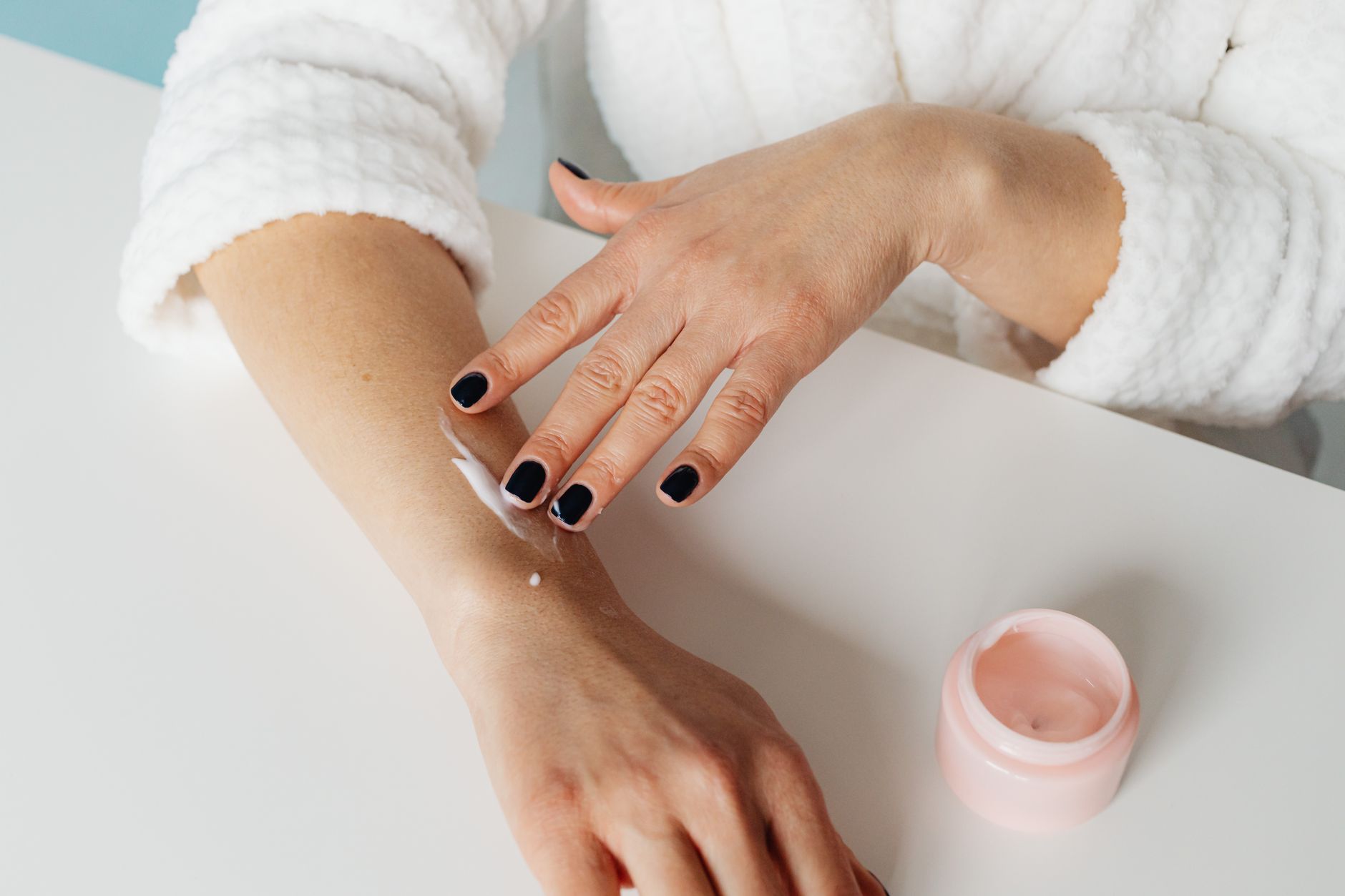
On October 28, 2026, the U.S. health department added KPV, a three-amino-acid peptide sold online for red, inflamed skin, to a group of six unproven peptides that pharmacies may now prepare without fear of federal enforcement. If you deal with acne, rosacea or eczema, you may start seeing KPV creams with a prescription option. Before you spend money on a KPV peptide skin product, it helps to know what has, and has not, been tested.
Where it stands: KPV has no FDA approval for acne, rosacea or anything else on October 28, 2026. Federal health officials at HHS say they will not go after state-licensed pharmacies, federal facilities or physicians that compound KPV under the policy’s conditions, but only as a topical or oral product. HHS is stepping back from enforcement; it has not found that KPV works.
What is KPV?
KPV is a peptide, meaning a short chain of amino acids. It has just three: lysine, proline and valine. FDA says the body makes it naturally as a fragment of alpha-MSH, a hormone produced in the pituitary gland. Researchers became interested because, as a 2008 review put it, the fragment keeps alpha-MSH’s anti-inflammatory effect but not its tanning effect, which made it look like “an alternative for antiinflammatory therapy.”
The New York Times described KPV as “a cream or gel marketed for wound healing and inflammatory skin conditions.” That is how it was nominated to FDA. In practice it is sold more widely: FDA found websites promoting KPV as pills, injections, skin products and nasal sprays, sometimes mixed with other peptides.
What does the KPV peptide skin research show?
Very little in skin, and nothing in people. When KPV was nominated to FDA as a compounding ingredient, the nomination cited nine studies. FDA’s reviewers noted that “none were studies of KPV administered in humans.” FDA added that it is particularly concerned by the lack of any human data by any route, including on whether KPV can trigger an immune reaction.
The best-known KPV experiments are in the gut, not the skin. In a 2008 study, KPV given by mouth reduced chemically induced colitis in mice, along with markers of inflammation. That is a bowel model in rodents. It says nothing direct about a pimple, a rosacea flush or an eczema patch on a human face.
There is also a delivery problem. FDA cited a lab study in which KPV did not pass well through human cadaver skin. FDA said that could keep a cream from reaching “epidermal layers below the stratum corneum (the outermost skin layer),” which would limit its usefulness on the skin. FDA also noted that researchers have called for clinical studies to find out whether KPV could help heal skin wounds and ulcers. Those studies have not been done.
| Question | What the record shows |
|---|---|
| Human studies in acne or rosacea? | None |
| Human studies by any route? | None found by FDA |
| Where the anti-inflammatory data come from | Cell experiments and mouse colitis models |
| Does a cream get into the skin? | Poorly, in one cadaver-skin lab test |
| Side-effect reports to FDA | None found; that is not proof of safety |
FDA searched its adverse event database and the medical literature and found no reported KPV side effects. With no human studies and an unknown number of users, an empty report file does not tell you much either way.
Does KPV help acne or rosacea?
No one knows, because no one has tested it. Acne and rosacea are both inflammatory conditions. NIH’s skin institute, NIAMS, calls acne “an inflammatory disorder of the skin” and rosacea “a long-term inflammatory skin condition that causes reddened skin and a rash, usually on the nose and cheeks.” Online sellers lean on that word, inflammatory, to suggest that an anti-inflammatory peptide should help. That is a guess, not a result.
Acne inflammation also has specific drivers, such as clogged follicles, oil and bacteria, that proven acne medicines target directly. Rosacea is a different condition again; our guide to how dermatologists tell rosacea and acne apart explains why the treatments differ.
What does the HHS policy allow for KPV?
KPV is one of six peptides in the policy. For KPV, HHS limits compounding to topical and oral products. Injectable KPV, which FDA found promoted online, is outside the policy, and so are blends: the product must contain a single active ingredient. A prescription for a specific patient is still required, and no federal reviewer checks a compounded cream’s strength, cleanliness or benefit before it reaches you.
The policy runs against FDA staff advice. FDA’s reviewers recommended against adding KPV to the compounding list. The advisory committee voted 8-6 in favor in July 2026, STAT reported, but FDA did not finalize that step; HHS acted instead.
What has evidence for inflammatory skin conditions?
Plenty. FDA’s own KPV review pointed out that approved treatments with “established efficacy” already exist for inflammatory skin diseases including psoriasis and eczema. NIAMS lists options for each condition:
- Acne: benzoyl peroxide, which kills bacteria; retinoids, which “can help treat lesions and reduce inflammation”; salicylic acid; antibiotics; and, for some, isotretinoin or hormone therapy.
- Rosacea: NIAMS says “There is no cure for rosacea, but treatment can keep it under control,” usually through self-care plus medicines.
- Psoriasis: mild cases often respond to creams or ointments; more severe disease may need pills, injections or light treatment.
A dermatologist can match those options to your skin and history. That visit is also the place to ask about any peptide product before you try it.
What should you check before trying a peptide cream?
If you are weighing a KPV product, a few checks can lower the odds of trouble. Test any new product on a small patch of skin first; our explainer on why dermatologists recommend patch testing shows how. Be wary of products that arrive as injections, nasal sprays or multi-peptide mixes, since none of those fall under the HHS policy. And watch for irritation from stacking actives, a problem we cover in how viral routines can trigger inflammatory breakouts.
For now, the human evidence for KPV on skin stands where FDA left it in July 2026: no studies in people, by any route.
Frequently Asked Questions
Does KPV help acne?
No study has tested KPV in people with acne. FDA reviewers found no human data on KPV by any route. Its anti-inflammatory reputation comes from cell experiments and mouse models of colitis, a bowel disease, not from skin trials.
Is KPV cream FDA approved?
No. KPV has no FDA approval. Under the HHS policy posted October 28, 2026, licensed pharmacies can make topical or oral KPV under set conditions without federal enforcement, which is different from approval.
Can KPV help rosacea or eczema?
It has not been studied in people with either condition. FDA staff noted that approved therapies with established efficacy already exist for inflammatory skin diseases such as psoriasis and eczema, and NIH says rosacea treatment can keep the condition under control.
Does KPV absorb into the skin?
Poorly, according to one lab study FDA cited. In human cadaver skin, KPV did not pass well through the outer layer, which FDA said could limit how useful a KPV cream would be.
Are KPV injections covered by the new HHS policy?
No. The HHS policy lists only topical and oral forms of KPV, even though FDA found websites promoting injectable and nasal spray versions.
Sources
- FDA Briefing Document: KPV-Related Bulk Drug Substances (KPV (free base) and KPV acetate) — U.S. Food and Drug Administration (CDER), For the July 23-24, 2026 Pharmacy Compounding Advisory Committee meeting
- HHS Enforcement Discretion Policy Regarding 503A Compounding Using Certain Peptide Bulk Drug Substances — U.S. Department of Health and Human Services (Office of the Secretary), Posted October 28, 2026
- PepT1-mediated tripeptide KPV uptake reduces intestinal inflammation — Gastroenterology (PubMed 18061177), January 2008
- Alpha-melanocyte-stimulating hormone and related tripeptides: biochemistry, antiinflammatory and protective effects in vitro and in vivo — Endocrine Reviews (PubMed 18612139), August 2008
- Acne: Types, Causes, and Risk Factors — National Institute of Arthritis and Musculoskeletal and Skin Diseases (NIH), Last reviewed July 2023
- Acne: Diagnosis, Treatment, and Steps to Take — National Institute of Arthritis and Musculoskeletal and Skin Diseases (NIH), Accessed October 28, 2026
- Rosacea — National Institute of Arthritis and Musculoskeletal and Skin Diseases (NIH), Accessed October 28, 2026
- Psoriasis — National Institute of Arthritis and Musculoskeletal and Skin Diseases (NIH), Accessed October 28, 2026
- Kennedy to Allow Broad Use of Unapproved Peptide Injections — The New York Times (Christina Jewett), October 28, 2026
- FDA peptide compounding panel backs epitalon, rejects emideltide — STAT, July 24, 2026
This article is general health information, not medical advice. Unapproved peptides have not been shown to be safe or effective. Talk to a licensed clinician before starting, stopping or changing any treatment. Regulatory status is as reported by the sources cited on the dates shown and can change.