
To verify a blackhead or acne claim in 2026, check it against three authorities: the FDA's rules for OTC acne drugs, the American Academy of Dermatology's (AAD) evidence-based guidelines, and the FTC's standard for health advertising. A claim earns trust when it names an active ingredient the FDA recognizes, matches dermatology guidance, and is backed by controlled human trials—not testimonials or vague "miracle" language.
This matters because acne products are marketed heavily and regulated unevenly. Some terms on the label mean something specific; others mean nothing at all. Knowing which is which lets you judge a product before you buy.
Medical information disclaimer: This article is for general educational purposes only and does not provide medical advice, diagnosis, or treatment. Always consult a physician or other qualified health professional about symptoms, medications, tests, or treatment decisions.
Official resources:
- Read the original report from FDA — Use this primary source to review the complete report.
- Explore the official data from FTC — Use this primary source to review the underlying data.
Table of Contents
- Start with the FDA: which acne ingredients are actually recognized
- What blackheads really are—and why "dissolves dirt" is wrong
- The evidence bar: what dermatology and the FTC expect
- Red flags that mark an unsubstantiated claim
- How to check a "non-comedogenic" or pore label
- Frequently Asked Questions
Start with the FDA: which acne ingredients are actually recognized
The FDA regulates topical over-the-counter (OTC) acne products as drugs, not cosmetics. Under OTC Monograph M006, it recognizes just three active ingredients as generally safe and effective: benzoyl peroxide (2.5–10%), salicylic acid (0.5–2%), and sulfur. Each must carry a standardized "Drug Facts" panel listing the active ingredient and its concentration. That panel is your first verification tool.
If a product claims to fight acne but shows no Drug Facts box and no recognized active within these ranges, it is selling formulation, not proven treatment. One safety note belongs here. In March 2025, the FDA reported that testing of benzoyl peroxide products found most had undetectable or very low benzene, but a limited number showed elevated levels and were voluntarily recalled. Benzoyl peroxide can degrade into benzene under conditions like high heat, though the FDA estimated the lifetime cancer risk from the levels found as very low. Storing these products cool is a reasonable precaution.
What blackheads really are—and why "dissolves dirt" is wrong
A blackhead is an open comedo: a pore partly blocked by sebum (skin oil) and dead skin cells. According to the American Academy of Dermatology, its dark color comes from melanin oxidizing when exposed to air, not from trapped dirt. This single fact debunks a whole category of marketing.
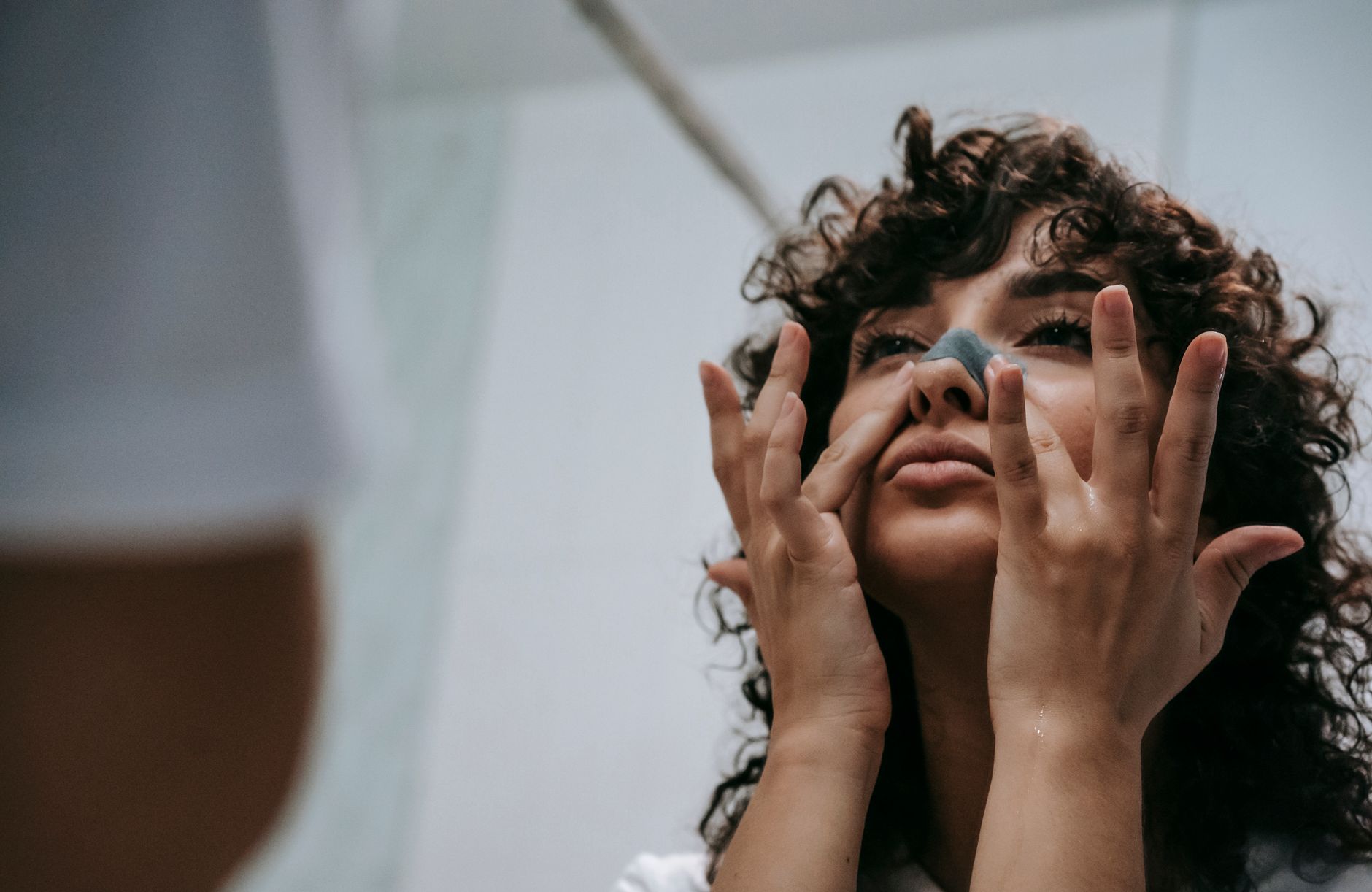
A product that promises to "dissolve dirt" or "scrub out" blackheads misdescribes the problem, because there is no dirt to remove and scrubbing does not clear an oxidized plug. Harsh scrubbing can inflame the skin instead. The AAD's own approach targets the cause: treat blackheads with a retinoid such as OTC adapalene plus a benzoyl peroxide wash, and rely on dermatologist extraction for safe removal. That framing tells you at-home pore strips clear only the surface temporarily—they do not stop new comedones from forming.
The evidence bar: what dermatology and the FTC expect
Dermatology guidance and advertising law converge on the same idea: real claims need real evidence. The AAD's updated acne guidelines, published online in January 2024 in JAAD, give strong recommendations for benzoyl peroxide, topical retinoids (adapalene, tretinoin, tazarotene, trifarotene), topical antibiotics, and oral doxycycline. They favor fixed-dose combinations to raise efficacy and slow antibiotic resistance. On the advertising side, the FTC's Health Products Compliance Guidance requires health claims to rest on "competent and reliable scientific evidence," which it says generally means randomized, controlled human trials.
Testimonials, anecdotes, and lab-dish or animal data do not meet that bar. So when you read a product page, ask what stands behind the claim. An ingredient the AAD recommends, at an FDA-recognized strength, backed by human trials, is a strong signal. A striking before-and-after photo with no study behind it is not.
Red flags that mark an unsubstantiated claim
Certain phrases reliably signal weak or deceptive marketing. They follow directly from FTC rules, since the agency requires trial-level proof and, in its 2024 Reviews Rule effective October 21, 2024, banned fake or AI-generated reviews, undisclosed insider reviews, fake independent-review sites, and review suppression.
Watch for these: Any one of these should slow you down. Two or more together usually mean the claim cannot be verified against the standards above.
- A promised "cure" for acne—a chronic condition, not something a cream eliminates for good.
- "Instant," "overnight," or "miracle" results, when guidelines describe treatment over weeks.
- "Secret" or proprietary ingredients withheld from the label, when the Drug Facts panel should disclose actives.
- Proof by testimonial or influencer claim instead of controlled clinical evidence.
- Suspiciously uniform five-star reviews, which the FTC's rule now expressly targets.
How to check a "non-comedogenic" or pore label
"Non-comedogenic" sounds like a guarantee that a product won't clog pores. It is not. As a 2025 review in JAAD Reviews explains, the term is neither defined nor regulated by the FDA and has no standardized test behind it, so a product can carry it without proof.
Treat the word as a statement of intent, not evidence. It suggests the maker tried to avoid pore-clogging ingredients, but nothing verifies the outcome for your skin. A practical check: ignore the marketing word and look at what the FDA and AAD actually endorse. If you want a product that addresses comedones, confirm it contains a recognized active—adapalene, benzoyl peroxide, or salicylic acid at monograph strengths—rather than trusting an unregulated label to do the work.
Frequently Asked Questions
Does a "Drug Facts" panel guarantee a product works?
It confirms the product is regulated as an OTC drug and names a recognized active at a set strength. That is a strong baseline, but individual results still vary and severe acne may need a dermatologist.
Are pore strips bad for blackheads?
They remove only the surface of an oxidized plug temporarily and do not stop new comedones. The AAD points to retinoids plus a benzoyl peroxide wash for the cause, and professional extraction for safe removal.
Should I stop using benzoyl peroxide over the benzene findings?
The FDA found most products had undetectable or very low benzene and estimated the risk as very low, recalling only a limited number. Storing products cool and away from heat is a sensible precaution.