
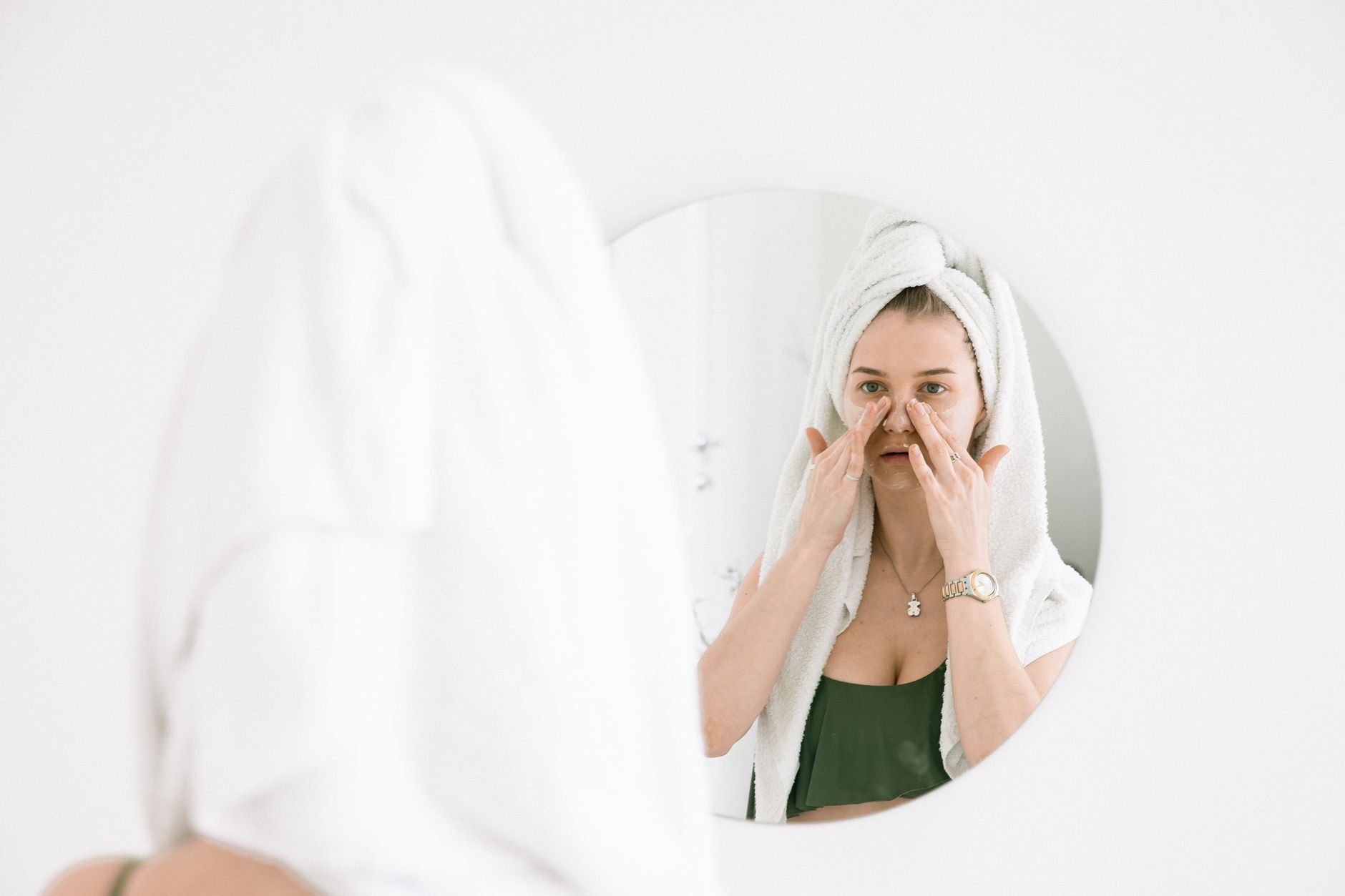
Hormonal breakout means acne driven by androgen shifts that raise oil production and clog pores. The 2026 update centers on blocking that androgen signal, with spironolactone emerging as a durable systemic option for women with persistent chin and jawline disease. Puberty, menstrual cycles, pregnancy, perimenopause and menopause, plus polycystic ovary syndrome, can trigger the same lower-face pattern. The lesions often cluster on the chin and jawline but rarely stay confined there.
Medical information disclaimer: This article is for general educational purposes only and does not provide medical advice, diagnosis, or treatment. Always consult a physician or other qualified health professional about symptoms, medications, tests, or treatment decisions.
Table of Contents
- Why hormones target the jawline
- What cycle breakouts look and feel like
- Which treatments does 2026 evidence favor?
- Is jawline-only acne a myth?
Why hormones target the jawline
Androgens stimulate sebaceous glands and increase sebum. Blocking that signal lowers oil-gland activity and improves acne. That link explains why antiandrogen drugs help hormonal breakouts.
Verywell Health explains that puberty, menstrual cycles, pregnancy, perimenopause and menopause, and polycystic ovary syndrome raise sebum, clog pores, and drive chin, jawline, and lower-face lesions in its medically reviewed jawline acne guide. The effect peaks first at puberty and again in the 30s to 50s. Adult hormonal acne favors the chin and jawline. It can also appear on the rest of the face, chest, shoulders, and back.
What cycle breakouts look and feel like
Menstrual-cycle breakouts form deeper, more painful cysts or papules than whiteheads. They concentrate on the lower third of the face. They can also affect the cheeks, neck, mouth area, shoulders, and back.
A single flare can last days to weeks. Tenderness, firm lumps under the skin, and slow healing point toward a cycle link. Pain and depth help separate these lesions from small surface whiteheads. Location helps too, with the mouth, chin, and jaw carrying the heaviest burden.
Which treatments does 2026 evidence favor?
The American Academy of Dermatology strongly recommends topical benzoyl peroxide, retinoids, topical antibiotics and combinations, and oral isotretinoin for severe disease in its 2024 acne management update. Hormonal options carry conditional recommendations within that framework. For women with hormone-driven jawline acne, Managed Healthcare Executive, reporting Brigham dermatologist John Barbieri at the 2026 American Academy of Dermatology meeting, describes spironolactone as similar or superior to oral antibiotics long-term in its AAD 2026 conference report.
The reported advantage is durable control without antibiotic resistance and related risks. Standard topicals still matter for clogged pores, bacteria, and inflammation. A clinician can pair them with hormonal therapy when lower-face flares persist.
Is jawline-only acne a myth?
Adult female acne is often not jawline-only. Dermatologist Dr. Rachel Ho, reviewing an international study of 374 women, reports almost 90% had multiple facial zones affected in her January 2026 adult female acne review.
That finding challenges isolated jawline diagnosis. A jawline cluster remains a useful clue. It does not prove a hormone cause by itself. Cleveland Clinic advises practical next steps for persistent chin and jawline acne:.
- ask a clinician about hormonal therapy such as contraceptives or spironolactone
- seek dermatology referral if there is no improvement after a few months
- mention cycle timing, pregnancy status, and polycystic ovary syndrome history