
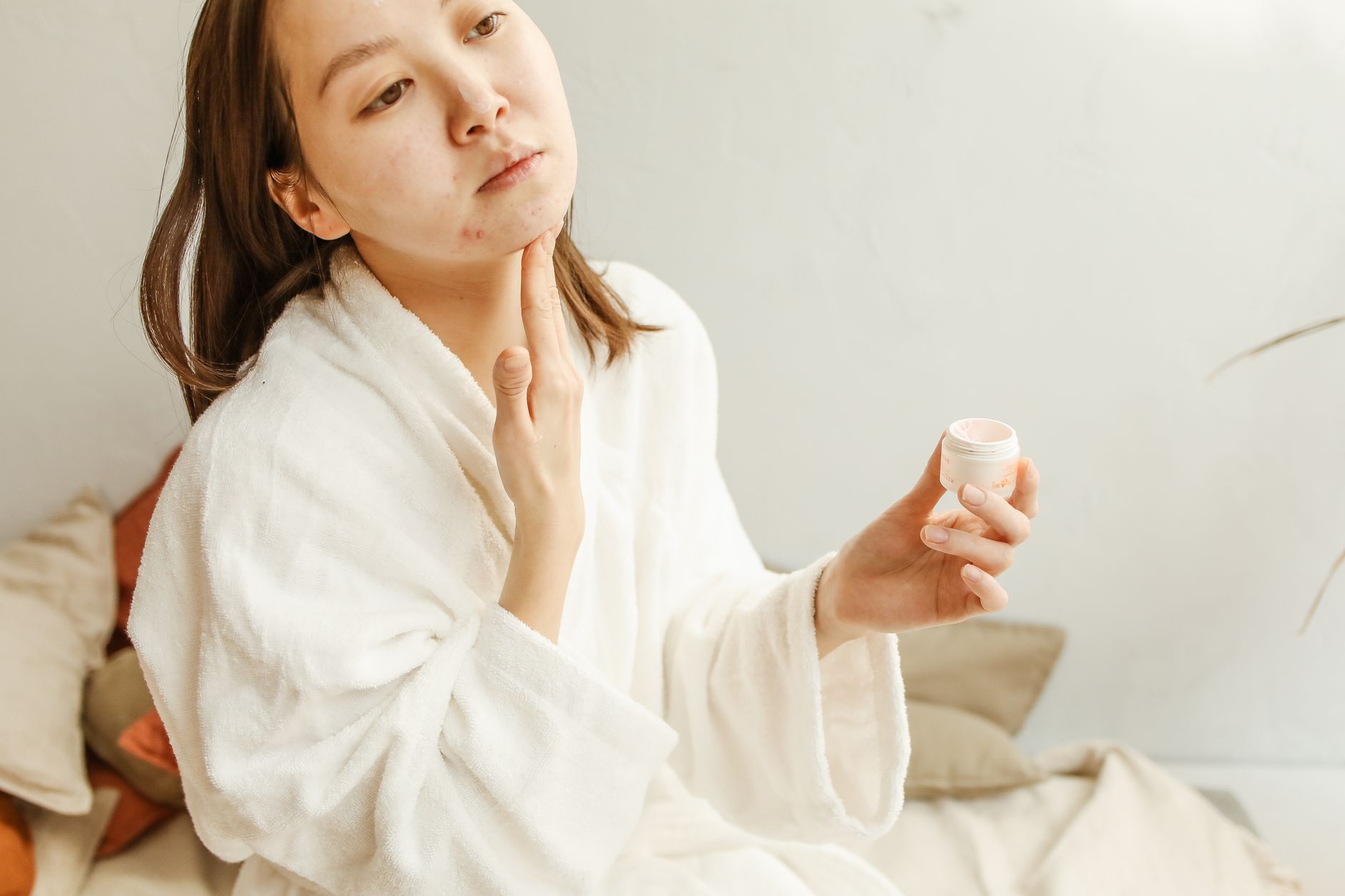
Yes — tretinoin is generally safe to use alongside antifungal treatment for fungal acne, but it will not clear the condition on its own. Fungal acne is not acne at all: it is Malassezia folliculitis, an overgrowth of the yeast that normally lives on skin, growing inside hair follicles, and the *Journal of Clinical and Aesthetic Dermatology* review of Malassezia folliculitis describes antifungal medication, not acne therapy, as the mainstay of treatment.
That distinction drives every practical decision here. Tretinoin has no antifungal activity, so pairing it with an antifungal is about treating two problems at once — or managing texture and true acne while the yeast is handled separately. The real risks are irritation from layering and the chance that what looks like stubborn acne is actually yeast being treated with the wrong drug.
Medical information disclaimer: This article is for general educational purposes only and does not provide medical advice, diagnosis, or treatment. Always consult a physician or other qualified health professional about symptoms, medications, tests, or treatment decisions.
Table of Contents
- What fungal acne actually is, and why tretinoin cannot treat it
- What the evidence says antifungals achieve
- Why the two are often prescribed together
- The irritation problem when layering
- Misdiagnosis is the bigger risk
- Planning for recurrence
- Frequently Asked Questions
What fungal acne actually is, and why tretinoin cannot treat it
Malassezia folliculitis produces small, uniform, itchy bumps — usually on the chest, back, shoulders and forehead — without the blackheads and whiteheads that define acne vulgaris. The yeast is a normal skin resident; the condition starts when it multiplies inside the follicle. Tretinoin, a topical retinoid, works by speeding cell turnover and keeping follicles from plugging.
The FDA labeling for tretinoin cream on DailyMed indicates it only for topical treatment of acne vulgaris and states that safety and efficacy in other disorders have not been established. Using it for Malassezia folliculitis is off-label, and it does nothing to the yeast. Evidence for retinoids in this condition remains thin. A 2026 *Journal of Drugs in Dermatology* review of fungal acne notes that retinoids and benzoyl peroxide target pathways shared with acne and may have a role, but calls for further study — no trial establishes tretinoin as effective on its own.
What the evidence says antifungals achieve
The numbers for antifungal therapy are strong. A 2022 systematic review in *Archives of Dermatological Research* pooled 15 studies of immunocompetent patients and found roughly 92% improvement with oral antifungals, 82% with topical agents, and 77% with combined therapy, concluding that most correctly diagnosed cases reach complete response.
Those figures come mostly from retrospective records, not head-to-head trials, so the ranking between oral and topical should not be read as a direct comparison. One randomized placebo-controlled trial cited in that review — Parsad and colleagues, 1999, in 26 patients — found that seven days of itraconazole 200 mg daily produced healing or marked improvement in 84.6% of patients versus 8.3% on placebo. The practical reading: an oral antifungal course tends to work fast, and topicals serve as adjunctive and maintenance therapy.
Why the two are often prescribed together
Malassezia folliculitis and acne vulgaris can occur in the same person at the same time. The JCAD review notes the association may require combinations of both antifungal and acne medications — which is the clinical rationale for using tretinoin alongside an antifungal rather than instead of one.
Concurrent use is documented in practice. A case report indexed in PMC describes a patient treated with oral fluconazole plus topical clotrimazole and tretinoin 0.0375% cream, with no reported incompatibility between the agents. So a reasonable regimen looks like this: the antifungal clears the yeast, and tretinoin continues to address the comedonal acne that the antifungal will never touch.
The irritation problem when layering
Tretinoin's prescribing information is blunt about local tolerance. The Retin-A prescribing information warns that topical use may induce severe erythema and peeling, directs reducing frequency or discontinuing if irritation warrants, and advises particular caution with preparations containing sulfur, resorcinol or salicylic acid, and with medicated or abrasive soaps.
Antifungal shampoos and body washes used for fungal acne frequently contain exactly those kinds of ingredients. That is the main real-world risk of combining — not a drug interaction, but a barrier that gives out. Practical ways to reduce the overlap:.
- Use the antifungal wash in the shower and apply tretinoin later, on dry skin, rather than back to back.
- Treat different areas with different products where the two conditions sit in different places.
- Start tretinoin two or three nights a week and build up, rather than nightly from day one.
- Pause tretinoin, not the antifungal, if stinging, redness or peeling escalates — the antifungal is the drug doing the curative work.
- Skip salicylic acid, sulfur and scrubs while both are in the routine.
Misdiagnosis is the bigger risk
Treating yeast as acne is the more consequential error. In a retrospective review of 110 Pityrosporum folliculitis cases indexed in PubMed, more than 75% of patients had acne that had recently been treated with antibiotics, and the authors found the condition more common following antibiotic use.
That pattern matters for anyone whose "acne" worsened on a course of doxycycline or minocycline. Acne-directed therapy can precede the yeast overgrowth or make it worse, and adding tretinoin to that picture treats a condition the patient may not have. Signs worth raising with a clinician: itch rather than tenderness, bumps of uniform size with no comedones, a flare that began during or after oral antibiotics, and a lack of response to standard acne treatment.
Planning for recurrence
Clearance is not the end of it. DermNet's page on Malassezia folliculitis notes that recurrence is common even after successful treatment, and recommends ongoing weekly application of a topical antifungal as maintenance.
The scale of the relapse problem is documented: one French series saw 75% of patients cured on oral ketoconazole, with consistent relapse within three to four months of stopping. Maintenance is the difference between one successful course and a cycle of flares. This is where long-term tretinoin use can sit comfortably — a weekly antifungal wash for maintenance, with tretinoin continuing on its own schedule for the acne vulgaris it is actually indicated for.
Frequently Asked Questions
Can I use tretinoin while taking oral itraconazole or fluconazole?
Published case documentation includes oral fluconazole used alongside topical clotrimazole and tretinoin cream, with no reported incompatibility. Confirm with the prescriber, since oral antifungals carry their own interaction list.
Will tretinoin make fungal acne worse?
No evidence in the cited reviews shows tretinoin aggravating Malassezia folliculitis. The documented risk is irritation and barrier damage from layering it over medicated antifungal washes.
How long before I know the antifungal is working?
The randomized trial of itraconazole 200 mg daily measured healing or marked improvement after just seven days, so improvement is typically rapid rather than gradual.
Do I need an oral antifungal, or is a topical enough?
The 2022 systematic review reported roughly 92% improvement with oral agents and 82% with topicals, drawn from mostly retrospective data. Topicals are commonly used adjunctively and for weekly maintenance after clearance.