
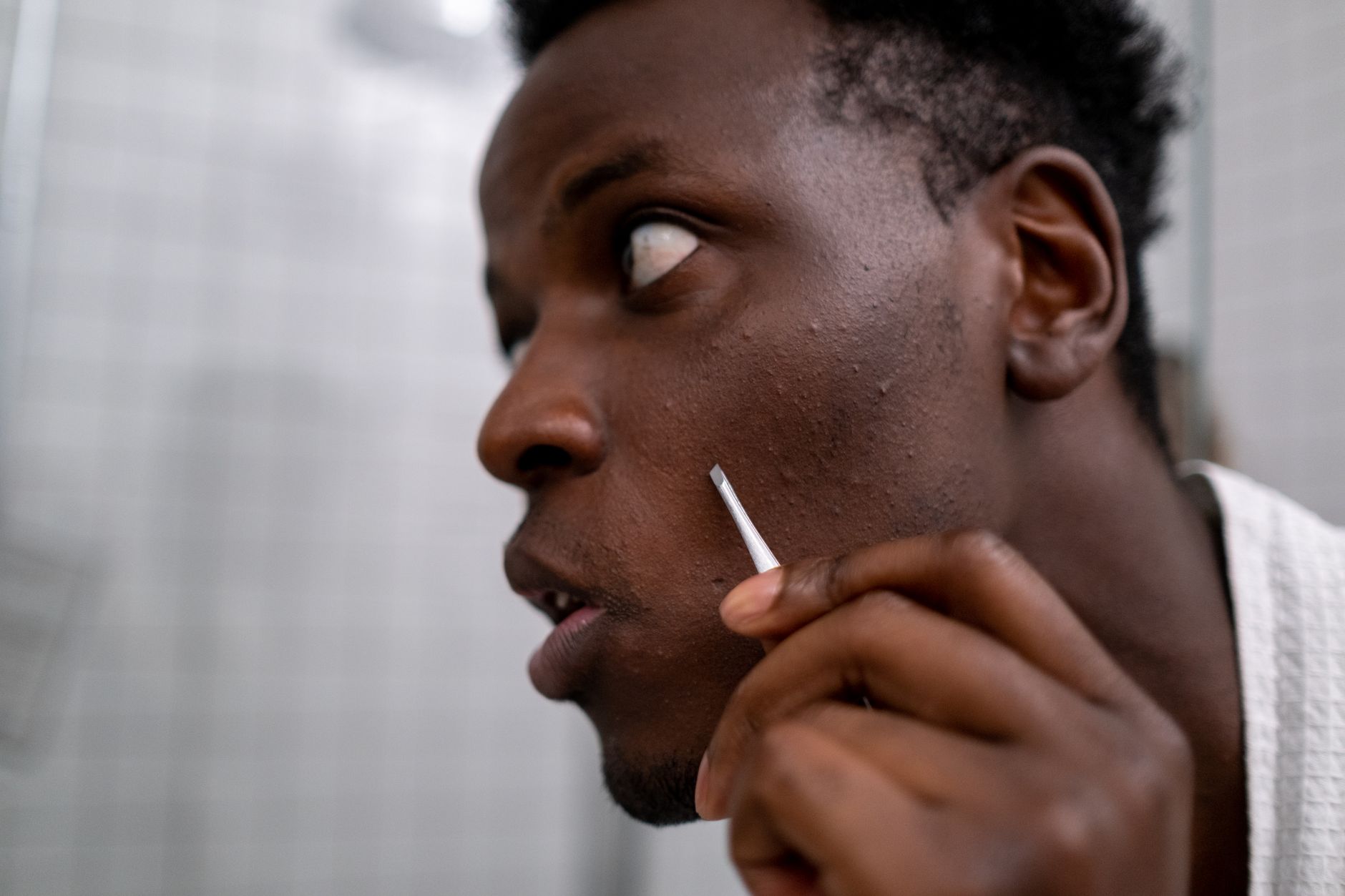
Acne extraction — the physical removal of a clogged pore's contents with a sterile needle or comedone extractor — is reasonably safe when a dermatologist performs it and risky when you do it yourself, but the controlled-trial evidence behind it is thin either way. The American Academy of Dermatology's 2024 guideline found the research insufficient to recommend extraction for or against, which makes it an optional add-on to proven acne treatments, never a replacement for them. That gap between common practice and confirmed evidence is the core of this guide. What follows covers what professional extraction actually involves, why self-extraction backfires, what the trial record does and does not show, and the questions worth asking a provider before agreeing to the procedure.
Medical information disclaimer: This article is for general educational purposes only and does not provide medical advice, diagnosis, or treatment. Always consult a physician or other qualified health professional about symptoms, medications, tests, or treatment decisions.
Table of Contents
- Where extraction sits in the 2024 acne guideline
- What a dermatologist does differently from your fingers
- How thin is the trial evidence, exactly?
- Handling a deep, painful pimple at home
- Questions to ask before booking an extraction
- Frequently Asked Questions
Where extraction sits in the 2024 acne guideline
The AAD's updated acne guideline, published January 30, 2024 in the Journal of the American Academy of Dermatology, reviewed comedo extraction and concluded the evidence is insufficient to recommend for or against it. Extraction landed in the same category as chemical peels, laser and light devices, microneedle radiofrequency, and photodynamic therapy — procedures that are widely offered but not yet backed by strong trials. The same guideline, which replaced the 2016 version, issued 18 evidence-based recommendations and 5 good practice statements.
Its strong recommendations went to benzoyl peroxide, topical retinoids, topical antibiotics, and oral doxycycline, according to the AAD's guideline announcement. The practical reading: extraction can clear an individual blocked pore, but it does nothing to stop new lesions forming. Any extraction plan that is not paired with one of the strongly recommended medical treatments is treating symptoms one pore at a time.
What a dermatologist does differently from your fingers
Professional extraction is a minor sterile procedure. The dermatologist opens the clogged pore with a sterile needle or surgical blade, then removes the contents with a comedone extractor — a small metal loop tool — under sterile conditions. For a deep nodule or cyst, extraction is the wrong tool entirely: the standard office treatment is a corticosteroid injection, which flattens most lesions within 48 to 72 hours.
Self-extraction fails on every point of that process. The AAD warns that squeezing a pimple risks infection from bacteria on the hands, can push the lesion's contents deeper into the skin, increases inflammation, and raises the odds of permanent scarring and discoloration — with discoloration risk running higher in darker skin tones. The "pushing deeper" mechanism is why a squeezed pimple often gets larger and angrier rather than draining. Pressure applied from the surface can rupture the pore wall inward, spreading the contents into surrounding tissue instead of out of the skin.
How thin is the trial evidence, exactly?
Very thin. The main randomized study on record, trial NCT04206631, enrolled 128 patients aged 15–50 across three Indonesian dermatology clinics in 2015, comparing comedone extraction against oral doxycycline 100 mg over six weeks for moderate acne. It is a single small trial, and no results have been posted on the registry.
This matters because professional extraction's safety case rests on expert guidance and sterile technique, not on controlled-trial data. Even done professionally, the guideline literature notes possible downsides: incomplete extraction, the lesion refilling, and tissue damage. Extraction results are also not durable on their own. The AAD notes that without ongoing medical therapy — typically a topical retinoid to keep pores clear — extracted pores simply clog again.
Handling a deep, painful pimple at home
For a deep, painful pimple, the AAD's home advice is to never attempt extraction at all. Instead, apply a washcloth soaked in hot water for 10–15 minutes, three times daily. The warmth draws the lesion toward the surface so it can drain and heal on its own.
Warning signs that a lesion needs a professional rather than patience: The urge to pick can itself be the problem. A 2026 study of psychiatric comorbidity in acne patients found excoriation (skin-picking) disorder in 17% of them, most often alongside severe or long-standing acne, and U.S. prevalence of skin-picking disorders overall is estimated at 1.4%–5.4%. If picking feels compulsive rather than occasional, that is a conversation for a clinician, not a willpower issue.
- It is a nodule or cyst — deep, firm, and painful — which gets a corticosteroid injection in-office, not extraction.
- It keeps refilling after draining.
- It sits somewhere scarring would be costly, since discoloration and scarring from a botched squeeze can be permanent.
Questions to ask before booking an extraction
The evidence supports a short, specific checklist for anyone offered extraction at a dermatology office, med spa, or facial appointment: Scale is the reason these questions matter for so many people. Acne affects up to 50 million Americans annually, roughly 85% of people aged 12 to 24 experience at least minor acne — the group most likely to attempt extraction — and adult acne affects up to 15% of women. A provider who cannot answer the maintenance question is offering a cosmetic pause, not a treatment plan.
- Who performs the extraction, and with what sterilized instruments?
- Is this lesion a candidate at all? Comedones (blackheads and whiteheads) are; nodules and cysts are not — they get injections.
- What maintenance plan follows? Ask specifically about a topical retinoid or another guideline-backed treatment, since results do not last without one.
- What happens if the extraction is incomplete or the lesion refills — is a follow-up included?
Frequently Asked Questions
Is professional acne extraction proven to work?
No trial has established it. The 2024 AAD guideline found the evidence insufficient to recommend extraction for or against, and the one registered randomized trial of 128 patients has no published results. Its safety case rests on sterile technique and expert practice.
Can extraction replace acne medication?
No. The guideline strongly recommends benzoyl peroxide, topical retinoids, topical antibiotics, and oral doxycycline; extraction is at most an adjunct, and extracted pores reclog without ongoing therapy such as a topical retinoid.
What about a cyst or deep nodule?
Those are not extraction candidates. The in-office treatment is a corticosteroid injection, which flattens most lesions within 48 to 72 hours.