
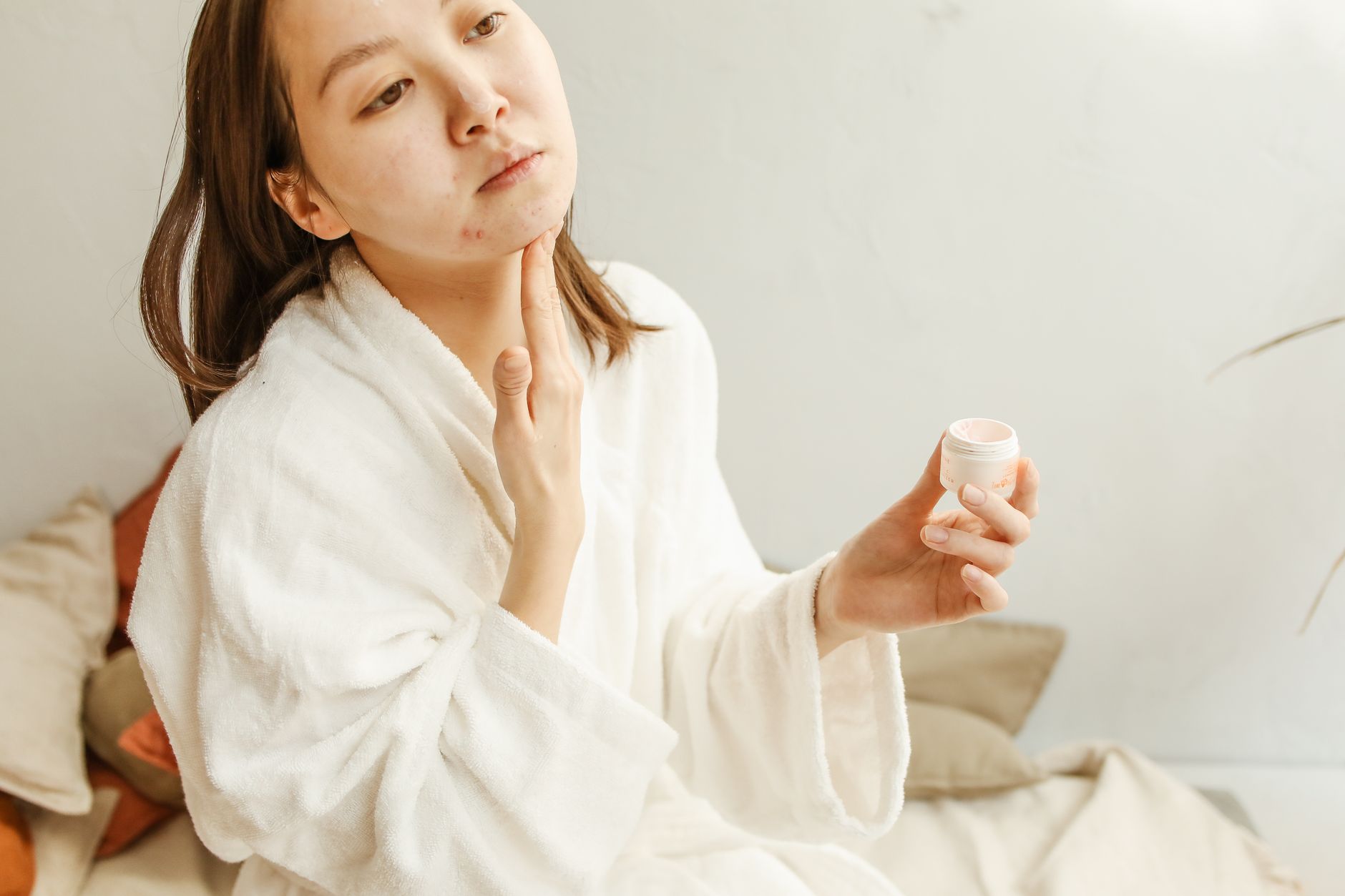
Acne cosmetica is comedonal acne triggered when oily cosmetics, moisturizers, pomades or hair products plug pores. The decision path is to stop the suspect product, switch to oil-free noncomedogenic care, and add proven treatment only if lesions persist.
Whiteheads and blackheads appear mainly on the face and forehead, according to the U.S. National Library of Medicine in its MedlinePlus acne care guide. This guide explains how to spot the pattern, what to change, how to weigh treatment trade-offs, and when to get follow-up.
Medical information disclaimer: This article is for general educational purposes only and does not provide medical advice, diagnosis, or treatment. Always consult a physician or other qualified health professional about symptoms, medications, tests, or treatment decisions.
Table of Contents
- Is your breakout acne cosmetica?
- Which products should you change first?
- What daily routine supports clearing?
- Should you add over-the-counter treatment?
- When should you get medical follow-up?
Is your breakout acne cosmetica?
Look for small whiteheads and blackheads across the forehead, cheeks, chin or hairline. New makeup, moisturizer, sunscreen, facial oil, pomade or hair product started weeks before the breakout points toward a cosmetic trigger. Early product testing found about half of 25 creams mildly comedogenic in rabbit-ear assays.
Reported culprits included lanolin, petrolatum, some vegetable oils, butyl stearate, lauryl alcohol and oleic acid. Check timing, placement and product change together. Breakouts centered where a product is applied, plus recent use of a heavier formula, make acne cosmetica more likely.
Which products should you change first?
Stop the suspected cream, makeup, moisturizer, pomade or hair oil. Replace it with a water-based, oil-free formula labeled noncomedogenic or non-acnegenic.
Read ingredient habits, not promises alone. Heavy oils and long-wear coverage raise plugging risk on acne-prone skin.
- Pause one suspect at a time so you can see what matters
- Choose water-based, oil-free makeup and moisturizer labeled noncomedogenic
- Keep pomades, oils and waxes away from the forehead and hairline
- Reintroduce only one product after skin clears, then watch for return
What daily routine supports clearing?
If you wear makeup, choose oil-free, non-comedogenic makeup. The American Academy of Dermatology advises removing all makeup before bed with oil-free remover plus gentle cleanser, and never scrubbing during removal, as reposted in this dermatology makeup guide. Wash gently once or twice daily and after sweating.
Shampoo daily if hair is oily, keep hair off the face, and avoid repeated scrubbing, drying toners and picking. Gentle care protects the barrier while pores clear. Scrubbing, alcohol toners and squeezing prolong redness and raise mark risk.
Should you add over-the-counter treatment?
For persistent lesions, the American Academy of Dermatology strongly recommends topical benzoyl peroxide to cut acne bacteria and topical retinoids such as adapalene, tretinoin, tazarotene or trifarotene to unclog pores, in its 2024 acne guidelines report. Start with one active, use a thin layer, and allow several weeks of steady use. The key trade-off is irritation.
The U.S. Food and Drug Administration warns in its acne-product safety notice that benzoyl peroxide and salicylic acid commonly cause burning, dryness, peeling, redness and slight swelling. If irritation bothers you, use the product once daily or every other day. Stop and seek care for severe swelling, blistering, eye irritation or signs of allergy.
When should you get medical follow-up?
See a GP or dermatologist for moderate to severe acne, painful nodules or cysts, or signs of scarring. The UK National Health Service also advises follow-up when consistent care and over-the-counter treatment bring no improvement after several weeks. Bring a list of makeup, moisturizer, sunscreen and hair products, plus start dates.
Note which product you stopped, what you switched to, and how often you used treatment. Do not wait if lumps grow painful, merge, leave pits or dark marks, or affect sleep, work or mood. Early treatment lowers lasting scar risk.