
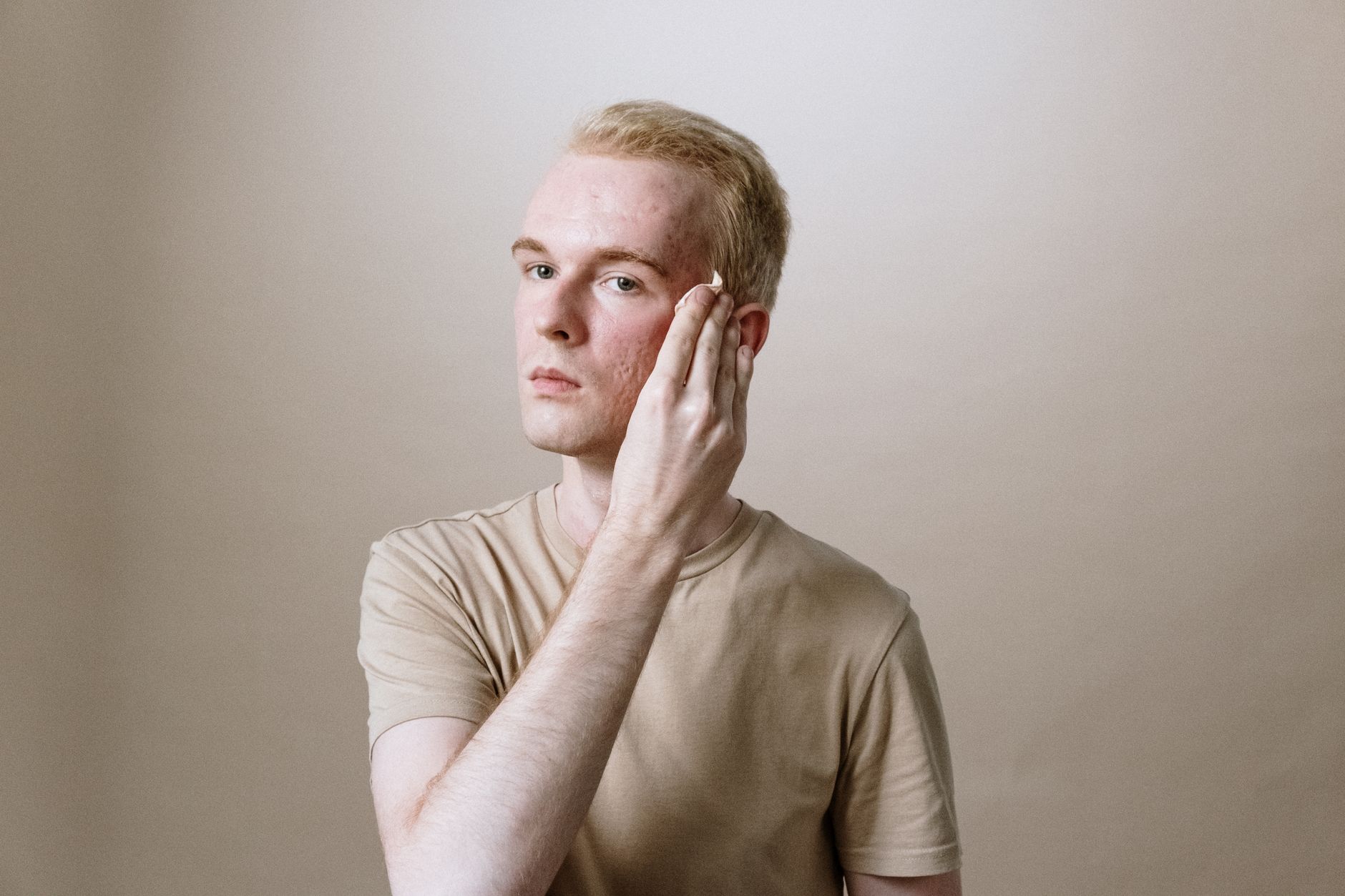
Acne treatment can fail even with the right routine because the timeline is too short, the coverage is too narrow, or hormones, drug resistance, irritation, and daily habits block progress. Most routines are stopped at 2-3 weeks, just before they can work.
Acne is a disease of the pore, not just visible pimples. It involves excess oil called sebum, abnormal clumping of follicle cells, growth of Cutibacterium acnes bacteria, and inflammation. That mix explains why thin whole-area treatment matters more than spot dabbing.
Medical information disclaimer: This article is for general educational purposes only and does not provide medical advice, diagnosis, or treatment. Always consult a physician or other qualified health professional about symptoms, medications, tests, or treatment decisions.
Table of Contents
- Are you judging results too early?
- Are you treating only pimples?
- Could hormones or antibiotic resistance limit response?
- Is irritation or friction undoing progress?
- When should you stop switching products?
Are you judging results too early?
Quitting after 2-3 weeks mimics failure. The American Academy of Dermatology advises giving any new treatment at least 4 weeks, expecting first improvement at 6-8 weeks and judging full response at about 12 weeks in its how-to-treat-acne guide. Skipping doses also looks like failure. A Pulse Today clinical review for GPs identifies nonadherence as the major modifiable cause.
Complex regimens, cost or coverage barriers, unrealistic time expectations, and early irritation drive missed doses. Keep the routine simple and continuous. Use one combination as directed. Track the start date and review change only after the 12-week mark.
Are you treating only pimples?
Spot-treating visible pimples under-treats disease. The National Institute of Arthritis and Musculoskeletal and Skin Diseases describes acne as excess sebum, abnormal follicular cell clumping, C. acnes growth, and inflammation in its acne diagnosis and treatment page. New clogs form in clear-looking skin nearby.
Whole-area combination therapy reaches those early clogs. A thin layer over the full prone zone works better than thick dots on red spots. Apply to the entire forehead, cheeks, chin, or chest area as directed. Do not increase thickness to speed clearing. Consistency across the zone controls both seen and unseen lesions.
Could hormones or antibiotic resistance limit response?
Ongoing hormone shifts can overpower topicals alone. The UK National Health Service links continued flares to puberty, menstrual cycles, pregnancy, polycystic ovary syndrome, and starting or stopping contraception in its acne guidance. These shifts raise sebum and favor lower-face breakouts. Bacterial resistance is another ceiling. A Dermatology and Therapy update reports rising C.
acnes antibiotic resistance. It supports limiting oral antibiotics to about 3-4 months and pairing topical antibiotics with benzoyl peroxide or a retinoid. Ask about hormonal patterns and antibiotic history at follow-up. Note cycle timing, contraception changes, and prior antibiotic months. That record helps a clinician adjust therapy rather than repeat a weak course.
Is irritation or friction undoing progress?
Early redness, dryness, scaling, stinging or burning, and sun sensitivity often peak before benefit appears. FDA prescribing information for adapalene plus benzoyl peroxide says these effects are most likely in the first 4 weeks, according to its adapalene and benzoyl peroxide prescribing information. Many people stop during that window.
Gentle handling improves tolerance. Heavy or comedogenic makeup, sunscreen, and hair products can clog pores. Helmets, tight straps, over-washing, scrubbing, and picking prolong breakouts and raise scarring risk.
- Use oil-free, noncomedogenic skin and hair products.
- Wash twice daily with mild cleanser; do not scrub.
- Avoid picking or squeezing.
- Reduce friction from helmets, masks, and tight collars.
When should you stop switching products?
Specific diet changes remain unproven as targeted treatment. Product rotation will not fix cysts, nodules, scarring, or cyclical severe flares. Teens with persistent disease, adult women with cycle-linked flares, and anyone without improvement after about 12 weeks need escalation.
A Pulse Today clinical review advises dermatologist referral for those groups. Bring a list of products used, treatment weeks completed, and photos by date. Ask whether prescription retinoid strength, hormonal therapy, isotretinoin evaluation, or scar prevention is appropriate next.