
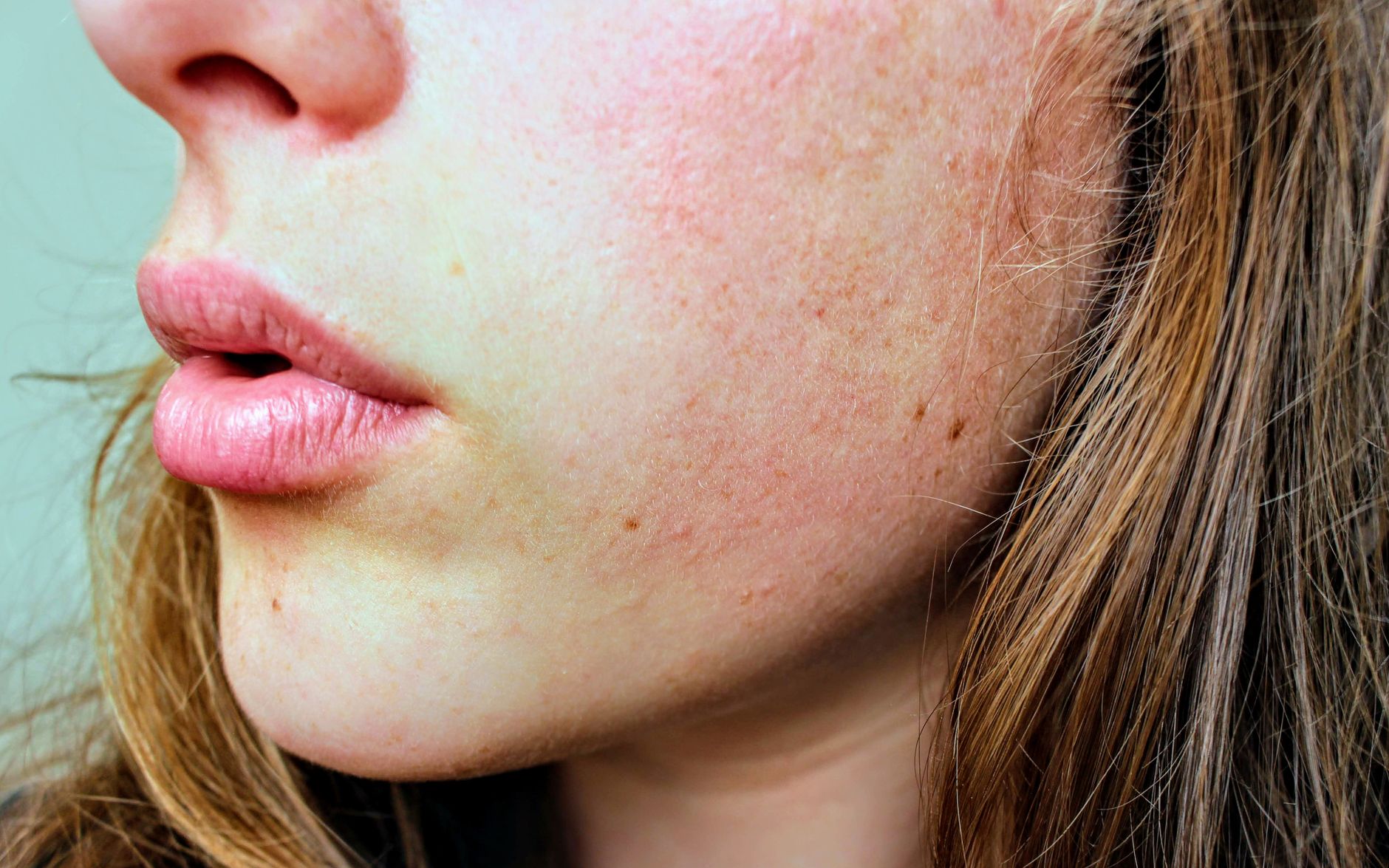
Dermatologists diagnose hormonal jawline acne with a physical exam of lesion types and face distribution plus a detailed medical history. Harvard Health Publishing states in its acne guide that typical cases need no blood test, scan, or biopsy. Hormonal jawline acne means deep, tender, inflamed bumps that cluster along the chin, jawline, and lower face. Dermatologists treat that pattern, especially with cycle-linked flares, as a clue to a hormonal driver, not as proof by itself.
Medical information disclaimer: This article is for general educational purposes only and does not provide medical advice, diagnosis, or treatment. Always consult a physician or other qualified health professional about symptoms, medications, tests, or treatment decisions.
Table of Contents
- What pattern points toward hormones?
- Which history questions matter most?
- Do you need hormone blood tests?
- When do they check for PCOS or look-alikes?
What pattern points toward hormones?
Dermatologists look closely at where breakouts sit and what they feel like. Reporting on UCSF dermatologist Dr. Jenny Murase, MDedge notes in its acne report that a lower-face, chin, and jawline concentration of deep, inflamed, nodulocystic papules suggests a hormonal driver.
They also ask about timing. Flares before a period strengthen that clinical clue. Tenderness, depth, and repeated breakouts in the same zone matter more than an occasional surface pimple.
Which history questions matter most?
The visit starts with a detailed menstrual, reproductive, medication, family, and lifestyle history. The Androgen Excess and PCOS Society committee recommends this broad review to spot cycle or hormone links. Bring clear answers about: A short timeline of when jawline breakouts began, worsened, or resisted treatment helps the dermatologist decide next steps.
- cycle length, regularity, missed periods, and premenstrual flares
- pregnancies, contraceptive use, and recent medication changes
- hair loss, excess facial or body hair, and family acne or PCOS symptoms
Do you need hormone blood tests?
Hormone testing is selective, not routine. An International Journal of Women's Dermatology review explains that testing centers on free and total testosterone when excess male-type hormones are suspected, with DHEA-S, androstenedione, LH/FSH, prolactin, and 17-hydroxyprogesterone added by context.
Dermatologists test or refer when red flags appear: Most adult women with jawline acne have normal circulating androgens, a limitation emphasized in the PCOS committee report. So pattern alone does not prove a hormone disorder, and routine testing mainly adds cost.
- hirsutism, scalp thinning, or signs of virilization
- infertility, infrequent periods, or absent periods
- sudden, severe, or treatment-resistant acne
When do they check for PCOS or look-alikes?
When PCOS is possible, dermatologists do not rely on one lab value. Cleveland Clinic and the Endocrine Society describe PCOS diagnosis as a combination of reproductive history, hormone testing, and ovarian imaging, because no single testosterone or ultrasound result confirms it alone.
They use swabs, scrapings, or culture only for atypical pustules. DermNet states these tests help exclude mimics such as bacterial folliculitis, gram-negative folliculitis, Malassezia folliculitis, tinea faciei, rosacea, or perioral dermatitis. Bring your cycle dates, medication list, and photos of flares to make that triage faster.