
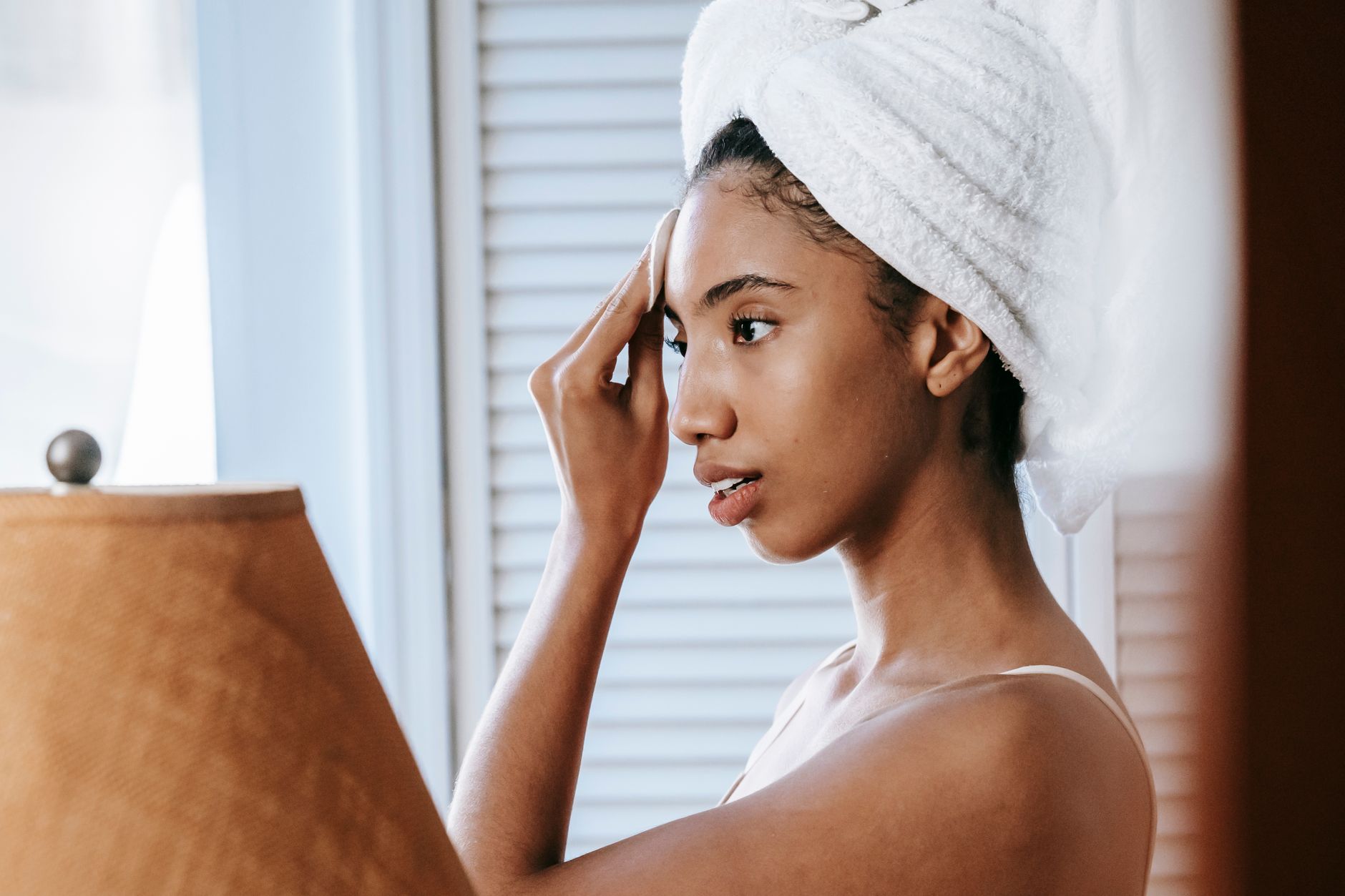
Forehead acne tends to flare in fall because cooler, drier air weakens your skin's protective barrier right as oil-based hair products, heavier moisturizers, and hats or headbands start touching your forehead more often. Clinical visit data also shows acne itself worsening through the season, not just your perception of it. A 2015 research letter in the Journal of the American Academy of Dermatology tracked Physician Global Assessment data from New England between June 2011 and May 2014 and found acne patient visits were lowest in summer at 18 percent, then climbed to 25 percent in fall, 28 percent in winter, and 29 percent in spring — a pattern the authors say reflects acne clinically worsening as fall begins, not during summer heat, as the JAAD research letter reports. The forehead and hairline are especially exposed because they sit closest to hair products and headwear, two triggers that become more common once the weather cools.
Medical information disclaimer: This article is for general educational purposes only and does not provide medical advice, diagnosis, or treatment. Always consult a physician or other qualified health professional about symptoms, medications, tests, or treatment decisions.
Table of Contents
- Does acne really get worse in fall, or does it just feel that way?
- Why does cooler, drier air trigger breakouts?
- Why does the forehead break out specifically?
- Does fall's stress and routine change play a role?
- What should you change about your routine?
- Frequently Asked Questions
Does acne really get worse in fall, or does it just feel that way?
The JAAD data gives a clear seasonal curve: visits bottom out in summer and rise steadily from fall through spring, according to the JAAD research letter. That curve is based on clinic visits in New England, a region with sharp swings in temperature and humidity between seasons. The same researchers caution that this pattern may not hold everywhere.
Their data reflects a climate with strong seasonal shifts, and the trend may not generalize to regions with milder or less variable weather, per the JAAD research letter. The picture isn't unanimous. An earlier 2002 study of 452 patients, cited in Acne.org's seasonal review, found 56.3 percent reported their acne got worse in summer, versus only 11.4 percent who said winter was worse. That's the opposite seasonal direction, which means your own pattern — and your local climate — matters more than a single rule.
Why does cooler, drier air trigger breakouts?
Fall air carries less moisture than summer air, and that drop directly affects your skin. Dermatologist Ellen Marmur explains that cooler, drier autumn air strips the skin's surface lipids — the oils that hold moisture in and keep bacteria out — which weakens the skin barrier and lets bacteria penetrate pores more easily, triggering breakouts, according to Olansky Dermatology.
Indoor heating makes it worse. Dermatology of Connecticut notes that once fall arrives, indoor heating dries indoor air beyond what the outdoor humidity drop alone would cause, compounding the moisture loss that stresses acne-prone skin's barrier function, per Dermatology of CT. A weakened barrier on the forehead, which already has a high concentration of oil glands, gives bacteria an easier path to inflamed pores.
Why does the forehead break out specifically?
Forehead and hairline breakouts often have a cause distinct from facial acne elsewhere: your hair products. Healthline identifies "pomade acne" as a pattern caused by oil-based hair products — pomades, waxes, and oils including cocoa butter and coconut oil — migrating from hair onto forehead skin and clogging pores there, as described in Healthline's forehead acne guide.
Fall adds a second forehead-specific trigger: headwear. Apollo247's dermatology guidance advises against tight hats, helmets, and headbands because they trap sweat, heat, and oil directly against forehead skin — a mechanism that becomes more common once cooler weather brings more head coverings into daily use, according to Apollo247. If your forehead breakouts line up with a beanie, cap, or headband you've started wearing again, that's a more direct culprit than the weather itself.
Does fall's stress and routine change play a role?
The return to school or work schedules in fall raises stress for many people, and stress has a measurable biological link to acne. Dr. Dennis Gross's practice states that this seasonal stress increases cortisol, and elevated cortisol promotes inflammation that can trigger or worsen acne breakouts during the fall transition, per Dr.
Dennis Gross Dermatology. This mechanism works alongside the barrier and product changes above rather than replacing them. A stressful back-to-school or back-to-work period combined with drier air and heavier products creates more triggers acting on the skin at once, which is part of why fall breakouts can feel more persistent than a single-cause flare.
What should you change about your routine?
Two product habits commonly shift in fall, and both can land directly on the forehead. Dermatology of Connecticut reports that people switch to richer, heavier moisturizers and wear more makeup in fall to offset dryness, and these can clog pores and aggravate acne if the products aren't labeled non-comedogenic, according to Dermatology of CT.
Dermatologists quoted by Healthline and Ro recommend switching to non-comedogenic hair and skin products once oil-based styling products or headwear are identified as the forehead-specific trigger, per Healthline and Ro. They also recommend washing pillowcases, hats, and towels more frequently, since these surfaces accumulate the same oils that clog forehead pores.
- Check your hair products for pomades, waxes, or oils like coconut or cocoa butter, and keep them off your hairline.
- Swap in a non-comedogenic moisturizer before reaching for a heavier one to fight dryness.
- Loosen or reduce daily headwear, and wash hats, headbands, and pillowcases more often.
- If you wear makeup more in fall, confirm it's labeled non-comedogenic before applying it near the hairline.
Frequently Asked Questions
Is forehead acne different from acne on other parts of the face?
It often has a distinct cause called pomade acne, triggered by oil-based hair products migrating onto forehead skin, according to Healthline.
Will switching moisturizers alone fix fall forehead breakouts?
Not if hair products or headwear are also contributing; dermatologists quoted by Healthline and Ro recommend addressing non-comedogenic hair products and headwear hygiene alongside skincare changes.
Does everyone's acne get worse in fall?
No. New England clinic data shows a fall rise, per the JAAD research letter, but an earlier study cited by Acne.org found more people reported summer as their worse season.