
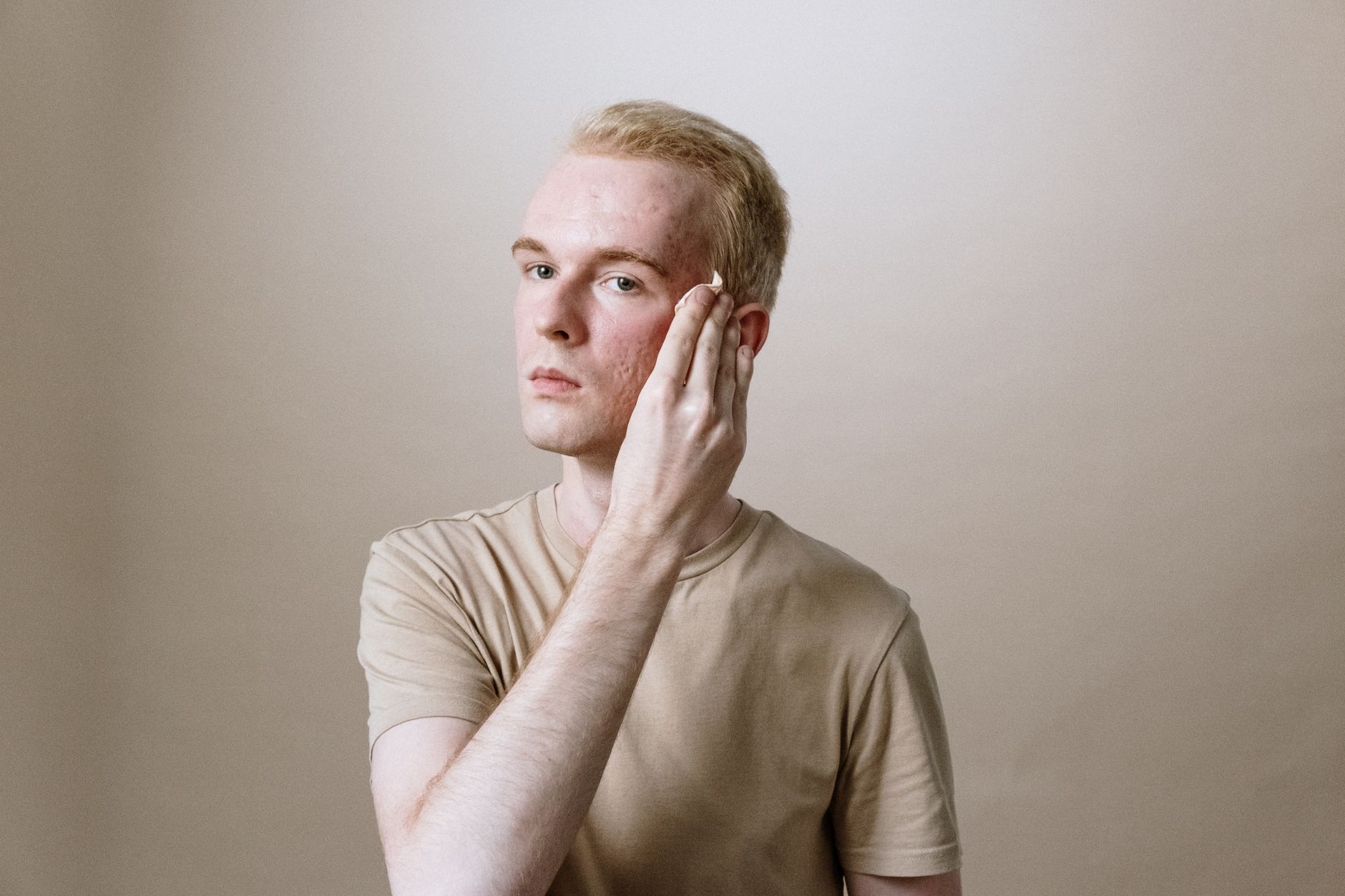
Acne comes back in your 30s and 40s because shifting estrogen and steady androgen levels raise oil production and plug follicles. Most cases are also old acne returning, not first-time breakouts.
Here persistent acne means breakouts that continue from the teen years with quieter and busier spells. Relapsing acne means skin clears for a time, then breaks out again. Women face both patterns more often than men in adulthood.
Medical information disclaimer: This article is for general educational purposes only and does not provide medical advice, diagnosis, or treatment. Always consult a physician or other qualified health professional about symptoms, medications, tests, or treatment decisions.
Table of Contents
- How common is acne after 30?
- Why do hormones bring it back?
- Where does adult acne appear?
- What triggers a flare?
- When to seek care and what steadies skin?
How common is acne after 30?
A survey summarized by the American Academy of Dermatology reported acne in 35.2% of women and 20.1% of men in their 30s. Rates stayed high in the 40s, at 26.3% of women and 12.0% of men. Women were affected more at every adult age.
An International Journal of Women's Health review found persistent or relapsing acne from adolescence explains 75-85% of adult female cases. That means most breakouts in the 30s and 40s are returns. First-ever acne in mid-adulthood is less common.
Why do hormones bring it back?
The American Academy of Dermatology explains in a research summary that androgens in both sexes overstimulate oil glands. They also change follicle-lining skin cells so shed cells turn sticky and clog follicles. Excess sebum, growth of Propionibacterium acnes, and inflammation then form pimples.
The same International Journal of Women's Health review notes estrogen falls during perimenopause while androgen levels stay comparatively steady. That shift creates relative hyperandrogenism, where androgen signals weigh more heavily. It raises sebum production and follicular inflammation and can cause new jawline acne in the 40s.
Where does adult acne appear?
Cleveland Clinic notes adult hormonal breakouts cluster on the lower third of the face, chin, jawline, and neck. Shoulders and back can break out too. Lesions tend to run deeper, larger, and more painful as cysts or papules.
That pattern differs from teenage acne. Teen breakouts favor the T-zone with more blackheads and whiteheads. A painful chin or jawline cyst in the late 30s fits the adult pattern better than a scatter of teenage blackheads.
What triggers a flare?
According to Harvard Health Publishing guidance, pregnancy, menstrual-cycle shifts, and menopause alter estrogen and progesterone balance and oil production. Starting, stopping, or changing birth-control pills or IUDs can do the same. Flares may appear months after the change, not right away.
Harvard Health Publishing also points to stress raising androgen and cortisol signaling that stimulates oil glands and follicles. Daily exposures and background risk shape who flares next. Family history and prior teen acne do not cause a flare alone. They lower the threshold so hormone shifts and pore-clogging exposures break through more easily.
- pore-clogging skin and hair products
- steroids and some progestins
- dairy and high-glycemic diets
- family history and prior teen acne
When to seek care and what steadies skin?
The American Academy of Dermatology reports most women with acne have normal androgen levels. Hormone testing is reserved for excess facial or body hair, deepening voice, or irregular periods.
Control calls for a tailored, pregnancy-safe regimen when pregnancy is possible or planned. Use it consistently for 8-10 weeks with dermatologist follow-up so dose, irritation, and progress can be checked.