
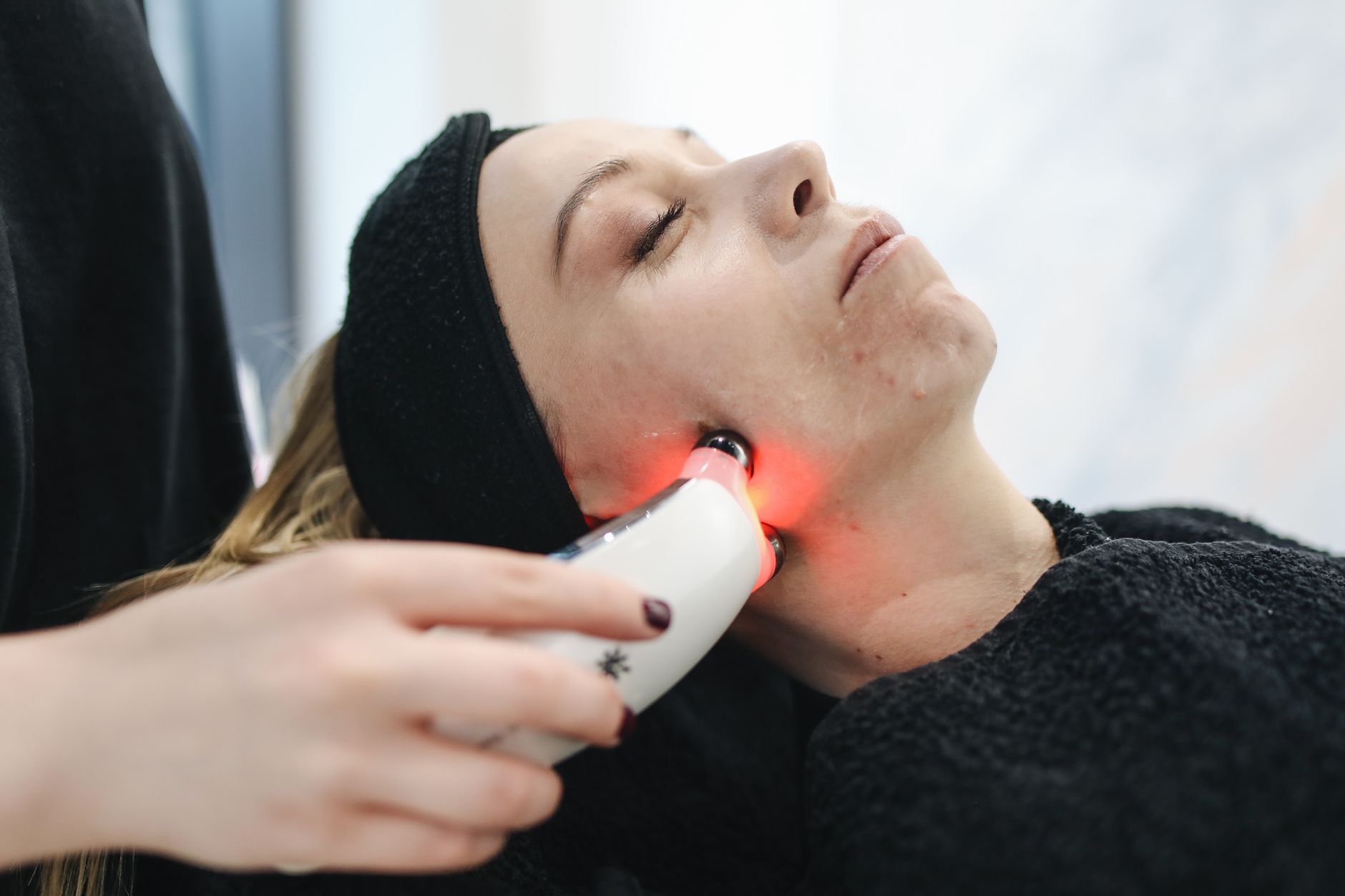
Current evidence supports fractional RF microneedling as effective monotherapy for facial acne scars. It uses tiny needles to deliver heat into the dermis, and studies show significant scar improvement alone. The signal is strongest for atrophic scars, including icepick and boxcar types, with encouraging safety data in brown skin. Outcomes still depend on scar type, device settings, follow-up length, and operator skill.
Medical information disclaimer: This article is for general educational purposes only and does not provide medical advice, diagnosis, or treatment. Always consult a physician or other qualified health professional about symptoms, medications, tests, or treatment decisions.
Table of Contents
- How does RF microneedling treat scars?
- How much improvement do studies show?
- Which scars and skin types show the best signal?
- What limits and risks should you weigh?
How does RF microneedling treat scars?
According to the U.S. Food and Drug Administration, RF microneedling inserts insulated or non-insulated needles into the dermis and subdermis. The needles deliver radiofrequency heat that creates small thermal injuries.
Those controlled injuries trigger collagen remodeling used for acne scarring, wrinkles, and skin tightening. Dermatology Times, summarizing a systematic review, notes varied devices and energy and needle-depth settings across studies. Standard settings do not yet exist. Ask what device, depth, and energy your clinic plans to use.
How much improvement do studies show?
A Dermatology Times summary on Jan. 9, 2025 covered 16 studies in 481 patients age 15 and older the review summary. It found fractional RF microneedling alone produced significant improvement in facial acne scarring. Ten studies used controls and six used another treatment.
Dartmouth Dermatology, summarizing Chandrashekar and colleagues, describes 31 patients with moderate-to-severe grade 3-4 scars the Dartmouth summary. Four treatments six weeks apart led 80.64% to improve by two grades and 19.35% by one grade on Goodman and Baron's scale. In that small study, every patient improved by at least one grade. Most improved by two grades. A two-grade change means a larger drop in measured severity.
Which scars and skin types show the best signal?
The same Dermatology Times summary reports efficacy equal to 1550-nm Er:Glass, fractional ablative CO2 laser, and platelet-rich plasma in head-to-head comparisons. It reports greater efficacy for icepick, M-shaped, and boxcar scars than bipolar radiofrequency. Most patients in the review had Fitzpatrick skin types III-V. Post-inflammatory hyperpigmentation was uncommon and mostly resolved during follow-up.
According to Dermatology Times, the review presents RF microneedling as relatively safer for darker skin than some ablative lasers. Scar shape still matters. Bring clear photos and ask how your scar types match the studied groups. Ask what results to expect for your skin type.
What limits and risks should you weigh?
The review authors flag small samples, varied devices and settings, mostly 1-6 month follow-up, and few randomized comparisons. They call for larger randomized trials with standardized parameters. In an Oct. 15, 2025 safety communication, the U.S. Food and Drug Administration warns about serious RF-microneedling complications the FDA safety communication.
Listed harms include burns needing wound care, hypertrophic scarring, fat loss, disfigurement, and nerve damage. The agency ties many events to misuse, inexperience, or aggressive facial settings. Use these checks before booking. Bring your scar history and skin-concern list to the visit. Confirm who will perform the treatment and how complications are handled. The FDA asks patients and clinicians to report serious problems through MedWatch.
- Choose a trained professional with acne-scar experience.
- Ask about device, depth, energy, expected downtime, and follow-up.
- Seek prompt care for severe pain, blistering, color change, denting, or numbness.