
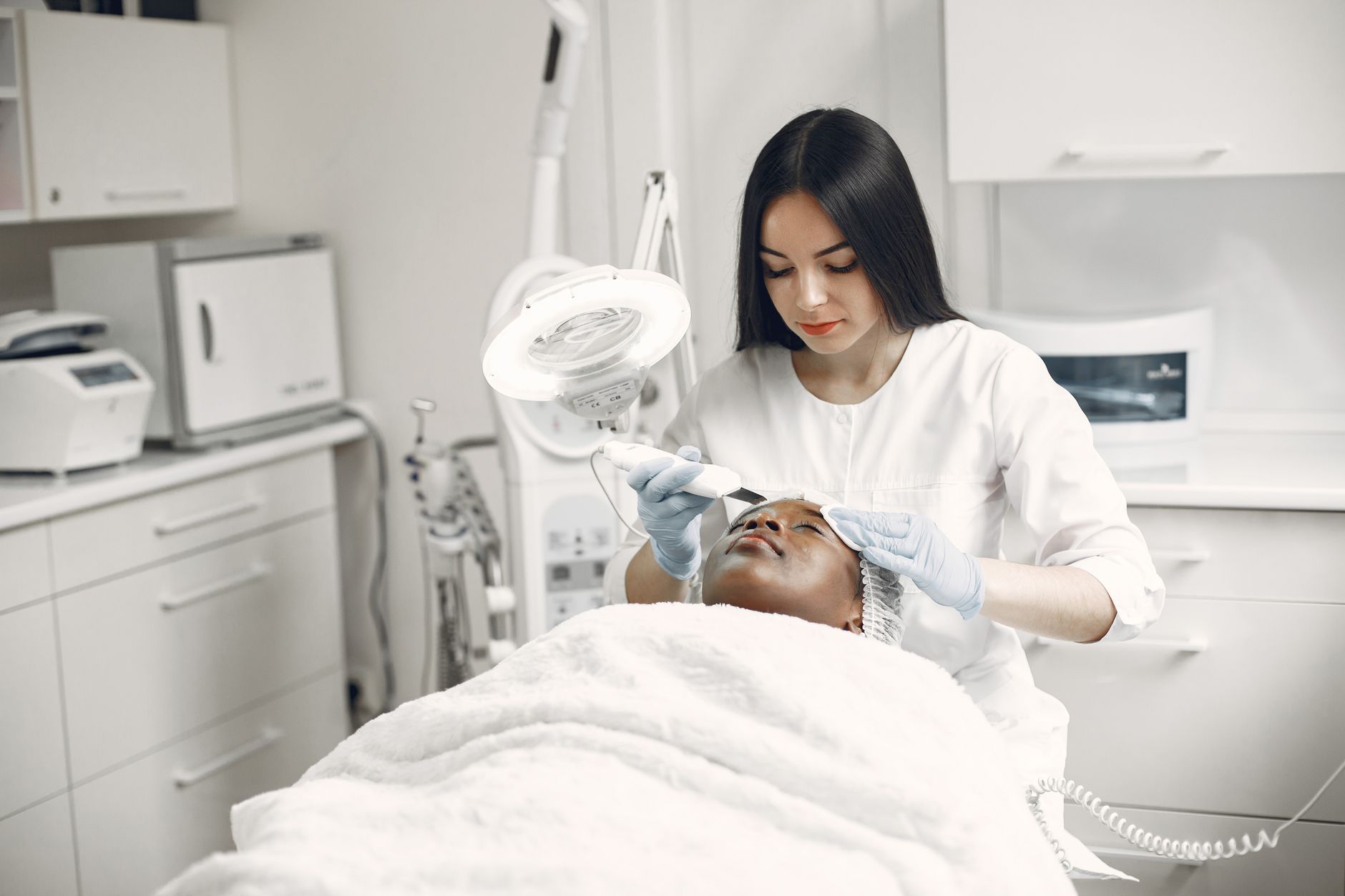
Fractional CO2 laser is a resurfacing choice for indented acne scars that offers stronger remodeling with higher pigment risk and downtime. It suits readers weighing scar improvement against healing time and follow-up care. Fractional CO2 means a carbon-dioxide laser that vaporizes narrow columns of skin while leaving nearby tissue intact. Cleveland Clinic explains in its laser resurfacing guidance that skin then tightens as collagen between treated holes contracts and remodels.
Medical information disclaimer: This article is for general educational purposes only and does not provide medical advice, diagnosis, or treatment. Always consult a physician or other qualified health professional about symptoms, medications, tests, or treatment decisions.
Table of Contents
- How does fractional CO2 improve scars?
- Which scars respond best?
- What are the main trade-offs?
- What do healing and follow-up require?
How does fractional CO2 improve scars?
The laser removes tiny columns of scarred surface and leaves bridges of untreated skin. Those bridges speed repair while deeper heat starts collagen remodeling. The Journal of Cosmetic Dermatology describes fractional CO2 as the gold-standard resurfacing method because it treats all three atrophic scar types.
It links benefit to collagen remodeling, new collagen formation, and fibroblast activation. The American Society for Dermatologic Surgery notes laser treatment for acne scars has minimal pain and recovery and is noninvasive. The same group states it works best combined with other acne treatments rather than as a single fix.
Which scars respond best?
Boxcar scars have clearer trial data than other shapes. Researchers reporting in the Indian Dermatology Online Journal found in their skin-of-color comparison that 3-4 fractional CO2 sessions improved boxcar scars by 36.2%, versus 3.74% for microneedling. Rolling scars responded best in that study, while ice-pick scars responded least.
Narrow, deep ice-pick scars leave less surface for resurfacing to remodel. Ask the clinic to map each scar type before booking. A mixed pattern may need more than one method.
What are the main trade-offs?
Redness, crusting, pigment change, and new breakouts are common short-term effects. An Indonesian tertiary-hospital retrospective study reported hyperpigmentation in 59.5%, crusting in 26.2%, redness for 4 or more days in 19%, and new acne in 19%. Pigment risk shapes candidacy most for medium and darker skin tones. The same Universitas Airlangga and Dr.
Soetomo team flagged higher post-inflammatory hyperpigmentation in darker-skin populations, with sun precautions and pretreatment planning as key controls. The U.S. Food and Drug Administration lists general laser-surgery risks in its medical lasers page as incomplete treatment, pain, infection, bleeding, scarring, and skin-color changes. It also states medical lasers use non-ionizing radiation without X-ray-type long-term risk.
- Ask about recent tanning, pigment history, cold sores, isotretinoin use, and planned sun exposure.
- Ask how the clinic adjusts energy, density, sessions, and spacing for darker skin.
- Pause and seek care for spreading redness, yellow crust, pus, fever, severe pain, or dark patches that widen.
What do healing and follow-up require?
Traditional CO2 healing takes about 10-21 days depending on depth and condition. Fractional treatment is shorter, but redness often lasts weeks to months and needs strict mineral sunscreen. Plan for gentle cleansing, bland moisture, sun avoidance, and no picking at crusts.
Attendance matters because acne-scar plans often pair laser with topical care, acne control, or another scar procedure. Bring dated front and side photos to each visit. Ask when to call, when to return, and what pigment change should trigger earlier review.