
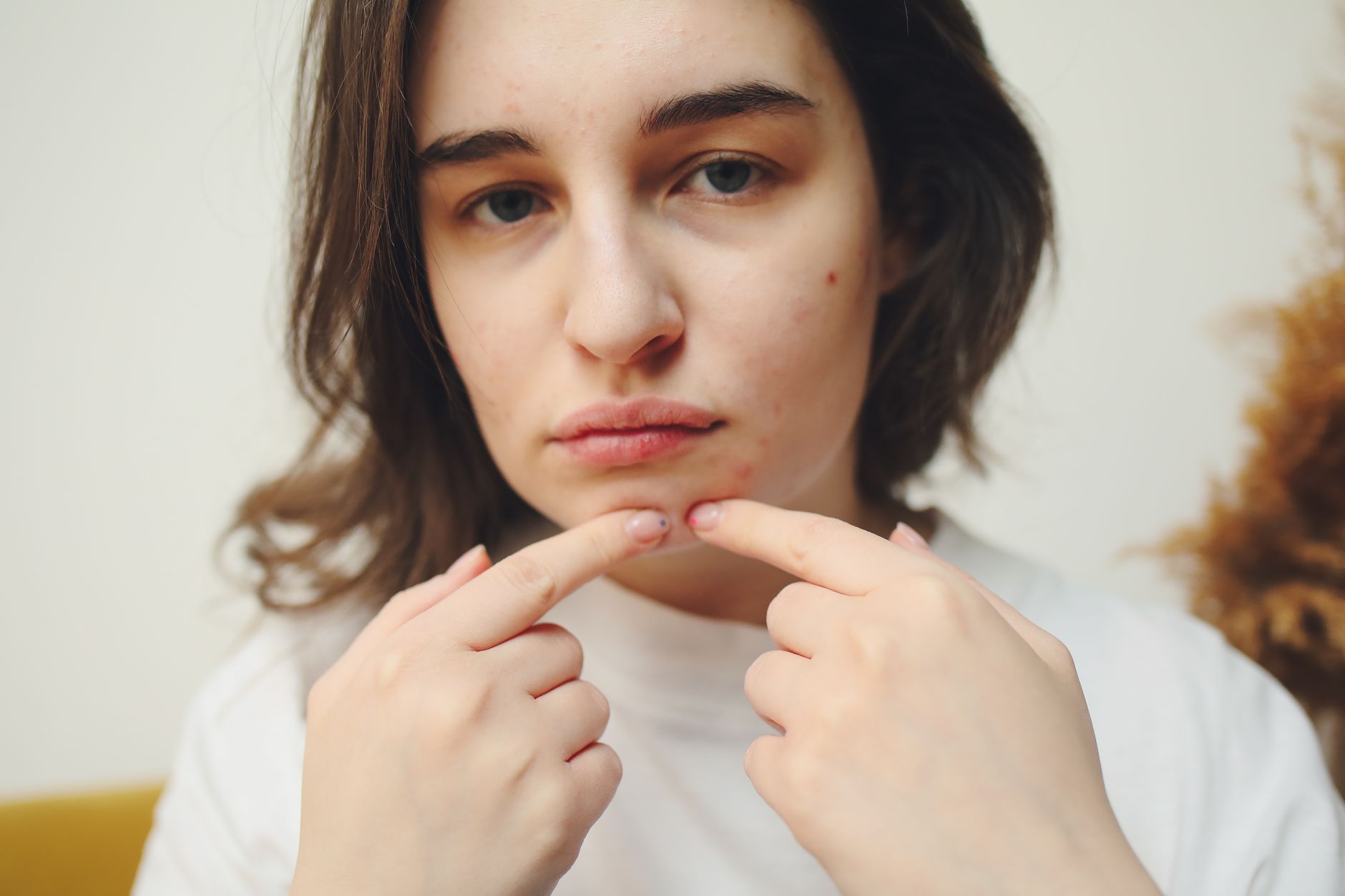
Acne excoriée means pimples that have been scratched or picked. Patients and families should know that picking makes acne look worse and can cause secondary infection, prolonged pigment changes, and permanent scarring. In excessive cases, DermNet reports that examination may show no active spots left, only scratch marks, sores, pigmentation, and scars because lesions were removed by picking, described in DermNet's overview. That pattern signals two problems at once: active acne plus repeated injury to the skin.
Medical information disclaimer: This article is for general educational purposes only and does not provide medical advice, diagnosis, or treatment. Always consult a physician or other qualified health professional about symptoms, medications, tests, or treatment decisions.
Table of Contents
- What does picking do to acne?
- Who tends to develop it?
- When is it more than a habit?
- How do patients and families stop the cycle?
What does picking do to acne?
Squeezing does not clear spots faster. It tears inflamed skin, pushes contents deeper, and leaves an open sore where a pimple was.
The sore then takes longer to heal than the original spot. It is more likely to darken or lighten, stay red, or form a lasting scar. Harsh scrubbing adds the same kind of injury without removing acne.
Who tends to develop it?
Anyone with acne can develop acne excoriée. DermNet reports it appears more common in females, particularly women with late-onset acne, including people who spend long periods examining or squeezing skin.
Long mirror checks often start with one bump that feels urgent. More checking leads to more squeezing, then more marks to check. Breaking that loop matters more than finding the "right" way to squeeze.
When is it more than a habit?
Frequent picking can overlap with excoriation skin-picking disorder. The Merck Manual defines that diagnosis by recurrent picking that causes lesions, repeated attempts to cut back or stop, and major distress or impaired daily life, detailed in the Merck Manual's disorder guide.
This distinction guides next steps. Ordinary picking needs skin care and habit change. Distress, lost time, avoidance of school, work, or social events, or failed efforts to stop point toward added mental-health support.
How do patients and families stop the cycle?
Effective care treats acne and picking together. Fading creams or scar procedures alone do not break the cycle of new acne, picking, and scarring.
Habit reversal training teaches awareness of triggers and a substitute action for the urge, such as fist-clenching or using a stress ball, according to the Cleveland Clinic's treatment guide. Clinicians may also consider other treatments when anxiety, depression, or obsessive-compulsive features are present. Families can help most through daily actions:.
- discourage picking, squeezing, and harsh scrubbing without shaming
- encourage early acne treatment matched to type and severity
- seek clinician, family, or other support if confidence drops or distress persists