
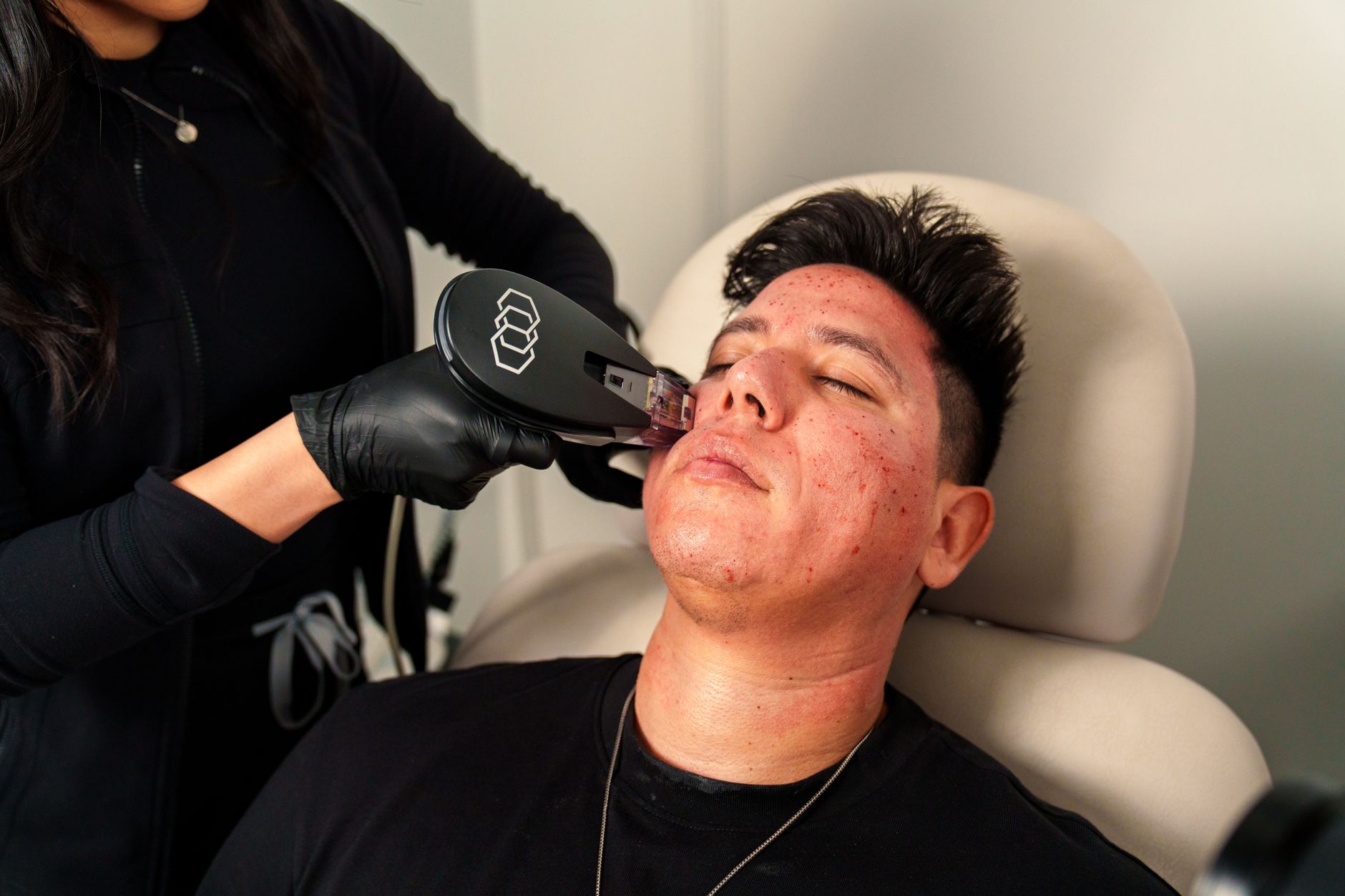
The 2026 split-face trial found the 755-nm picosecond laser and the 1565-nm nonablative fractional laser improved atrophic scars equally. For people with boxcar scars — broad, shallow depressions with sharp edges — the picosecond side offered shorter redness and swelling with no crusting. The study treated 27 patients for three sessions at four-week intervals over 20 weeks. Each patient received one laser on each cheek, which controls for skin type and healing differences.
Medical information disclaimer: This article is for general educational purposes only and does not provide medical advice, diagnosis, or treatment. Always consult a physician or other qualified health professional about symptoms, medications, tests, or treatment decisions.
Table of Contents
- What each cheek received
- Why recovery felt lighter on one side
- How pigment risk compares with stronger lasers
- What this means for boxcar scars
What each cheek received
One cheek received 755-nm picosecond laser with a diffractive lens array. The other received 1565-nm nonablative fractional laser. Lasers in Medical Science reports both sides improved significantly with no significant difference in that 27-patient comparison the Springer trial report.
Treatment ran for three sessions spaced four weeks apart. Total follow-up lasted 20 weeks. That window shows short-term healing, not years-long durability.
Why recovery felt lighter on one side
The SkinWorks review notes the picosecond side had shorter redness and swelling and no crusting than the nonablative fractional side the SkinWorks summary of the study. Redness means erythema, the pink tone after laser injury.
Less crusting means fewer visible scabs and simpler wound care. Shorter swelling means faster return to work or school.
- picosecond side: shorter redness, shorter swelling, no crusting
- fractional side: longer redness and swelling, with crusting
How pigment risk compares with stronger lasers
The Journal of Cosmetic Dermatology meta-analysis of eight trials with 249 patients found fractional CO2 gave slightly better scar improvement and satisfaction than microneedle radiofrequency the Wiley meta-analysis. CO2 also caused more pain, higher risk of dark marks, and longer redness.
Dark marks here mean post-inflammatory hyperpigmentation. Dermatology and Therapy reports a split-face radiofrequency-microneedling trial with poly-L-lactic acid in Fitzpatrick types III-V. Only 4.2% had mild transient redness and 4.2% had acne flare, each resolving within days to weeks.
What this means for boxcar scars
The Journal of Cutaneous and Aesthetic Surgery reports microneedling with platelet-rich plasma improved boxcar and rolling scars well. It had limited effect on ice-pick scars and post-inflammatory pigmentation. Ice-pick scars are narrow, deep pits; rolling scars are broad and wavy.
The 2026 picosecond trial enrolled only 27 patients and lasted 20 weeks, so long-term pigment and durability data remain limited. People prone to dark marks or needing short downtime can ask a dermatologist about nonablative, picosecond, or radiofrequency-microneedling options rather than assuming ablative CO2 is required. Bring photos of past dark marks and your usual healing time to that visit.
- share past dark marks and healing time
- ask which option fits your scar depth and skin tone
- discuss sessions, downtime, and pigment watch signs
You Might Also Like
- Recovery and Pigment Safety in the 2026 Split-Face Acne Scar Trial: What Longer Follow-Up Must Show for People With Rolling Acne Scars
- Vitamin C, Vitamin E, and Ferulic Acid After Acne Scar Laser in 2026: Pigment, Pain, and Recovery Questions for People With Boxcar Acne Scars
- Subcision With Suction for Acne Scars in a 2026 Split-Face Trial: Who Was Studied and Who Was Not for People With Atrophic Acne Scars