
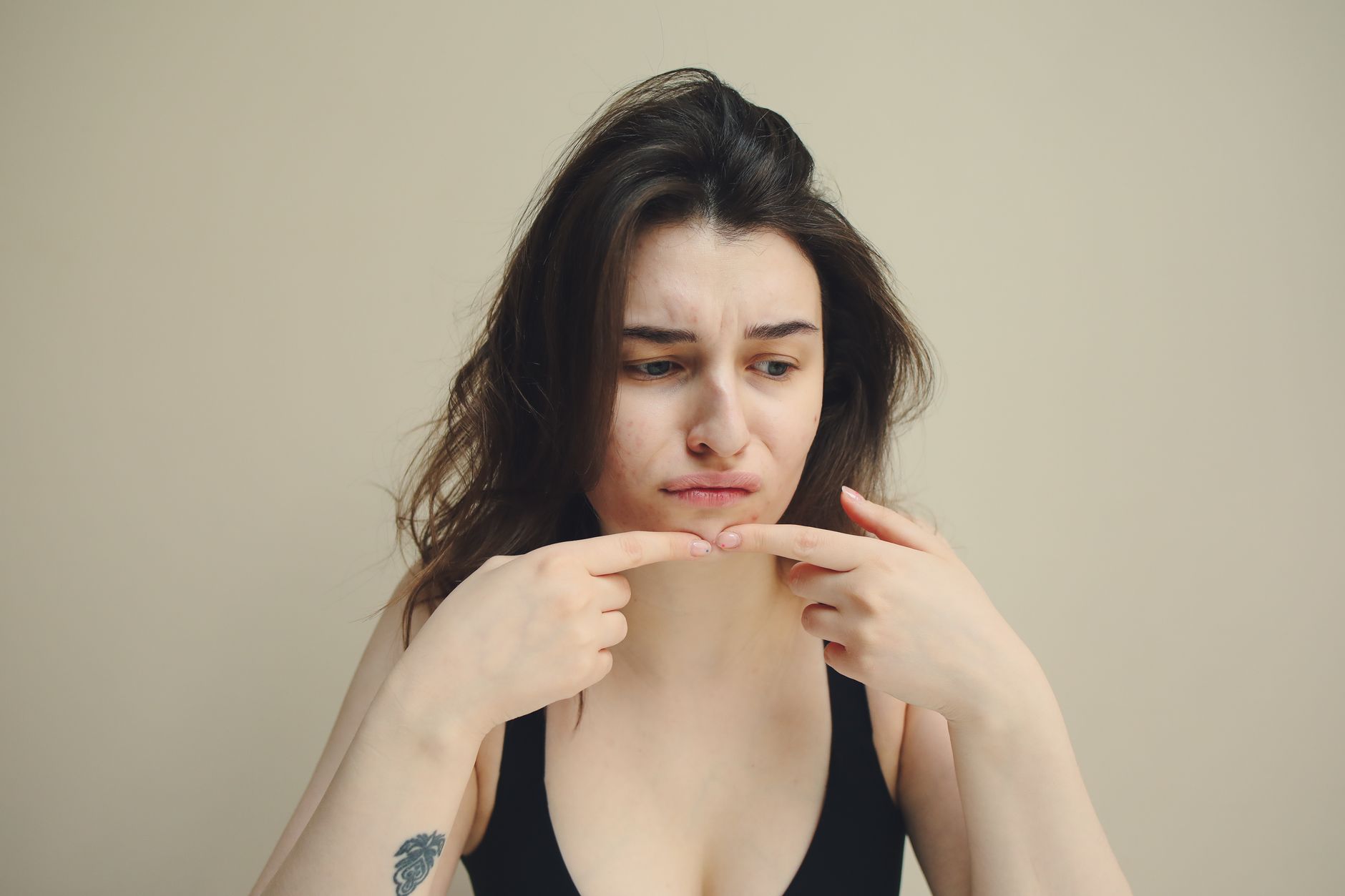
Jawline acne in August 2026 should be treated as acne, not diagnosed by location alone. Repeated lower-face breakouts around menstruation may suggest hormonal acne, but their position does not prove the cause. "Hormonal acne" means acne whose pattern suggests a hormonal influence. The practical response depends on recurrence, severity, pregnancy considerations, previous treatment, and scarring risk.
Medical information disclaimer: This article is for general educational purposes only and does not provide medical advice, diagnosis, or treatment. Always consult a physician or other qualified health professional about symptoms, medications, tests, or treatment decisions.
Table of Contents
- Does jawline acne always mean a hormonal problem?
- Which topical treatments have the strongest support?
- When does prescription treatment make sense?
- How do pregnancy plans affect treatment choices?
- Should benzene findings change benzoyl peroxide use?
- Can diet, supplements, or procedures replace acne treatment?
Does jawline acne always mean a hormonal problem?
No. The American Academy of dermatology says predictable breakouts around menstruation can signal hormonal acne, especially along the lower face, but location alone cannot establish the cause.
Look for a pattern rather than relying on a face map. Note whether breakouts recur around menstruation, persist despite standard treatment, or extend from the jawline onto the neck. These details can help a clinician assess whether hormone-directed treatment is worth considering.
Which topical treatments have the strongest support?
The AAD's 2024 guideline strongly recommends topical benzoyl peroxide and topical retinoids. It also recommends combining treatments that address different acne mechanisms. Benzoyl peroxide reduces surface bacteria and inflammation.
According to the NHS, it can also cause dryness, stinging, peeling, irritation, and sun sensitivity, while bleaching hair or fabric. Topical retinoids help prevent follicles from becoming clogged by clearing dead surface skin cells. Irritation is common, so persistent or severe reactions warrant advice from a clinician or pharmacist rather than adding more active products.
When does prescription treatment make sense?
Women with stubborn acne on the lower face, jawline, or neck can ask a clinician about combined oral contraceptives or spironolactone. The AAD identifies both as possible hormonal treatments for persistent acne in women. Antibiotics may be considered in some treatment plans, but the AAD recommends limiting their use when possible.
Topical or oral antibiotics should be paired with benzoyl peroxide to reduce antibiotic resistance and related complications. Isotretinoin is an option for severe acne or acne that has not responded to standard topical or oral therapy. Prompt evaluation matters when deep nodules appear because severe untreated acne can scar.
How do pregnancy plans affect treatment choices?
Topical retinoids should not be used during pregnancy because of potential birth-defect risk, according to the NHS. Anyone who is pregnant, could be pregnant, or is planning pregnancy should discuss alternatives before starting or continuing one.
Spironolactone also requires pregnancy prevention because fetal harm can occur if pregnancy happens during treatment. Before seeking hormone-directed care, tell the prescriber about pregnancy plans and every acne treatment already in use.
Should benzene findings change benzoyl peroxide use?
The FDA reported in March 2025 that six of 95 tested benzoyl-peroxide acne products had elevated benzene levels. More than 90% had undetectable or extremely low levels, and the agency described the cancer risk from decades of daily exposure as very low.
The affected recalls occurred at the retail level. Readers concerned about a particular container can compare its exact product and lot information with the FDA's benzoyl-peroxide recall notice or ask a pharmacist before replacing it.
Can diet, supplements, or procedures replace acne treatment?
The AAD found insufficient evidence to recommend dietary changes, vitamins, plant-based remedies, chemical peels, laser or light devices, or microneedling as acne treatments. "Insufficient evidence" does not prove that every approach is useless; it means the evidence was not strong enough for a recommendation.
These options should not replace supported treatment, particularly when acne is painful, nodular, treatment-resistant, or beginning to scar. Bring any supplement, restrictive diet, or procedure under consideration to a clinician before using it instead of standard care.