
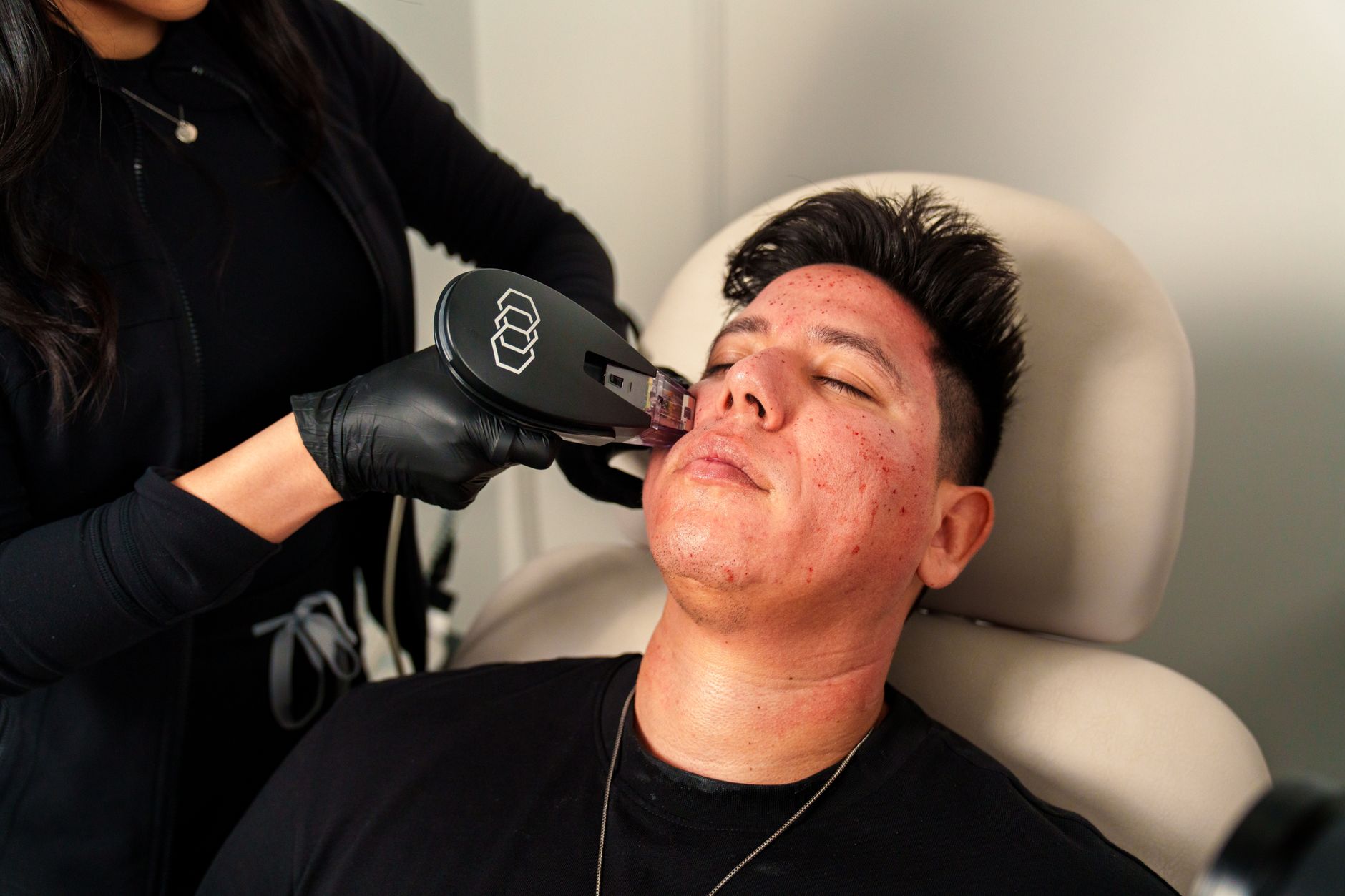
Morpheus8 can improve depressed acne scars by heating deeper skin to rebuild collagen, but it is not a separate FDA-approved scar treatment. Evidence for fractional radiofrequency microneedling shows scar improvement comparable to common resurfacing lasers in reviewed trials. Morpheus8 is InMode's fractional radiofrequency microneedling platform for face and body skin resurfacing, tightening and subdermal remodeling. This guide explains how it works, what studies found, who faces limits, and what to do next.
Medical information disclaimer: This article is for general educational purposes only and does not provide medical advice, diagnosis, or treatment. Always consult a physician or other qualified health professional about symptoms, medications, tests, or treatment decisions.
Table of Contents
- How does Morpheus8 treat acne scars?
- What does the evidence show?
- Who has less proven benefit or higher caution?
- What safety warning should readers know?
- What are practical next steps?
How does Morpheus8 treat acne scars?
The device drives insulated microneedle tips into skin and releases bipolar radiofrequency heat at depth. That heat creates small zones of coagulation that trigger collagen and elastin remodeling for depressed scars, according to the InMode Australia news explainer.
InMode Australia describes the target as the fibro-septal skin-fat matrix, in its product description. In plain terms, needles deliver energy below the surface while sparing more of the top layer than full-surface resurfacing.
What does the evidence show?
A 2025 systematic review of 16 studies with 481 patients age 15 and older found fractional radiofrequency microneedling effective alone for facial acne scars. Efficacy was comparable to 1550-nm Er:Glass and fractional CO2 laser in included trials, according to Dermatology Times in its review summary.
A 31-patient study of grade 3-4 acne scars reported 80.64% improved by two grades and 19.35% by one grade on the Goodman-Baron scale. Side effects were transient pain, redness, swelling and darkening, according to the Journal of Cutaneous and Aesthetic Surgery.
Who has less proven benefit or higher caution?
Higher-energy use above 62 mJ per pin is limited to Fitzpatrick skin types I-IV. Acne-scar use is not a separate scar-specific FDA approval, according to the Innolitics summary in its summary of the FDA record.
The 2025 review population was mostly types III-V, with no type I or VI extremes. Post-inflammatory darkening was infrequent and usually resolved, which supports lower pigment risk but leaves the lightest and darkest skin less proven.
What safety warning should readers know?
On Oct. 15, 2025, FDA warned that certain radiofrequency-microneedling uses caused burns, scarring, fat loss, disfigurement and nerve injury.
Some injuries needed medical or surgical care, according to Global Cosmetics News in its report on the FDA communication. The agency called it a medical procedure unsuitable for home use. Choose a trained clinician, ask about depth and energy settings, and report prolonged pain, numbness, dents, or color change promptly.
What are practical next steps?
Expect a course of treatment rather than one session, with 1-3 days of redness and swelling. Transient redness may last hours to days, and researchers call for randomized trials to standardize settings, according to Dermatology Times and ASDS. Verify the device clearance, indication, and clinician training before booking.
- Ask whether the clinic uses an FDA-cleared device and trained operator
- Ask which indication, skin-type limits, energy, depth, and session count fit your scars
- Plan downtime for redness and swelling
- Ask how darkening, burn, fat loss, or nerve symptoms are prevented and handled