
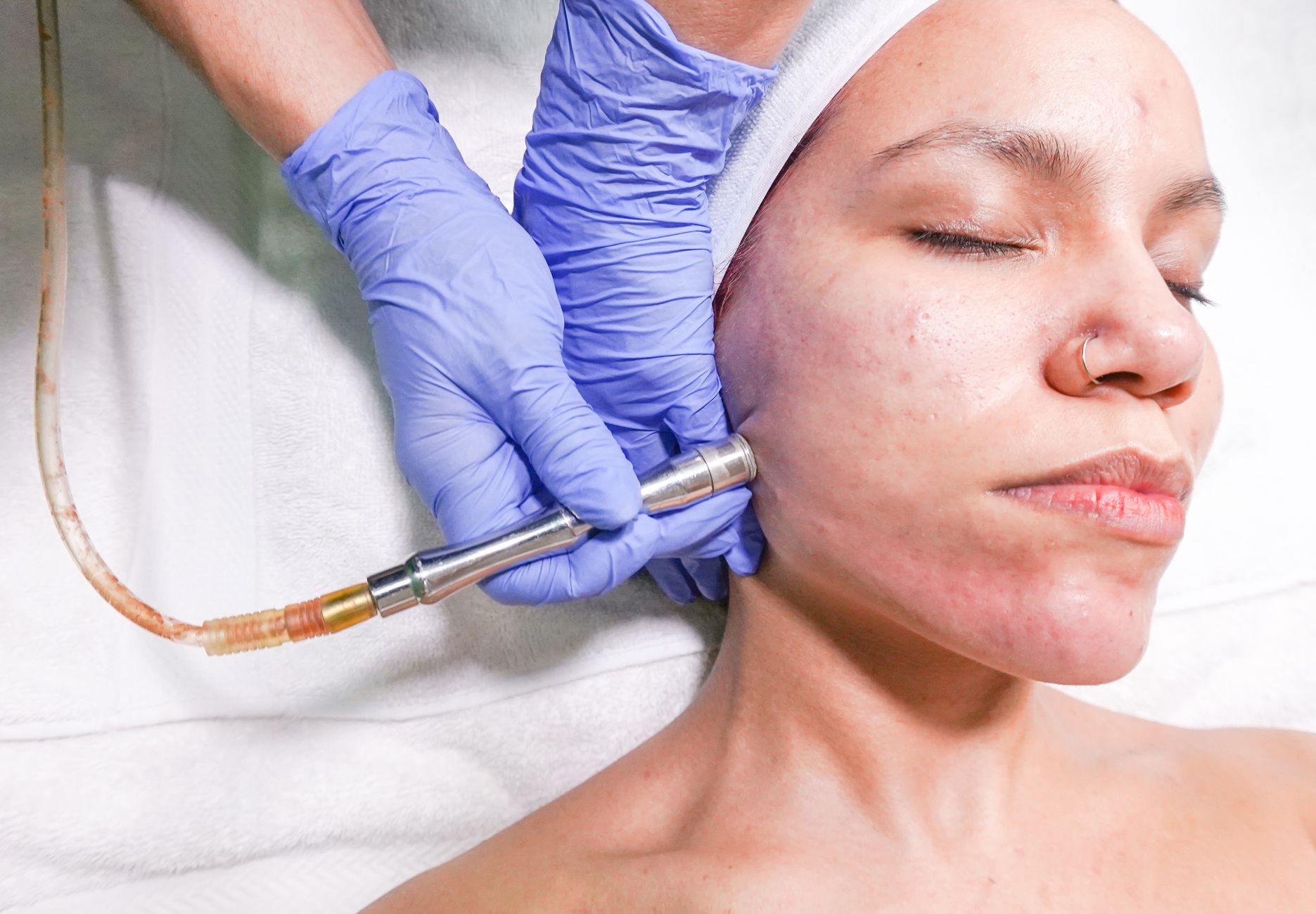
RF microneedling, tiny needles that deliver radiofrequency heat inside the dermis, can soften indented acne scars by triggering collagen and elastin remodeling. Verify a clinic by asking for the exact device name, 510(k) number and cleared indications, operator credentials, settings and aftercare. Photos and brand names do not prove safety. The right questions reveal clearance status, skin-type risk and operator control.
Medical information disclaimer: This article is for general educational purposes only and does not provide medical advice, diagnosis, or treatment. Always consult a physician or other qualified health professional about symptoms, medications, tests, or treatment decisions.
Table of Contents
- How does it improve indented scars?
- What harms should you weigh?
- Is the device FDA approved?
- Which questions expose weak safety claims?
How does it improve indented scars?
A Dermatologic Surgery review describes RF microneedling as insulated or non-insulated needles paired with heat at depth. The goal is controlled dermal injury. Healing then rebuilds collagen and elastin around pitted scars.
A 3D-imaging study reported by Medscape found mean scar depth fell significantly after microneedle fractional radiofrequency. Boxcar scars improved most. Rolling and icepick scars respond less evenly because shape, depth and tethering differ.
What harms should you weigh?
The FDA safety communication from Oct. 15, 2025, described in the republished FDA safety notice, lists burns, scarring, fat loss, disfigurement, nerve damage and need for surgical repair. The reports involved wrinkle, tightening or rejuvenation uses.
Scar treatment uses the same tissue effects, so energy and depth control matter. Darker skin carries added pigment risk. A split-face trial in Fitzpatrick types III-V, reported by Springer Dermatology and Therapy, found effects were mild and transient, but 2 of 24 participants developed post-inflammatory hyperpigmentation that cleared within one month. An FDA MAUDE report also describes lasting facial fat loss after Genius treatment despite prior reassurance.
Is the device FDA approved?
No RF microneedling system is FDA approved. A Fotromed industry summary of 510(k) numbers lists Morpheus8, Genius, Secret RF and Sylfirm X as cleared through substantial equivalence. That path allows Class II devices to market without proving the same claims as an approval.
FDA's Total Product Life Cycle database places skin-resurfacing radiofrequency devices under product code OUH, regulation 878.4400, Class 2, as shown in the FDA product listing. A clinic that says FDA approved is overstating clearance. Ask whether acne scars are among the cleared indications for that exact model.
Which questions expose weak safety claims?
Ask for facts you can check before paying. A Dermatology Times summary of the FDA alert recommends the same basic screen.
Bring this list: Use the answers to judge control. A clear clinic names the device, shows clearance, explains why settings fit your scar type and skin tone, and gives written aftercare. Leave if staff cannot name the model, confuse clearance with approval, dismiss fat loss or pigment risk, or promise no downtime for deep treatment.
- Exact brand and model, 510(k) number and cleared indications for that model
- Who operates the device, with license, training and scar experience
- Planned needle depth, energy, passes and protection for eyes, nerves and fat
- Aftercare, sun protection, pigment precautions and repair plan for burns or prolonged swelling
You Might Also Like
- Picosecond vs Nonablative Fractional Laser for Acne Scars: The September 2026 Trial
- Vitamin C, Vitamin E, and Ferulic Acid After Acne Scar Laser in 2026: Questions People With Atrophic Acne Scars Can Ask Before a Procedure
- Antioxidant Serum After Fractional CO2 Acne Scar Treatment in 2026: Questions People With Atrophic Acne Scars Can Ask Before a Procedure