
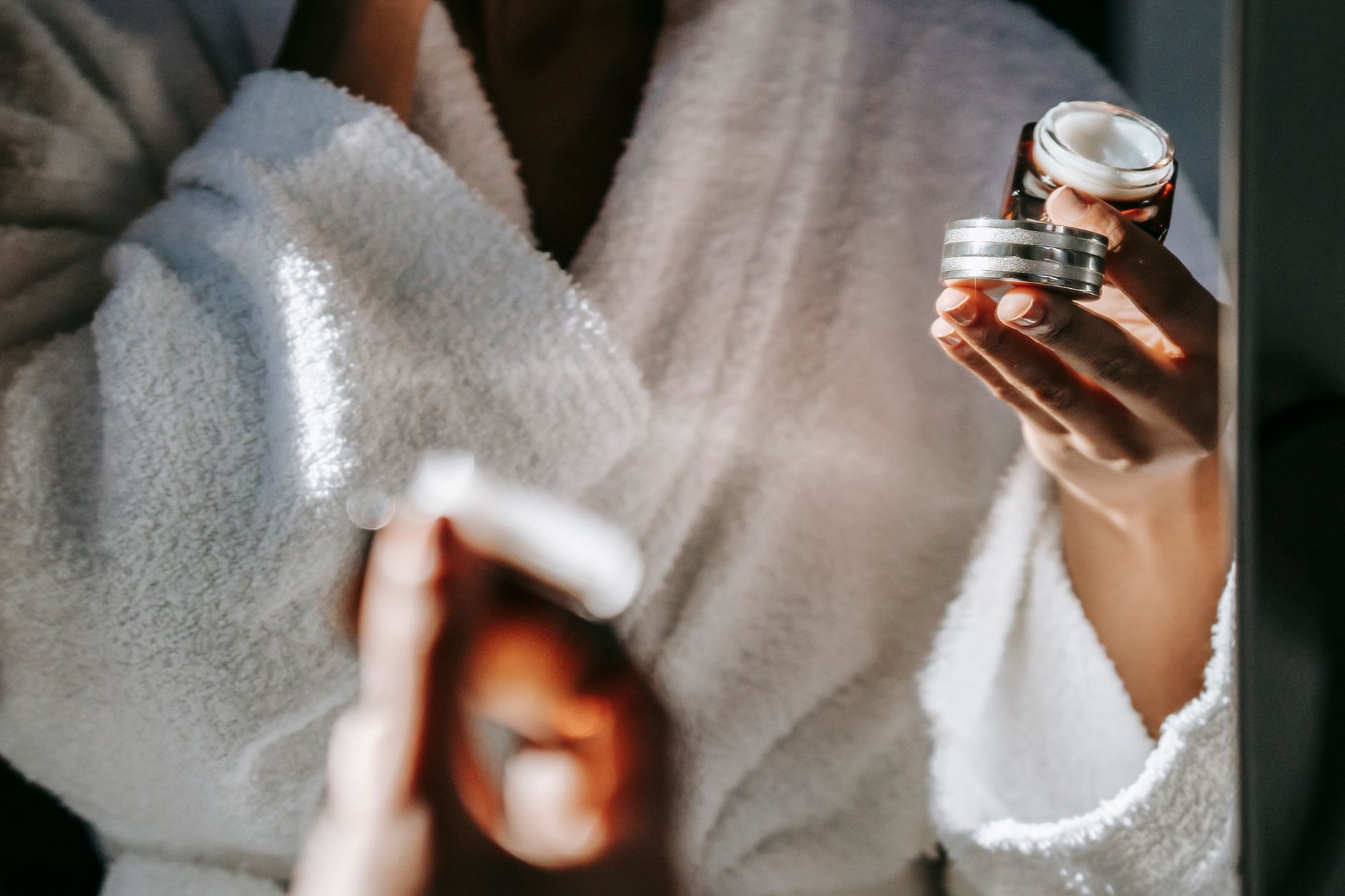
For most people, cold weather is not a reason to cut your retinol dose — it is a reason to reinforce your barrier around it. The evidence points the other way on efficacy: a post-hoc seasonal analysis of two phase 3 trials, published in the Journal of Clinical and Aesthetic Dermatology, found tazarotene 0.045% lotion cut inflammatory acne lesions about as well in colder months as in warmer ones (roughly -16.6 versus -15.8 lesions), and was well tolerated in both. What does change in winter is your skin's tolerance for the drug.
Retinoids are vitamin A derivatives — retinol over the counter, tretinoin and tazarotene by prescription — and they all speed up skin turnover at the cost of some barrier disruption. Cold air disrupts that same barrier, so the two stresses add up. The practical answer is to hold your dose, add moisture and sun protection, and reduce frequency only if your skin actually starts flaking, stinging or burning.
Medical information disclaimer: This article is for general educational purposes only and does not provide medical advice, diagnosis, or treatment. Always consult a physician or other qualified health professional about symptoms, medications, tests, or treatment decisions.
Table of Contents
- Why cold weather makes retinoids sting more
- Fix the barrier before you cut the dose
- When lowering the dose is the right call
- How to restart or taper without starting over
- What the seasonal evidence does not settle
- Frequently Asked Questions
Why cold weather makes retinoids sting more
This is not folklore; it is on the label. The FDA-approved prescribing information for Retin-A Micro (tretinoin) tells patients to minimize or avoid use during bad weather, noting that weather extremes such as severe wind or cold may increase the risk of skin irritation. The older Retin-A cream and gel labeling carries the same precaution, and generic tretinoin 0.025% labeling adds that tretinoin-treated skin may be more vulnerable to those extremes. The mechanism has been measured. A study in Acta Dermato-Venereologica found that in healthy Japanese women, stratum corneum barrier function was significantly impaired in winter on both the cheek and the flexor forearm, with the summer-to-winter gap much larger on the cheek and cheek transepidermal water loss elevated in winter.
The stratum corneum is the outermost layer of dead cells that holds water in; transepidermal water loss, or TEWL, is how fast water escapes through it. Retinoids push the same number in the same direction. In two randomized double-blind intraindividual studies of 42 healthy subjects reported by Verschoore and colleagues in the Journal of the American Academy of Dermatology, TEWL rose roughly fourfold at tretinoin 0.025% gel sites while staying unchanged at adapalene 0.1% sites. A separate trial of retinoic acid for facial photodamage measured about a 45% increase in TEWL during treatment. Winter does not make your retinol stronger — it removes the cushion you had in July.
Fix the barrier before you cut the dose
The same photodamage trial points to the better first move. Pretreatment with myristyl nicotinate reduced the retinoid-driven rise in water loss, which means barrier support — not dose reduction — is what blunts the specific problem cold weather worsens. You lose none of the drug's effect by propping up the skin around it. Moisturizer trials with retinoids back this up.
Two studies published in the Journal of Drugs in Dermatology in 2012 — a randomized investigator-blinded split-face study and a paired blinded 10-week study — found that a ceramide-precursor SPF 30 moisturizer improved tolerability of tretinoin 0.05%, and that a niacinamide/panthenol/tocopheryl acetate moisturizer helped skin get through early retinization, the adjustment period of dryness and peeling. Formulation matters more in January than in June. The American Academy of Dermatology's dry-skin guidance recommends ointments or creams over lotions in winter, because the heavier bases hold water in better. Applying moisturizer first, then the retinoid on top, is one of the AAD's listed fixes for irritation and costs you nothing to try.
When lowering the dose is the right call
There is a real line between "my skin feels tight" and "my skin is damaged." Frank winter dryness crosses it. The AAD's dry-skin guidance tells people to stop using products containing retinoids while skin is dry — a pause, not a taper.
That is stronger advice than most readers expect, and it is the clearest signal in the evidence that sometimes the answer is to put the bottle down. Signs it is time to scale back or pause: If none of those apply, dose reduction buys you nothing. The tazarotene seasonal analysis is the relevant counterweight: patients kept full efficacy through the cold months, so pre-emptively halving your retinol concentration trades away results for a problem you may never have.
- Visible flaking or scaling that makeup and moisturizer cannot sit on
- Stinging or burning when you apply anything, including plain moisturizer
- Redness that has not settled by the next morning
- Cracking, chapping, or weeping skin anywhere you apply the product
- Chronic irritation that started with the first cold snap and has not improved after two weeks of heavier moisturizing
How to restart or taper without starting over
When you do pause, rebuild rather than jumping back to where you left off. The AAD's retinoid guidance describes dermatologists starting patients on the least-intense formulation every other night and building up slowly.
Its acne treatment advice lists the three standard irritation fixes: apply a smaller amount, use the retinoid less often, and apply moisturizer first. A workable winter sequence: Frequency, not concentration, is the lever to pull first. Going from nightly to three nights a week keeps you on the product you already tolerate and lets your barrier recover between applications.
- Stop the retinoid while skin is actively dry or cracked, and moisturize with a cream or ointment twice daily
- Restart at every other night, or every third night, at the same product you were using
- Apply moisturizer before the retinoid for the first few weeks
- Add nights back one at a time, holding for a week at each step
- Keep daily sunscreen — retinoid-treated skin stays sun-sensitive in winter, and the split-face study that improved tolerability used an SPF 30 moisturizer
What the seasonal evidence does not settle
The tazarotene analysis is reassuring about efficacy, not a clean bill of health on comfort. Reporting on the same data, HCPLive noted that scaling and stinging did rise slightly in colder months before returning to baseline or improving by week 12, and that the trials were not powered to detect seasonal differences across their 10-plus climate zones. It cannot rule out a genuine winter tolerability penalty. Two other limits are worth knowing.
The barrier-seasonality measurements were taken in a single population under specific conditions, so the size of the winter effect on your own cheeks depends on your climate, your indoor heating and your baseline skin. And not all retinoids behave alike on water loss: adapalene 0.1% left TEWL unchanged in the Verschoore studies where tretinoin quadrupled it, which makes the molecule you use part of the equation. That matters for the decision in front of you. If you are irritated every winter on tretinoin, the conversation to have with a dermatologist is about which retinoid and which vehicle you are on — a cream or lotion base rather than a gel, or a different molecule entirely — before it is about cutting strength.
Frequently Asked Questions
Does cold weather make retinol less effective?
No. The seasonal analysis of two phase 3 tazarotene trials found comparable inflammatory-lesion reductions in colder and warmer months, so the drug keeps working — it is tolerability, not efficacy, that shifts.
Should I switch from a gel to a cream in winter?
It is a reasonable move. Gels tend to be drying, and the AAD recommends creams or ointments over lotions in cold months. Ask the prescriber about vehicle options before changing strength.
Can I keep using retinol if my face is peeling?
The AAD's dry-skin guidance says to stop using retinoid products while skin is dry. Treat frank peeling as a pause, moisturize until the skin is intact, then restart at a lower frequency.
Do I still need sunscreen with retinol in winter?
Yes. Retinoid-treated skin stays sun-sensitive year-round, and the split-face study that found better tretinoin tolerability used a ceramide-precursor SPF 30 moisturizer as the vehicle for that benefit.