
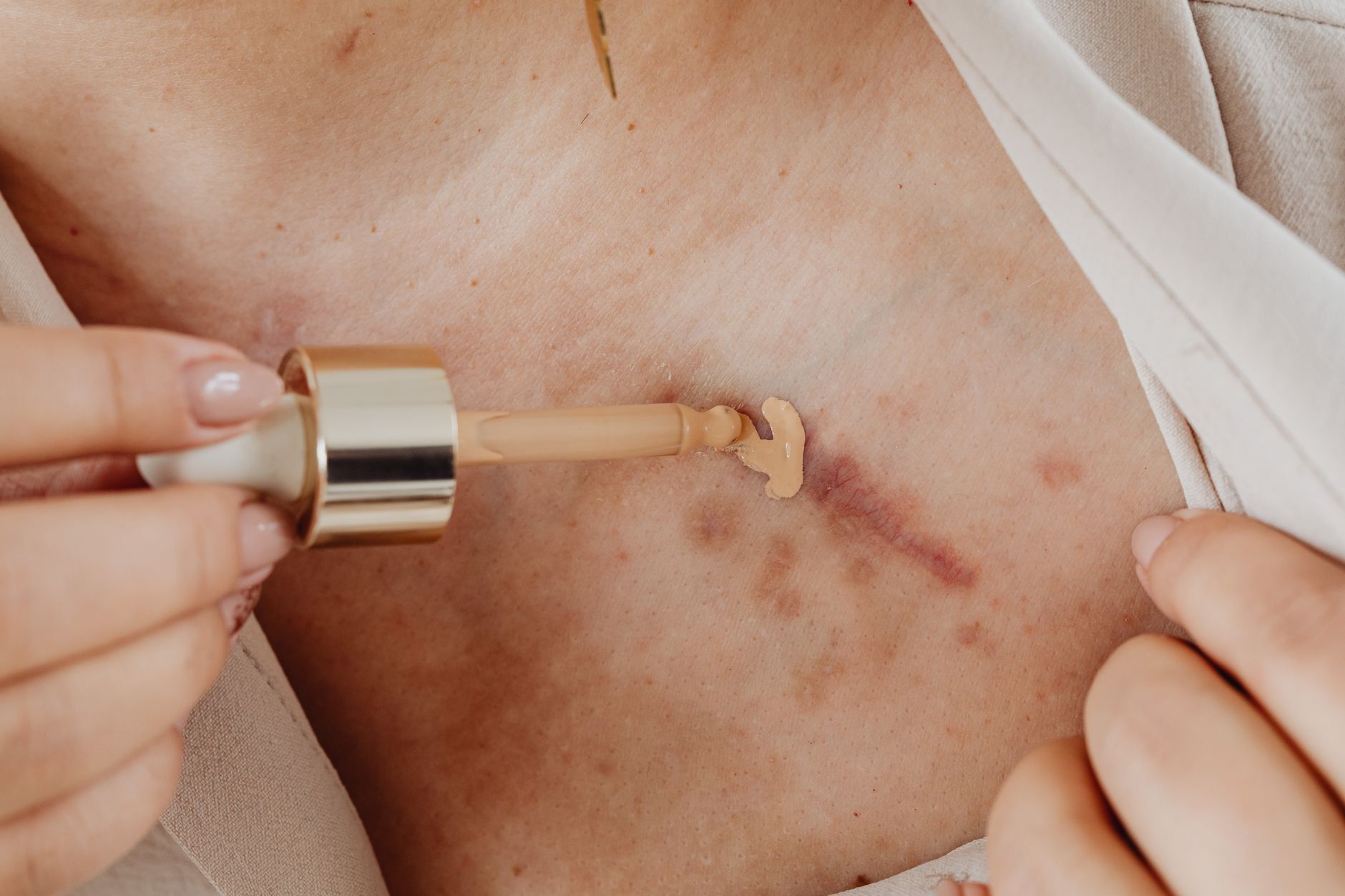
In the 2026 split-face trial — one treatment on each cheek for direct comparison — recovery was mild, transient and self-limiting. People with icepick scars — deep, narrow pits that look punched into the skin — should treat benefit claims as preliminary because samples were tiny and follow-up was short. The trial enrolled people with moderate-to-severe atrophic scars in Fitzpatrick skin types III to V. It compared fractional microneedle radiofrequency plus transdermal poly-L-lactic acid against radiofrequency plus sterile water.
Medical information disclaimer: This article is for general educational purposes only and does not provide medical advice, diagnosis, or treatment. Always consult a physician or other qualified health professional about symptoms, medications, tests, or treatment decisions.
Table of Contents
- What the 2026 split-face trials tested
- How recovery and pigment change looked
- Why tiny samples limit answers for icepick scars
- What darker skin should expect for pigment downtime
- How to use these results at a visit
What the 2026 split-face trials tested
A second 2026 prospective randomized 20-week split-face trial enrolled 27 patients with atrophic acne scars. It gave 755-nm picosecond laser with diffractive lens array on one side and 1565-nm nonablative fractional laser on the other for three sessions at 4-week intervals. The microneedle-radiofrequency trial tested whether adding poly-L-lactic acid through microchannels improved moderate-to-severe atrophic scars in skin types III to V, reports Dermatology and Therapy in the split-face trial report.
One cheek received radiofrequency plus poly-L-lactic acid and the other received radiofrequency plus sterile water. Split-face design controls for age, healing, sun habits, and skincare. It still leaves small groups when researchers split results by scar shape.
How recovery and pigment change looked
Harms were mild, transient and self-limiting. Mild redness occurred in 1 participant (4.2%), acne flare occurred in 1 participant, and mild postinflammatory hyperpigmentation occurred in 2 participants (8.3%). Those events resolved within 5 days to 1 month.
Short clearing time matters for planning work, school, and sun exposure after sessions. For darker skin, brief redness is only part of downtime. Brown or gray pigment marks can persist for weeks after redness fades and need sun protection.
Why tiny samples limit answers for icepick scars
Recent fractional CO2 laser versus microneedling-radiofrequency trials enrolled only 12 to 50 participants with about 2-3 months follow-up, reports Wiley in the 2026 meta-analysis. The studies came from India, China, Pakistan, Iraq and Denmark and used split-face or parallel designs. Small numbers become smaller after scar-shape splitting.
A simultaneous split-face trial in 20 patients (10 rolling, 10 icepick scars) found no statistically significant between-side difference for the icepick subgroup, according to the PRIME PubMed record in the laser-versus-CROSS trial summary. That trial treated one side three times with 1,550-nm Er:Glass fractional laser and the other twice with CROSS chemical reconstruction. People with deep narrow icepick scars gain the least from resurfacing alone. A 1,550-nm erbium-doped fractional laser study reported median improvement of 59.2% for boxcar, 40.6% for rolling and only 19.1% for icepick scars.
What darker skin should expect for pigment downtime
In 13 skin-phototype-IV Asian patients receiving three ablative fractional CO2 sessions at about 7-week intervals, 12 developed postinflammatory hyperpigmentation, reports MDedge Dermatology in the report on the Mahidol University study. Pigment cleared in all patients in an average of 5 weeks during 6-month follow-up.
That pattern means consent should name weeks-to-months pigment downtime, not days. Strict sun protection, pause on irritants, and a clear pigment plan matter more than session count. A 2025 MDPI systematic review draws the practical line: expect transient redness, swelling and weeks-to-months pigment downtime, use strict sun protection, and treat small 2026 split-face efficacy claims as preliminary because of tiny samples and short follow-up.
How to use these results at a visit
Bring your scar map and skin-history notes. Ask the clinician to name icepick scars separately from rolling and boxcar scars.
Choose a clinic that tracks pigment for at least several months. Leave with a written aftercare and pigment-escalation plan.
- Ask what share of treated patients had icepick scars like yours
- Ask what pigment downtime they see in your phototype and season
- Ask what sun-protection, pause, and follow-up schedule they advise
- Ask when they would add or switch from resurfacing for deep narrow pits
You Might Also Like
- Recovery and Pigment Safety in the 2026 Split-Face Acne Scar Trial: What the Trial Means for People With Icepick Acne Scars
- Objective vs Patient-Rated Results in the 2026 Subcision Trial: Sample Size and Evidence Limits for People With Rolling Acne Scars
- Subcision With Suction for Acne Scars in a 2026 Split-Face Trial: Questions People With Rolling Acne Scars Can Ask Before a Procedure