
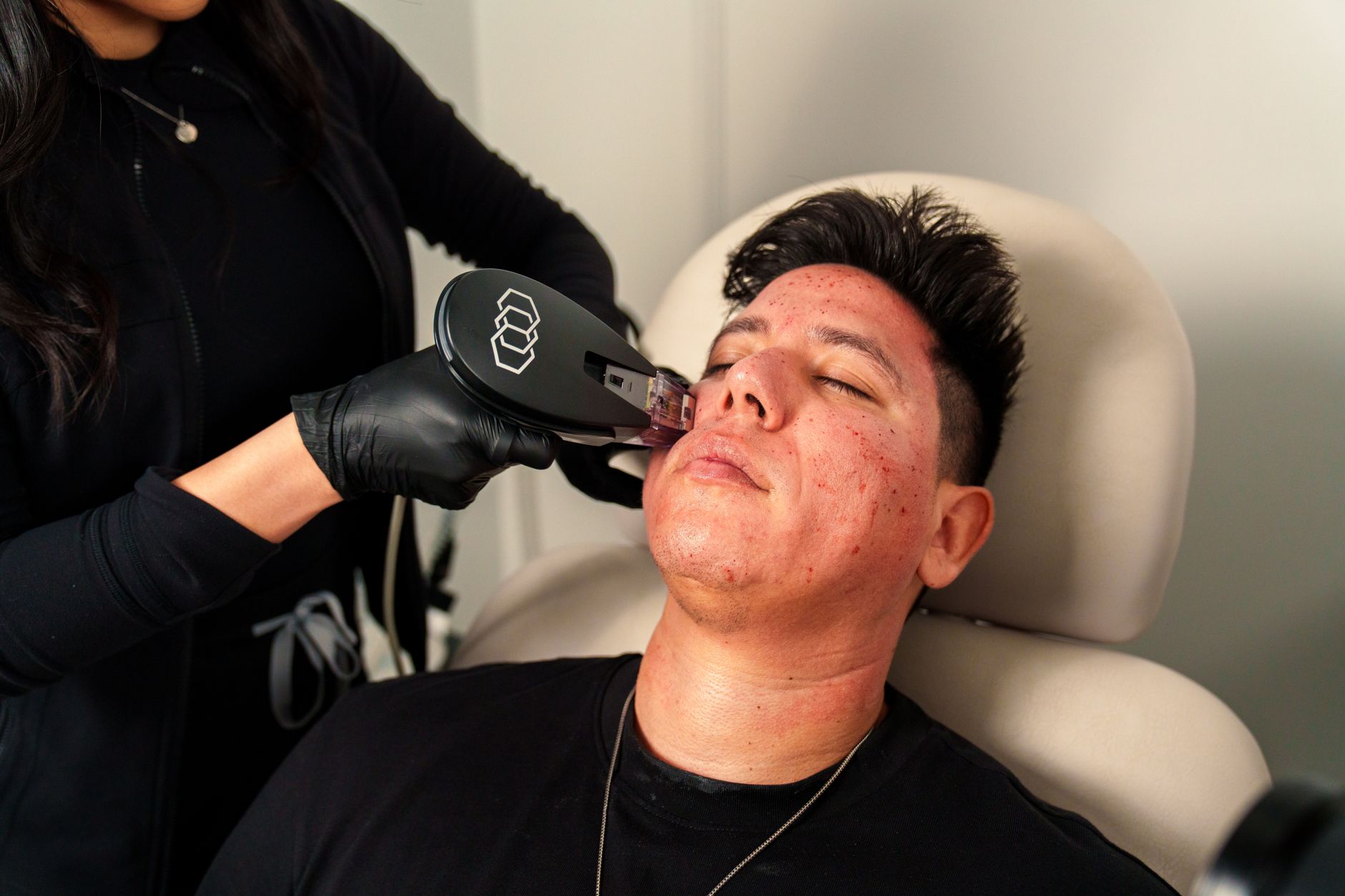
The 2026 split-face trial compares 1064-nm picosecond microlens laser with 1927-nm fractional thulium laser for atrophic acne scars. People with boxcar scars — depressed round-to-oval scars with sharp edges — should plan for 3 to 6 sessions, brief downtime, pigment protection, and multi-session costs. The registered design is a randomized split-face evaluator-blinded trial in Asian adults testing the two lasers for efficacy, safety and tolerability, according to the Veeva CTV clinical-trials record. A 2026 comparison reported similar scar-score reductions across icepick, boxcar and rolling scars, according to Clifford Clinic in the 2026 laser comparison.
Medical information disclaimer: This article is for general educational purposes only and does not provide medical advice, diagnosis, or treatment. Always consult a physician or other qualified health professional about symptoms, medications, tests, or treatment decisions.
Table of Contents
- What did the split-face trial compare?
- How many sessions do boxcar scars need?
- What does downtime look like?
- What controls pigment risk and total cost?
What did the split-face trial compare?
The trial treats one side of the face with 1064-nm Nd:YAG picosecond microlens laser and the other side with 1927-nm fractional thulium laser. Each person serves as their own comparison. That structure reduces differences from age, healing tendency, and sun exposure.
The comparison focuses on atrophic scars, not active acne. It measures scar improvement alongside safety and tolerability. For readers, the useful read is comparative performance rather than a single before-and-after claim.
How many sessions do boxcar scars need?
Shallow boxcar scars may respond to resurfacing, while deep lesions over 0.5 mm often need full-thickness or combined treatment, according to the DermaAmin dermatology atlas in the acne scarring atlas. Depth and edge sharpness matter more than scar count alone. A dermatologist usually judges this by angled light and palpation.
Typical nonablative fractional courses run 3 to 6 sessions about 4 weeks apart, while one split-face protocol used 3 sessions at 4 to 6 week intervals. A randomized split-face pilot found two monthly fractional 1064-nm picosecond sessions reduced all scar types, with boxcar and rolling scars improving more than untreated sides. Expect a staged plan with review between sessions, not a single appointment.
What does downtime look like?
Nonablative fractional treatment usually causes redness, swelling, roughness, and light peeling for several days. Makeup, exercise, heat, and sun exposure are difficult during that window. Most people need social downtime rather than bed rest.
CO2 recovery is longer and sets the upper boundary for planning. It commonly involves about 5 days to 2 weeks of redness, crusting and peeling, according to Clifford Clinic, while Cleveland Clinic guidance notes treated skin can stay pink or red for 2 to 3 months and up to 6 months in the skin-resurfacing guidance. Use that range when requesting time off and avoiding important events.
What controls pigment risk and total cost?
Pigment change is the key limitation for darker skin. An Indonesian hospital study found 59.5% hyperpigmentation after fractional CO2, and a 2026 five-year review of 2,010 cases found post-inflammatory hyperpigmentation most frequent in Fitzpatrick IV to VI skin.
Tell the clinic about prior dark marks, melasma, tanning, and recent sun exposure before booking. For budgeting, the American Society of Plastic Surgeons reports average laser skin-resurfacing cost of $1,829 excluding related expenses, so the practical figure is a 3 to 5 session course plus sun protection and time off in the cost summary. Ask what one session includes, how scars are photographed and scored, and what happens if pigment darkening appears.
You Might Also Like
- Recovery and Pigment Safety in the 2026 Split-Face Acne Scar Trial: Pigment, Pain, and Recovery Questions for People With Boxcar Acne Scars
- Recovery and Pigment Safety in the 2026 Split-Face Acne Scar Trial: How People With Boxcar Acne Scars Can Compare Acne Scar Procedures
- The 160-Participant Acne Scar Combination Trial Published in 2026: Cost, Sessions, and Downtime Questions for People With Atrophic Acne Scars