
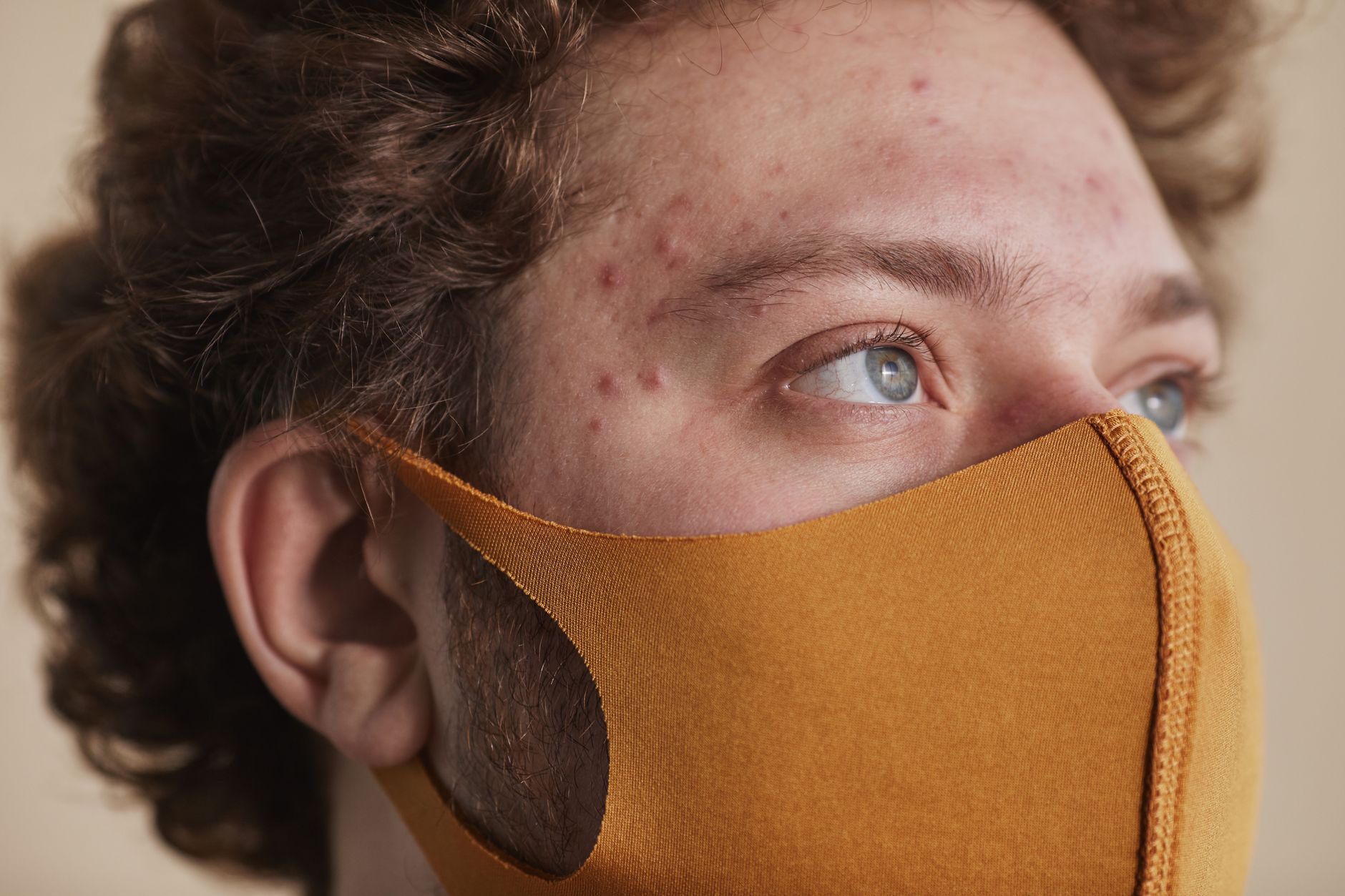
The 2026 consensus ties acne less to total bacteria and more to strain balance: phylotype IA1, especially SLST A1 and ribotypes RT4/RT5, tracks with acne, while SLST H1 and H2 track with protection. Cutibacterium acnes phylotypes — closely related subgroups within one common skin bacterium — differ in inflammatory behavior even when overall bacterial counts look similar. For acne-prone skin, this shifts the product question from "does it kill C. acnes" to "does it preserve diversity and limit IA1 dominance." Strain names, balance data, and claim wording matter more than "microbiome-friendly" on the label.
Medical information disclaimer: This article is for general educational purposes only and does not provide medical advice, diagnosis, or treatment. Always consult a physician or other qualified health professional about symptoms, medications, tests, or treatment decisions.
Table of Contents
- Which strains track with acne?
- Which microbes look protective?
- Can skin care shift the balance?
- How should you judge product claims?
Which strains track with acne?
An NIH/PMC review reports loss of C. acnes phylotype diversity with dominance of phylotype IA1 in acne. Those IA1 strains form biofilms and make pro-inflammatory enzymes that worsen lesions. SLST A1, within phylotype IA1, is classed as acne-prone based on extracellular-vesicle protein cargo and inflammatory responses, according to Scientific Reports/Nature.
Ribotypes RT4 and RT5 are the commonly cited acne-linked ribotypes within this group. Total C. acnes abundance often does not differ between healthy and acne skin, according to an NIH/PMC skin-barrier review. For readers, severity tracks imbalance among phylotypes rather than bacterial load.
Which microbes look protective?
SLST H1 and H2, within phylotype IB, are classed as protective commensals in the same vesicle-and-inflammation comparison. They carry different protein signals and trigger less inflammatory response than SLST A1. Balance with Staphylococcus epidermidis also matters. An NIH/PMC study found balanced C. acnes with S.
epidermidis supports barrier, pH, and immune homeostasis. Experimental dysbiosis favoring either species raised IL-6, IL-8, and other inflammatory markers versus balanced ratios. The practical point is preservation: keep protective IB strains and balanced S. epidermidis present. Products that broadly suppress all C. acnes miss this distinction.
Can skin care shift the balance?
Laboratory work points to selective support rather than broad killing. Fermentation by protective skin S. epidermidis, stimulated by carbon sources such as PEG-8 laurate, suppressed growth of acne-associated C. acnes in lab testing.
The same tests reduced the clindamycin activity needed against the acne-associated strain. That result is early and laboratory-based, not proof of a consumer outcome. It shows why ingredient stories should name the stimulated organism, the suppressed strain, and the test system. The direction has expert momentum: an international Delphi panel published March 5, 2026 in MDPI Pharmaceuticals concluded the skin and gut microbiome is central to acne pathogenesis and voted 100% that microbiome-targeted prevention and treatment should be adopted, as described in the Delphi consensus in Pharmaceuticals. Adoption still requires strain-specific human evidence.
How should you judge product claims?
Start with claim language. The FDA states a product intended to treat acne or affect body structure or function is a drug, or both drug and cosmetic, and generally needs premarket approval or conformity to an OTC monograph, explained in the FDA cosmetics safety Q&A. "Treats acne," "clears breakouts," and "reduces inflammation" signal drug claims; "moisturizes" or "refreshes" alone do not.
Then demand strain detail because trial limits remain. The 2026 consensus reported about 89% agreement on probiotic, prebiotic, and postbiotic benefits, but large randomized controlled trials are still limited. Request strain-specific evidence, diversity-preservation data, and drug-versus-cosmetic wording backed by competent human testing before you buy.
- Ask which SLST, ribotype, or phylotype was tested, not only "C. acnes"
- Ask whether diversity was preserved while IA1 signals fell
- Ask whether results come from people with acne-prone skin
- Ask whether an acne-treatment claim follows drug rules and human testing
You Might Also Like
- The 2026 Global Delphi Consensus on Acne and the Microbiome: Product-Claim Questions for People With Acne-Prone Skin
- Skin Microbiome Outcomes in the 2026 Probiotic Acne Review: Product-Claim Questions for People With Acne-Prone Skin
- Probiotics for Acne in a 2026 Systematic Review and Meta-Analysis: Product-Claim Questions for People With Acne-Prone Skin