
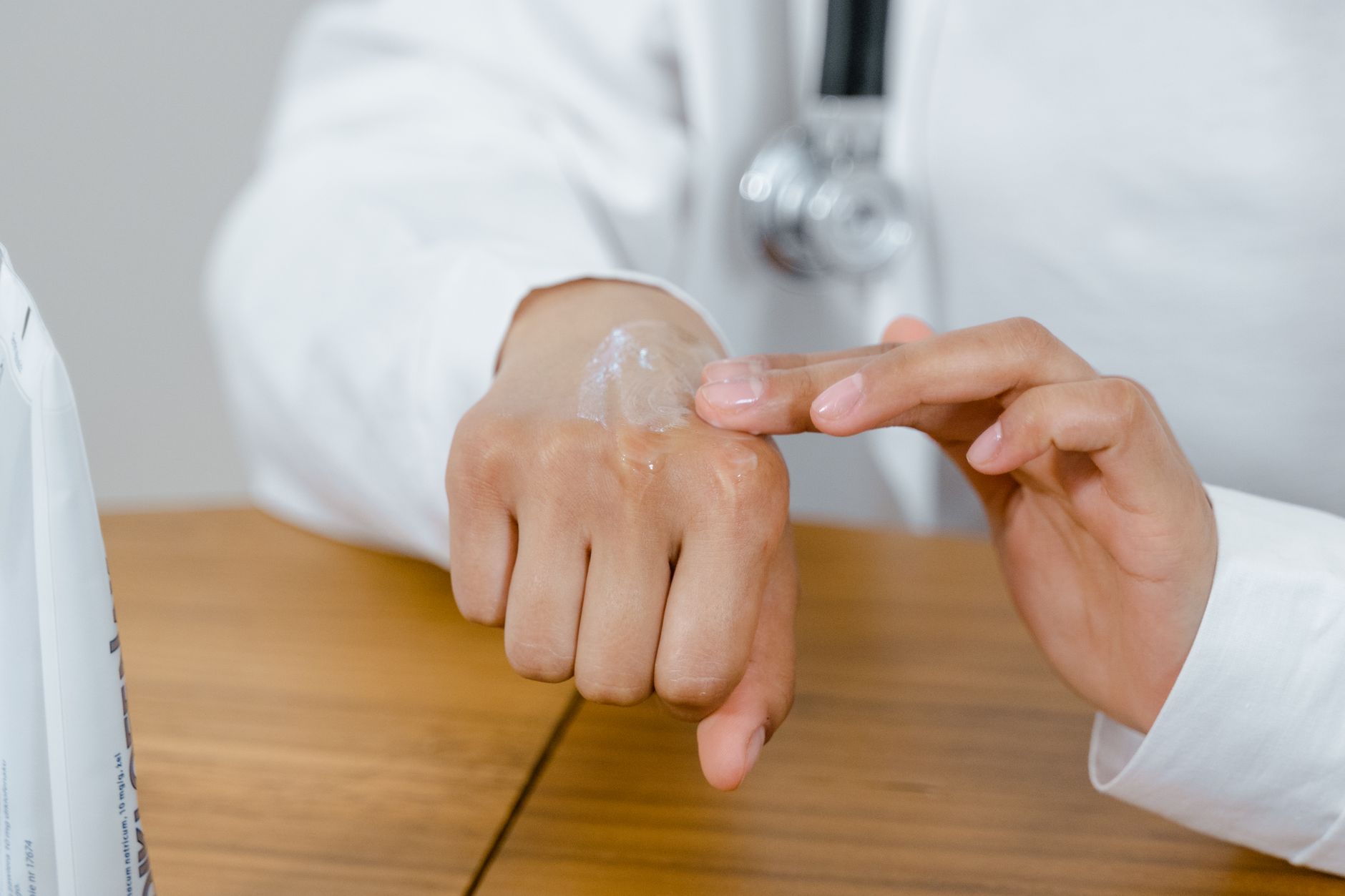
Most dermatologists schedule acne extractions every four to six weeks, timed to how long it takes skin to renew itself. Patients with sensitive or dry skin often stretch that to about every eight weeks to limit irritation, and people in the early, active phase of treatment may come in more often until breakouts are under control. Extraction itself is a narrow procedure: a dermatologist uses sterile tools to clear blackheads and whiteheads that haven't responded to topical treatment. It's scheduled around skin recovery time, not convenience, and it works alongside a daily skincare routine rather than replacing one.
Medical information disclaimer: This article is for general educational purposes only and does not provide medical advice, diagnosis, or treatment. Always consult a physician or other qualified health professional about symptoms, medications, tests, or treatment decisions.
Table of Contents
- What an Acne Extraction Actually Involves
- The Standard Interval — Every Four to Six Weeks
- When the Schedule Should Shift
- What Happens to Deep, Painful Lesions Instead
- Why the Schedule Alone Isn't the Whole Treatment
- Frequently Asked Questions
What an Acne Extraction Actually Involves
An acne extraction is the use of sterile instruments to clear out blackheads and whiteheads, and dermatologists typically reserve it for cases where standard acne treatments haven't worked, rather than offering it as a first option, according to the American Academy of Dermatology. That sequencing matters: a dermatologist usually tries topical or oral medication first and brings in extraction when blackheads and whiteheads persist despite that treatment.
The procedure is kept in a dermatologist's office for a reason. The AAD warns that extracting blemishes without proper technique can cause permanent scarring, trigger worse or more painful breakouts, and introduce infection from bacteria on unwashed hands or tools. Those risks are why the same action that looks simple on a sink-side mirror becomes a supervised clinical step in a dermatology practice.
The Standard Interval — Every Four to Six Weeks
For most patients already on a treatment plan, dermatologists space extraction sessions four to six weeks apart. Board-certified dermatologist Corey L.
Hartman, MD, ties this interval to the skin's approximate monthly renewal cycle, which is also why facial extraction schedules are built around a similar four-to-six-week window. Clinical staff at California Skin Institute report following the same general range for most patients, which keeps newly formed blackheads and whiteheads from accumulating between visits without extracting the same skin so often that it stays irritated. Curology's clinical blog adds that a full extraction process is usually spread across multiple appointments rather than finished in one visit, with roughly monthly visits a common pattern alongside a prescribed at-home regimen.
When the Schedule Should Shift
The four-to-six-week baseline isn't fixed. Hartman recommends patients with sensitive or dry skin space sessions out to about every eight weeks, since extraction can provoke inflammation that takes longer to settle on more reactive skin. The opposite adjustment applies early in treatment.
California Skin Institute's clinical staff describe scheduling more frequent sessions while active acne is still being brought under control, then tapering the frequency back toward the standard four-to-six-week range once breakouts are managed. In practice, this means a new patient with widespread blackheads may see a dermatologist more often at first, with visits spacing out as the skin responds. One adjustment goes the other direction regardless of overall frequency: a single spot shouldn't be worked repeatedly across visits. A dermatology-sourced report in HuffPost Canada advises against re-extracting the same blemish at successive appointments, since repeated manipulation of one spot raises the risk of scarring and post-inflammatory marks.
What Happens to Deep, Painful Lesions Instead
Extraction isn't used on every type of blemish. For deep, painful cysts or nodules, the AAD says dermatologists turn to an intralesional corticosteroid injection rather than extraction.
That injection treats one especially painful lesion at a time rather than multiple blemishes in a single visit, so it runs on its own as-needed basis tied to when a severe lesion appears, not on the four-to-six-week extraction calendar. This distinction matters for anyone expecting a single visit type to cover every kind of acne. Blackheads and whiteheads follow the extraction schedule described above; a sudden, painful cystic lesion gets a separate injection-based visit instead.
Why the Schedule Alone Isn't the Whole Treatment
Extraction frequency is set individually, based on acne severity and how a patient is responding to treatment, and dermatology sources are consistent that extraction supplements a daily topical regimen rather than replacing it. Blackheads and whiteheads recur without continued at-home treatment, so a patient who skips their prescribed products between visits will likely see the same spots return before the next appointment.
This is also consistent with how the AAD's broader acne vulgaris guideline frames treatment. The academy's current guideline, published in the Journal of the American Academy of Dermatology in January 2024, lays out 18 evidence-based recommendations built on a systematic review covering patients age 9 and up — extraction sits within that larger framework as one tool among topical, oral, and procedural options, not a standalone fix.
Frequently Asked Questions
Can extraction frequency change without the patient asking for it?
Yes — dermatologists often schedule more frequent sessions early in treatment while acne is still active, then taper to the standard four-to-six-week interval once breakouts are managed, according to clinical staff at California Skin Institute.
Is a cystic or nodular lesion treated on the same schedule as blackheads?
No. The AAD notes that deep, painful cysts and nodules are typically treated with an intralesional corticosteroid injection, addressing one lesion at a time rather than following the routine extraction calendar.