
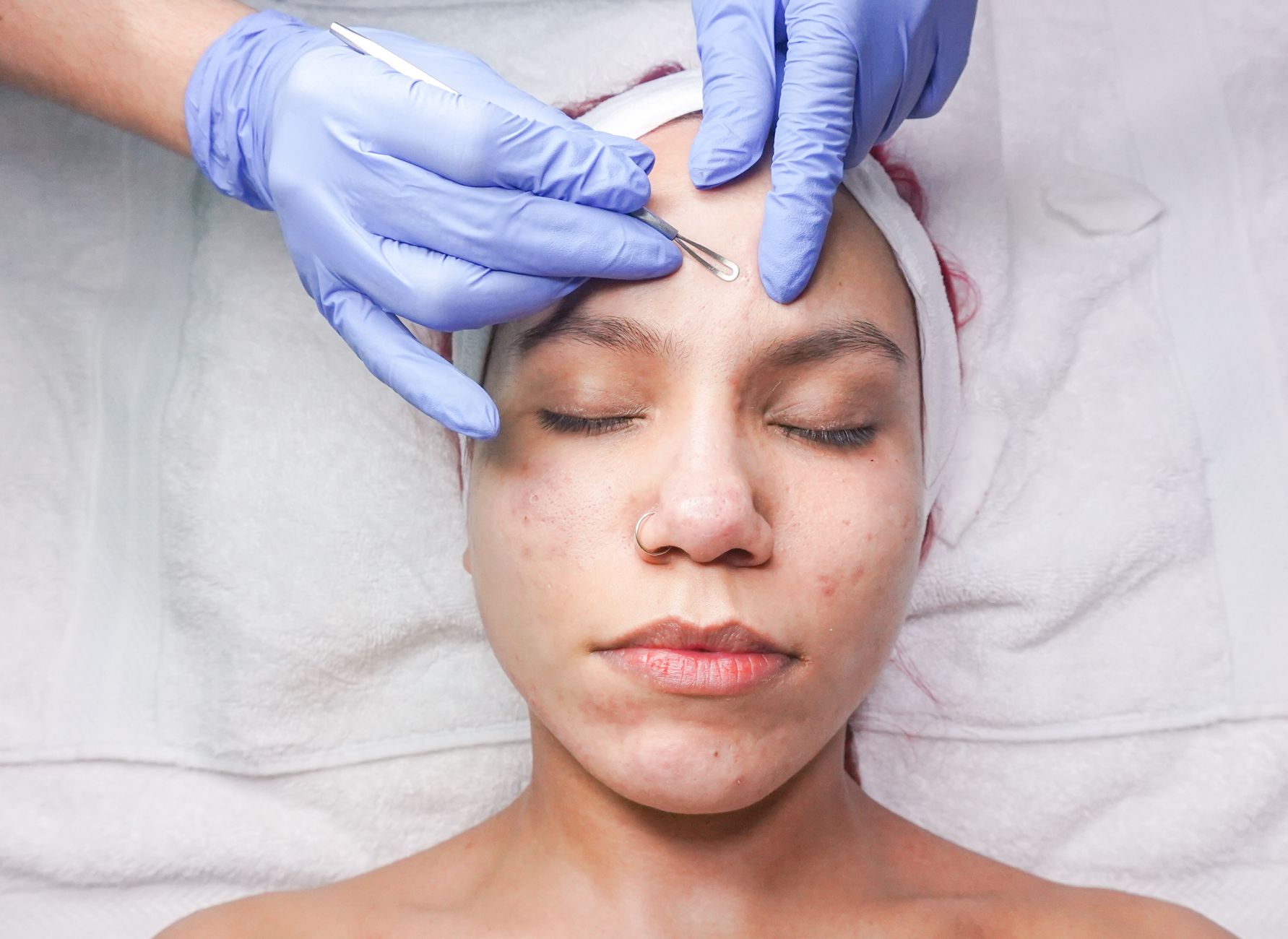
If you’re considering a consultation with Dr. Sandra Lee, commonly known as Dr. Pimple Popper, expect to pay approximately $120 for an in-person appointment or $200 for an online consultation at her practice, Skin Physicians & Surgeons in Upland, California. For someone dealing with severe acne, cystic breakouts, or persistent skin conditions, this initial investment can feel significant—but here’s the practical reality: these consultation fees often get applied toward your final treatment bill, which means you’re not necessarily paying extra money overall.
A patient scheduling a consultation for a large cystic acne extraction that might cost $500-$600 would see that $120 consultation fee deducted from the final treatment invoice, effectively reducing the total out-of-pocket cost. The difference between in-person and online options matters depending on your situation. If you live near her Southern California clinic, an in-person consultation gives you a face-to-face evaluation where Dr. Lee can examine your skin directly, assess severity, and discuss treatment plans in real time. The online option at $200 works for those who can’t travel or prefer remote evaluation, though it comes with a higher price tag and the inherent limitations of virtual assessment—lighting, camera angles, and screen resolution may not capture the full picture of your skin condition.
Table of Contents
- What’s the Real Cost Breakdown for Seeing Dr. Pimple Popper?
- Understanding How Consultation Fees Apply to Your Final Bill
- Dr. Sandra Lee’s Practice: Location, Credentials, and What to Expect
- Comparing In-Person vs. Online Consultation Value
- Budgeting for the Total Financial Commitment
- The Free Treatment Path: Appearing on the TLC Show
- Payment Plans and Out-of-Pocket Strategies
What’s the Real Cost Breakdown for Seeing Dr. Pimple Popper?
The consultation fee is just the entry point. Once you’re approved for treatment, the actual costs depend entirely on what your skin needs. Extraction procedures—the signature “pimple popping” that made Dr. Lee famous—typically run $500-$600 per extraction session, depending on complexity and the number of lesions being treated.
If you have multiple problem areas or severe congestion, a single visit could involve several extractions, multiplying that base cost significantly. Beyond basic extractions, additional procedures carry steeper price tags. Laser treatments, cosmetic surgery, or advanced skin rejuvenation procedures can range from $500 to over $3,000, depending on the scope and the specific technology involved. A patient needing laser resurfacing for acne scarring, for example, would face costs well above a simple extraction, potentially pushing into the $2,000-$3,000 range or beyond. This is why the initial consultation—even at $120 or $200—serves as a crucial filtering step; it determines whether treatment is medically necessary, whether your insurance might cover portions of it, and what the realistic financial commitment will be.
Understanding How Consultation Fees Apply to Your Final Bill
One of the most important financial details that often gets overlooked is that consultation fees are typically credited toward your treatment costs. This isn’t a separate charge on top of everything else; it’s deducted from your first procedure bill. If you pay $120 for an in-person consultation and then proceed with a $550 extraction, your treatment invoice will likely reflect $430 ($550 minus the $120 consultation fee already paid). This structure makes consultations far more affordable than they might initially seem.
However, this only applies if you move forward with treatment at the same practice. If you schedule a consultation to evaluate your options and then decide to seek treatment elsewhere or opt out entirely, that consultation fee is non-refundable—it’s gone. This is a critical consideration for patients who are price-shopping or uncertain about proceeding. Additionally, if your insurance covers part of your treatment, the consultation fee credit still applies, though the mechanics of how insurance claims process can be complex and varies by plan. You should clarify this with the clinic’s billing department before your appointment to avoid surprise charges.
Dr. Sandra Lee’s Practice: Location, Credentials, and What to Expect
Dr. Sandra Lee operates her practice, Skin Physicians & Surgeons, in Upland, California, a location that’s both her clinic base and the backdrop for her popular TLC television series. This matters because traveling to Southern California for an appointment involves expenses beyond the consultation fee itself—flights, hotel, meals, and time off work can add significantly to your total cost if you live out of state. For local Southern California residents, this isn’t a barrier; for someone flying from the East Coast or Midwest, it’s a meaningful financial commitment on top of the consultation and procedure costs.
The clinic’s reputation stems largely from Dr. Lee’s dermatological expertise and her television presence, which means appointment availability can be limited. High demand means longer wait times—it’s not uncommon for new patient consultations to have weeks or even months of lead time. This delay is something to factor into your planning, especially if you’re dealing with an active acne problem that feels urgent. The clinic does offer online consultations specifically to accommodate patients who can’t make the journey, which is why that $200 virtual option exists, though it carries the trade-off of not receiving in-person examination.
Comparing In-Person vs. Online Consultation Value
The $80 price difference between in-person ($120) and online ($200) consultations seems counterintuitive—you’d expect remote appointments to cost less, not more. In practice, this pricing likely reflects higher demand for the in-person experience and the premium associated with direct evaluation. An in-person consultation allows Dr. Lee to use specialized lighting, magnification tools, and tactile examination to assess skin texture, pore size, and lesion characteristics that can’t be fully captured on a video call. For complex cases—severe cystic acne, unusual lesion patterns, or combined conditions—the in-person advantage can justify the higher cost.
For straightforward cases or follow-up consultations with existing patients, the online option makes financial sense. You save the $120 consultation fee (since online is $200, not $80 more), avoid travel costs, and get a diagnosis without leaving home. The trade-off is that Dr. Lee might recommend an in-person follow-up before proceeding with treatment if she feels the virtual assessment is insufficient. This could mean paying for two consultations instead of one—first the $200 online, then scheduling an in-person visit at $120—which reverses the savings entirely. Ask the clinic whether they allow you to convert an online consultation to in-person with a partial refund or credit if needed.
Budgeting for the Total Financial Commitment
Most people underestimate the true cost because they focus only on the consultation fee and overlook the treatment cascade. Let’s walk through a realistic scenario: A patient with moderate cystic acne in multiple zones might pay $120 for an in-person consultation (credited toward treatment), then proceed with a series of extractions totaling $1,200 (roughly 2-3 sessions at $500-$600 each). If scarring is present, adding a laser treatment could push the total to $2,000-$2,500. Over the course of treatment, that initial $120 consultation fee becomes almost negligible—it’s the extraction and procedure costs that dominate the budget. Insurance coverage is another critical variable that many patients don’t investigate thoroughly before booking.
Some acne treatments—particularly those addressing severe cystic acne or acne-related complications—may be partially covered by medical insurance if deemed medically necessary rather than purely cosmetic. Procedures aimed solely at cosmetic improvement, however, are almost always out-of-pocket. Before scheduling, call your insurance carrier and ask what dermatological procedures might be covered under your plan. Then call Dr. Lee’s clinic and ask which of her treatments they bill to insurance and which are cash-only. This pre-appointment research can save hundreds of dollars and prevent billing surprises.
The Free Treatment Path: Appearing on the TLC Show
There is one legitimate way to receive Dr. Pimple Popper’s treatment without paying: appear on the TLC television series “Dr. Pimple Popper.” Patients featured on the show receive free treatment, and the production company covers travel expenses and Dr. Lee’s fees. This sounds ideal until you consider the real costs involved—you’re on national television, your skin condition is documented and broadcast, and your privacy is permanently compromised. For some patients, especially those with extreme cases or severe emotional distress around their condition, the free treatment is worth the media exposure.
For others, the thought of having their acne documented for millions of viewers to watch is unthinkable. The selection process for the show is highly competitive. Dr. Lee’s team receives thousands of applications from patients hoping to be featured, so the odds of being chosen are slim unless your case is particularly dramatic or unusual. If you’re pursuing this route, understand that it’s not a reliable path to free treatment—it’s a long shot that might or might not pan out. Relying on this as your primary plan to access care while your acne worsens is not a practical strategy.
Payment Plans and Out-of-Pocket Strategies
Dr. Lee’s clinic, like many dermatological practices, may offer payment plans or financing options for larger treatment costs, though you’ll need to contact them directly for current details since these offerings change based on billing partnerships. Some practices use medical financing companies that allow you to spread costs over months with or without interest—this can transform a $1,500 treatment into manageable $250 monthly payments. If you’re uninsured or underinsured, explicitly ask about this during your consultation; don’t wait until the final bill arrives.
Another financial consideration: if you’re traveling to Southern California for your appointment, you might bundle consultations with other dermatologists or plastic surgeons to maximize your trip efficiency and spread the travel cost across multiple professional opinions. Some patients drive to nearby clinics in the LA area while they’re already there, turning a single consultation trip into a broader skin care evaluation. This doesn’t reduce Dr. Lee’s fees, but it can improve the return on investment for your travel expenses and time away from work. Check what your health savings account (HSA) or flexible spending account (FSA) covers—medical dermatology treatments are often eligible for tax-advantaged health care funds, which can reduce your net out-of-pocket cost if you have these accounts available.
- —
You Might Also Like
- At Least 84% of Patients Taking Oral Antibiotics for Acne Believe That Tretinoin Increases Collagen Production and Actually Thickens Skin Over Time
- At Least 14% of Patients Seeking Scar Treatment Would Benefit From Knowing That Acne Around the Mouth May Actually Be Perioral Dermatitis
- Why Beauty Experts Say Visible Pimples Are Trending Now