
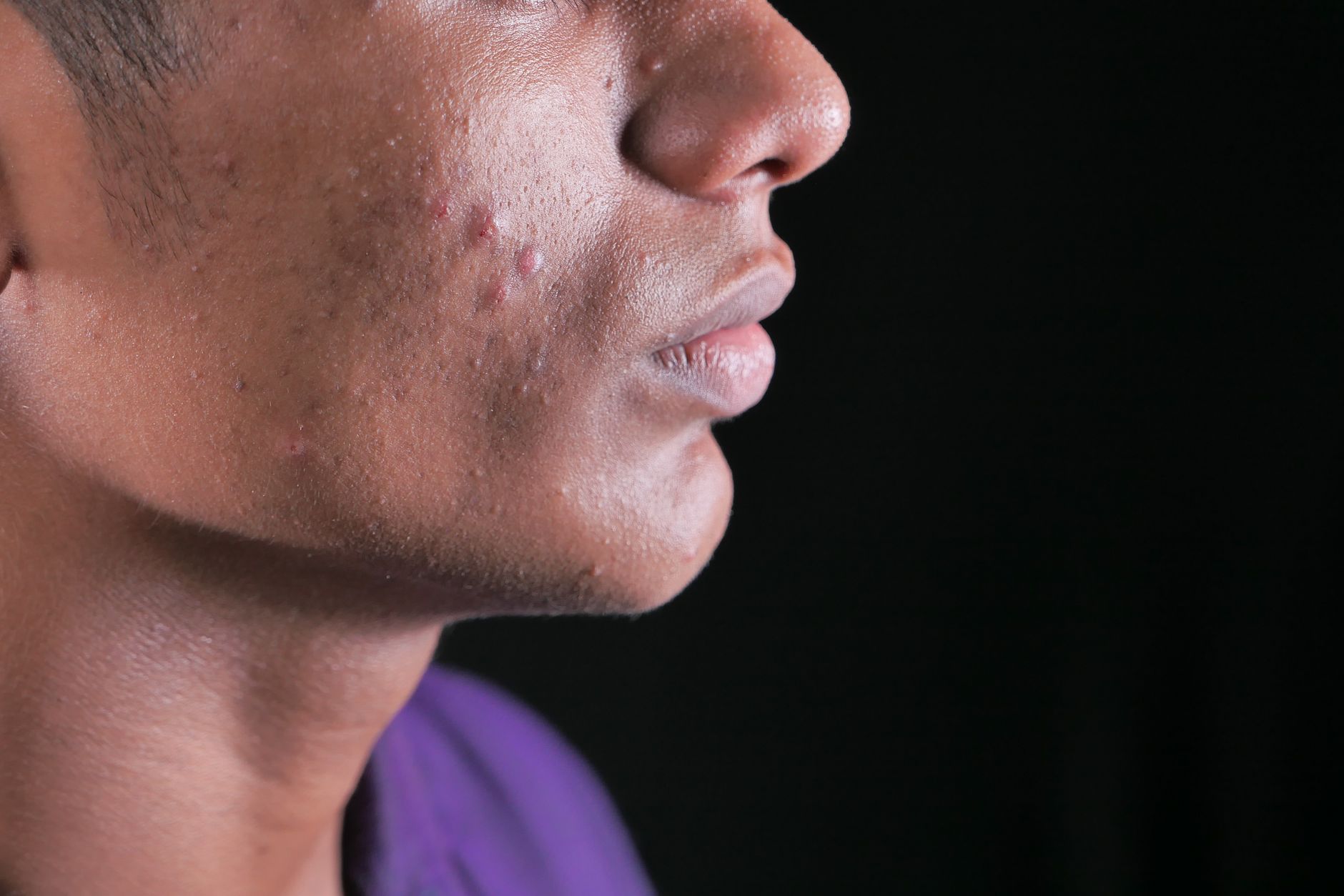
A dermatologist first grades chin blackheads — open plugs in hair follicles — by type and spread, counting comedonal bumps versus inflamed lesions and nodules. That count, plus scarring, pigment change, and daily-life burden, sets treatment intensity, according to the American Academy of Dermatology guideline summary in the JAAD guideline summary. Blackheads look dark because the exposed plug oxidizes and reflects light, not because dirt is trapped inside. Cleveland Clinic explains this oxidation process in its blackhead overview.
Medical information disclaimer: This article is for general educational purposes only and does not provide medical advice, diagnosis, or treatment. Always consult a physician or other qualified health professional about symptoms, medications, tests, or treatment decisions.
Table of Contents
- Why does the chin clog so easily?
- Is it really blackheads?
- Which first treatment fits mild chin blackheads?
- What should you avoid while pores clear?
Why does the chin clog so easily?
The chin holds many oil glands and gets frequent touch, lip balm migration, and mask or collar friction. Excess sebum mixes with dead skin cells and plugs the follicle opening.
That basic plug gets worse with excess oil production, hormonal shifts, comedogenic cosmetics, genetics, humidity, and follicle irritation. The National Institute of Arthritis and Musculoskeletal and Skin Diseases lists these triggers in its acne cause summary.
Is it really blackheads?
A dermatologist checks whether each dark spot has an open pore with a central plug. Papules, pustules, nodules, scaling, or a ring of red bumps around the mouth point elsewhere.
A key chin mimic is perioral dermatitis, a red bumpy rash around the mouth and chin that can resemble acne or rosacea. The MSD Manual consumer version links it to topical steroids and possibly fluoridated toothpaste or water.
Which first treatment fits mild chin blackheads?
For mild comedonal acne, care usually starts with a topical retinoid such as adapalene 0.1% gel, often paired with benzoyl peroxide. These products normalize follicle shedding and limit new comedones, as described by the American Academy of Dermatology in its benzoyl peroxide statement.
Persistent plugs may need salicylic-acid or tretinoin creams plus clinician extraction, chemical peels, or prescription retinoids when store-bought care fails. MedlinePlus lists those next-step options for stubborn lesions.
What should you avoid while pores clear?
Expect 6–12 weeks of steady use before clear improvement. Picking and squeezing spread inflammation and raise scar risk. Use this routine while treatment works: Seek prompt care if acne worsens, scars, or affects mood or daily life.
- wash gently with lukewarm water, then pat dry
- leave blackheads alone instead of trying to clean them out
- track new pain, swelling, dark marks, pits, or stress about appearance