
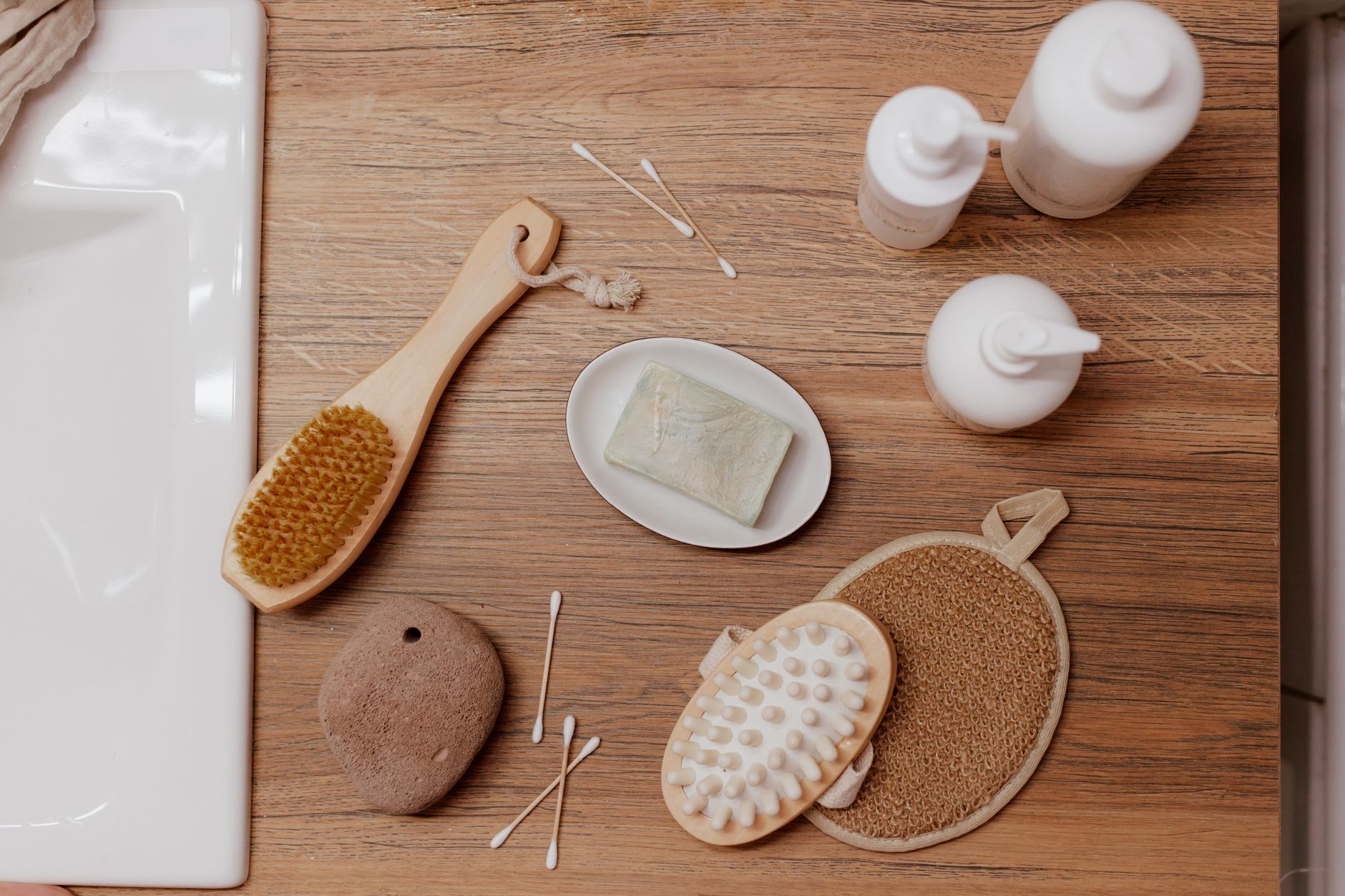
No, loofahs are not a safe choice for acne-prone skin. A loofah — a porous mesh puff or natural sponge used for scrubbing — can irritate breakouts and transfer bacteria to inflamed skin. The American Academy of Dermatology advises gentle fingertip washing over scrub tools for acne. Its acne-care guidance warns that washcloths, sponges and similar tools can irritate skin.
Medical information disclaimer: This article is for general educational purposes only and does not provide medical advice, diagnosis, or treatment. Always consult a physician or other qualified health professional about symptoms, medications, tests, or treatment decisions.
Table of Contents
- Why do dermatologists say skip the scrub?
- What lives inside a damp loofah?
- Can you still use one on your body?
- What works better for acne-prone skin?
Why do dermatologists say skip the scrub?
Acne-prone skin reacts badly to friction. Rubbing pulls at inflamed pores, opens pimples and spreads irritation across the face and body.
AAD dermatologist Rebecca Tung warns exfoliation can increase redness or breakouts for some people. She notes people with dry, sensitive or acne-prone skin may prefer a washcloth with a mild chemical exfoliator.
What lives inside a damp loofah?
Cleveland Clinic dermatologist Melissa Piliang explains that loofahs trap shed skin cells in tiny pores. Because they stay damp between showers, she calls them a beautiful breeding ground for bacteria in the Cleveland Clinic review.
The same review lists E. coli, Pseudomonas aeruginosa, Staphylococcus, Streptococcus and fungi that can infect broken or acne-inflamed skin. A study in the Journal of Clinical Microbiology linked one case of Pseudomonas folliculitis to a contaminated loofah and showed sterile fibers boosted growth of several bacteria.
Can you still use one on your body?
Northwestern Medicine dermatologist Lauren Taglia and Medical University of South Carolina dermatologist Katie Lynam recommend hands over loofahs. They warn that rarely washed loofahs harbor bacteria that threaten skin with a weakened barrier.
If you still use one, Cleveland Clinic sets strict limits for body-only use. Never apply it to the face, genital area or active breakouts.
- Dry it daily outside the shower.
- Clean it weekly.
- Replace natural loofahs every 3-4 weeks and plastic ones every two months.
- Throw it away with mold or a mildewy odor.
What works better for acne-prone skin?
For acne-prone skin, wash gently up to twice daily. Apply a gentle, non-abrasive cleanser with fingertips and avoid scrub tools.
This advice rests on microbiology and expert acne care, not a large trial proving loofahs cause acne. The American Academy of Dermatology advises people with cysts or pustules to see a dermatologist before exfoliating, per expert guidance.