
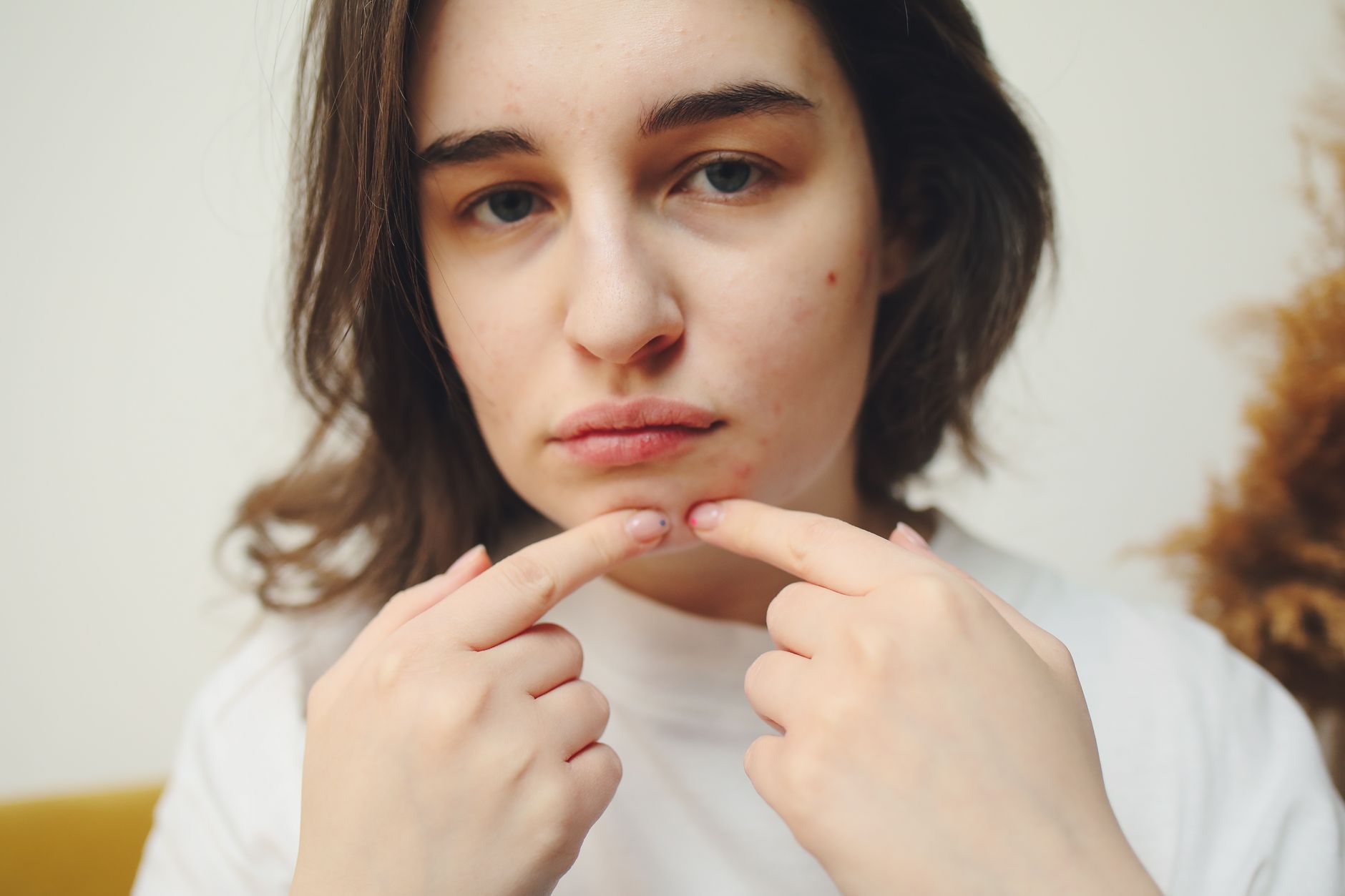
Safe acne treatment while breastfeeding usually means limited-area topicals rather than oral drugs. Ask your dermatologist about the exact product, treated area, duration, and keeping treated skin away from your breast and baby's mouth. Lactation means the period when you are producing breast milk and nursing. Many common acne ingredients have different guidance during this time, so the visit works best as a product-by-product check.
Medical information disclaimer: This article is for general educational purposes only and does not provide medical advice, diagnosis, or treatment. Always consult a physician or other qualified health professional about symptoms, medications, tests, or treatment decisions.
Table of Contents
- Which topicals are usually preferred while nursing?
- What should you ask about salicylic acid?
- What should you ask about retinoids?
- Why do pills need a different plan?
Which topicals are usually preferred while nursing?
Topical benzoyl peroxide is considered low risk while nursing because only about 5% is absorbed, according to the U.S. National Library of Medicine LactMed in its benzoyl peroxide summary. Mothers should prevent direct infant skin contact with treated areas. Wash hands after applying it and let it dry before holding the baby close.
Topical azelaic acid is also considered low risk while nursing because only 4% is absorbed and it occurs naturally in foods, blood, and breastmilk, according to the U.S. National Library of Medicine LactMed in its azelaic acid summary. Topical clindamycin and erythromycin have negligible absorption and are recommended as first-line topical antibiotics for mild-to-moderate acne during lactation. Ask whether one of these fits your acne type and what strength to use.
What should you ask about salicylic acid?
Topical salicylic acid is considered compatible with breastfeeding because meaningful absorption into milk is unlikely, with the limit that use should stay on small areas and off breasts where the infant contacts skin. That makes location as important as the ingredient itself.
Ask your dermatologist where to apply it, how large an area is reasonable, and how often to use it. Bring every product that contains it, including cleansers, toners, peels, and spot treatments. Ask which ones to pause if your baby nurses frequently or has much skin-to-skin contact.
What should you ask about retinoids?
Topical retinoids need a direct question because guidance differs by drug. Tazarotene is contraindicated in pregnancy and breastfeeding, while tretinoin and adapalene lack breastfeeding studies so many clinicians advise avoiding or minimizing them despite low expected absorption.
Ask whether to stop your current retinoid, switch to a preferred topical, or restart it later. Ask how to handle a prescription that combines a retinoid with benzoyl peroxide or an antibiotic. Do not continue a retinoid simply because the tube is labeled topical.
Why do pills need a different plan?
Oral isotretinoin must not be taken while breastfeeding because it can cause side effects in the baby, according to the UK National Health Service in its isotretinoin guidance. Nursing patients with severe acne need an alternative plan.
Ask what can control breakouts now and what should wait until after weaning. Oral tetracyclines are generally avoided while nursing over tooth-staining and bone-deposition concerns. Ask about safer short-term options, expected duration, and signs that need prompt follow-up.
- Bring a list of all acne products, strengths, and where you apply each one.
- Ask about exact treated area, frequency, duration, and breastfeeding contact areas to avoid.
- Ask when to call back if acne worsens, irritates skin, or does not improve.
You Might Also Like
- Pediatric Acne and Rosacea at the 2026 AAD Annual Meeting: Questions Families Comparing Acne Treatments Can Ask a Dermatologist
- Microbiome-Friendly Acne Care Questions Raised in 2026: Questions People Comparing Acne Supplements Can Ask a Dermatologist
- Cumulative Isotretinoin Dose and Acne Relapse in a 2026 Trial: Questions Adults With Persistent Acne Can Ask a Dermatologist